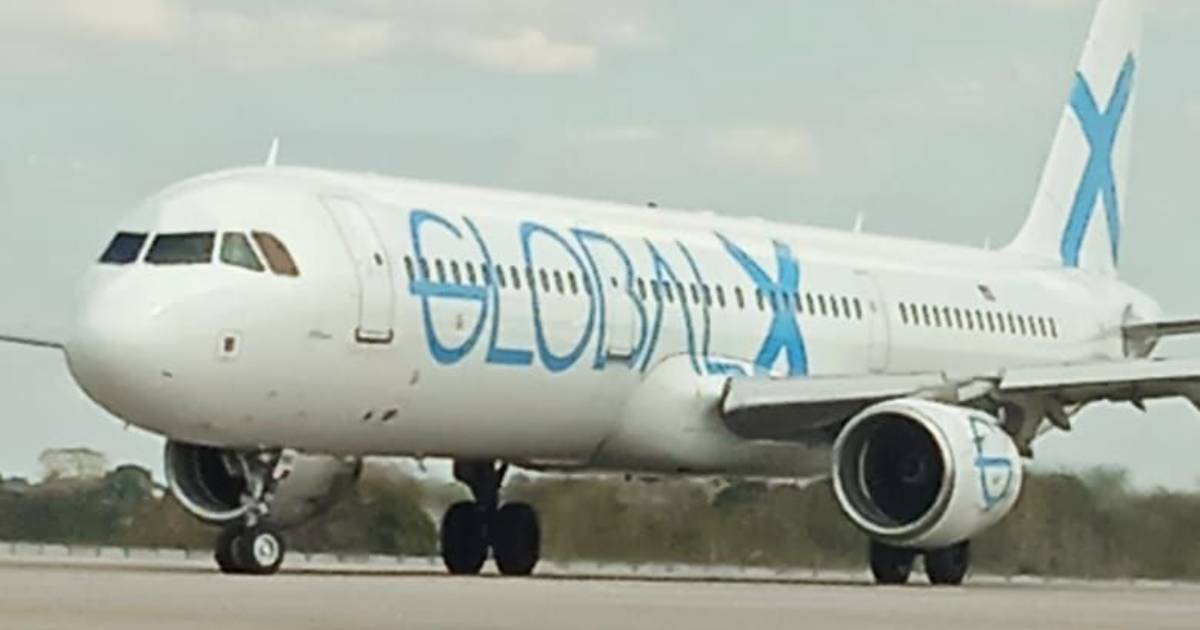
A group of 170 Cuban migrants was returned to the island on Monday, February 9, marking the first deportation flight of 2026, as announced by Cuba's Ministry of the Interior (MININT) on their official social media accounts.
This operation was conducted in accordance with bilateral migration agreements, with the José Martí International Airport in Havana serving as the arrival point.
According to the official statement, the deportees consisted of 153 men and 17 women. The authorities noted that three individuals were taken into custody for investigation due to their suspected involvement in criminal activities prior to leaving Cuba.
The Cuban government reiterated its stance on promoting "regular, safe, and orderly" migration and once again warned of the "life-threatening risks" associated with illegal departures.
This flight signals the resumption of deportations following a January devoid of such operations, happening after the last recorded return on December 18, 2025, when 128 Cubans were sent back from the U.S.
At that time, official statistics showed that during the year, 53 deportations had been carried out from various countries in the region, with a total of 1,663 Cubans repatriated.
Data from the Department of Homeland Security (DHS), as reported by Café Fuerte, indicated that the Donald Trump administration has deported 1,498 Cubans since January in 12 flights, raising the total number of Cuban citizens expelled during his presidency to 4,883. This figure far surpasses those recorded under Joe Biden, Barack Obama, and George W. Bush. The intensified migration policy has also included the deportation of Cubans to third countries when the Cuban government refuses to accept them back.
The return of these migrants occurs during a particularly tense time for Cuba, amid escalating tensions with Washington.
In late January, Trump declared a national emergency, labeled Cuba a threat to U.S. security and foreign policy, and again described the island as a "failed state," as his administration continues its strategy of maximum economic and diplomatic pressure on Miguel Díaz-Canel's regime.
Inside Cuba, the situation is dire. The country faces severe challenges, including a lack of oil, power outages lasting over 20 hours in some areas, transportation collapse, and shortages of food and medicine. The official acknowledgment of a return to the hardships of the Special Period paints a grim picture for these 170 Cubans as they set foot back on Cuban soil.
Insights on Cuban Deportation and Migration
Why was the deportation flight carried out?
The deportation flight was executed in line with bilateral migration agreements between the United States and Cuba to ensure the orderly return of migrants.
What challenges do the returning Cubans face?
Returning Cubans are stepping back into a country grappling with significant issues such as energy shortages, transportation breakdowns, and scarcity of essential goods and services.
How has the U.S. migration policy towards Cuba changed under Trump's administration?
Under Trump's administration, the U.S. has toughened its migration policy by increasing deportations of Cubans and implementing measures to return migrants to third countries if Cuba refuses to accept them.