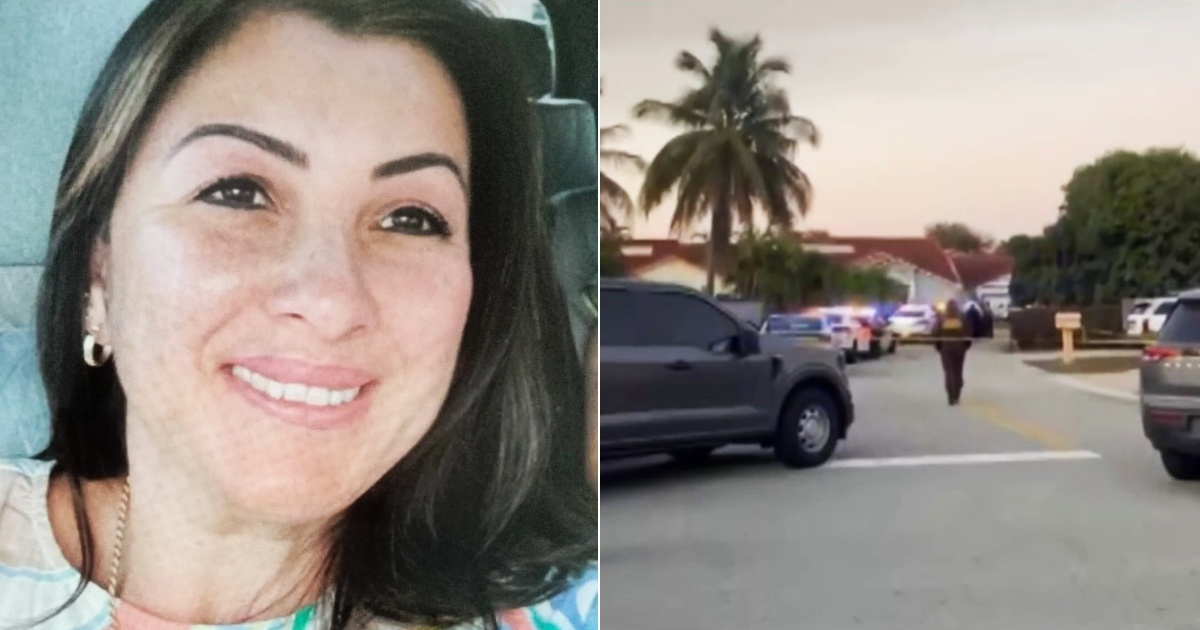
A 52-year-old woman was fatally shot by a law enforcement officer during a police operation at her residence in northwest Miami-Dade.
The deceased, identified as Karen Ivette Gómez, was a mother whose nationality has not been disclosed. According to official accounts, she was wielding a knife and had self-inflicted wounds when the police found her.
This tragic event, which took place on Saturday, has left her family in shock. They claim the emergency call was made to seek assistance during an emotional crisis.
During the intervention, a combination of a taser and a firearm was used by one of the officers, resulting in her being taken to a hospital where she was later pronounced dead.
Family members recounted that the crisis began when Karen's younger daughter dialed 911 out of concern for her mother's emotional state. Shortly after, what seemed like a call for help escalated into a police operation that ended in tragedy.
“When my sister called for help for my mom, I heard two gunshots and now my mom is dead,” Natalie Gómez, the victim's eldest daughter, told local media.
She further explained that while on the phone with her younger sister, who was still inside the house, she distinctly heard the shots.
“We called for help, and they killed my mom,” she reiterated to the press.
The family insists that there were no firearms in the home and that Karen posed no greater threat than that of someone in emotional distress.
Official Account: Attempted Dialogue and Use of Force
According to the Miami-Dade Sheriff's Office (MDSO), officers responded to a report of a woman inflicting harm on herself with a knife at a residence near Northwest 55th Avenue and 190th Street.
“During the encounter, the woman was tasered, and at the same time, an officer discharged his service weapon, injuring her,” explained sheriff's spokesperson Eric García.
The woman was airlifted by the Miami-Dade Fire Rescue team to a hospital, where she succumbed to her injuries. No officers were harmed during the incident.
Speaking to NBC6, spokesperson García mentioned that Karen posed a significant threat as she held a knife and had multiple self-inflicted injuries.
There is still no detailed explanation on why lethal force was deemed necessary if a taser had already been employed.
Family in Mourning and Seeking Answers
For the family, the situation was devastating from the moment they arrived.
“There were probably about 40 police officers outside my house when I got there,” Natalie Gómez recounted.
She and her younger sister spent hours outside the police barricade, uncertain of their mother's fate.
Karen's brother, deeply affected, mentioned that she had been experiencing issues with her partner and had suicidal thoughts, but stressed that she did not have access to firearms.
Investigation Led by FDLE
As is customary when law enforcement officers are involved, the case is under the jurisdiction of the Florida Department of Law Enforcement (FDLE), which is conducting an independent investigation.
So far, there has been no release of body camera footage from the involved officers, nor has the name of the officer who fired the weapon been disclosed.
Police have stated that they attempted to communicate with the woman before resorting to force, but specific details of that interaction remain unclear.
Karen Ivette Gómez's death adds to a growing list of incidents where police interventions in mental health crises have resulted in fatal outcomes.
In many such cases, families call for medical or psychological help only to receive an armed response instead.
Frequently Asked Questions about Police Interventions in Mental Health Crises
Why was lethal force used if a taser was already deployed?
The official explanation has not yet detailed why lethal force was necessary after using a taser. The investigation by the FDLE may provide further insights.
What steps are being taken to investigate the incident?
The FDLE is conducting an independent investigation. This includes reviewing body camera footage and other evidence to determine the events that led to the shooting.
How common are fatal outcomes in police interventions during mental health crises?
Unfortunately, incidents where police interventions in mental health crises end fatally are not uncommon. Families often request medical assistance but receive an armed response.