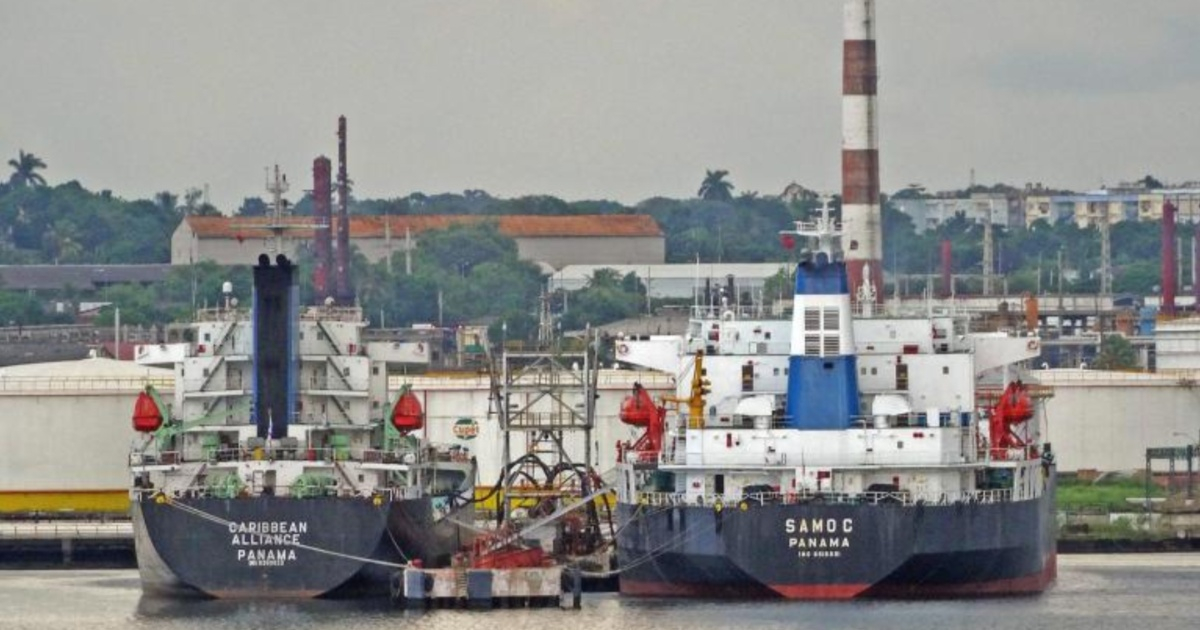
The M/T Caribbean Alliance, a Panama-flagged tanker, departed Santiago de Cuba's port on Sunday, heading towards Mariel. This movement has once again sparked curiosity on social media regarding the movement of tankers around the island amid the ongoing fuel crisis.
According to data from Vessel Finder, the tanker arrived in Santiago de Cuba on February 5 and has now set sail for Mariel.
Social media posts by user Joankelin Sánchez highlighted the M/T Caribbean Alliance, noting its departure from Mariel in September and its delayed arrival in Santiago de Cuba on February 5.
Typically, such a journey would take about three days. However, in this instance, it took over four months, as pointed out by Sánchez.
Sánchez also mentioned that the vessel was recorded in Santiago with a 90% load and a draft of 8.1 meters (out of a maximum of 9), as per maritime tracking systems.
This lengthy gap between departure and arrival was noted as "curious," although no confirmed explanation for the delay was offered.
Public interest in these tanker movements has heightened in early February due to numerous reports of tankers docking at Cuban ports amidst the country's fuel crisis.
The M/T Caribbean Alliance has become a focal point of discussion due to the stark contrast between the seemingly short route and the prolonged journey time tracked by monitoring systems.
The vessel is a 2006-built oil tanker (20 years old) currently sailing under the Panamanian flag, classified by Vessel Finder as a product tanker.
Since January 2026, Cuba has been grappling with a new chapter of its long-standing fuel crisis, leading to emergency measures and mounting public discontent.
The government announced the halt of gasoline sales in Cuban pesos and restricted sales to dollar transactions only.
This decision comes in response to an "acute shortage" of fuel, highlighting a lack of reserves and the frailty of the distribution system.
Despite the crisis, Prime Minister Manuel Marrero Cruz declared that "Cuba will not stop," during a special address on state television.
He urged the continuation of production and essential services through "controlled decisions" and announced initiatives to tackle the energy shortage and promote renewable energy sources.
These official statements were met with skepticism by a population already suffering from blackouts and mobility restrictions.
Analyzing the M/T Caribbean Alliance's Journey and Cuba's Fuel Crisis
Why did the M/T Caribbean Alliance's journey take so long?
The exact reasons for the extended journey time from Mariel to Santiago de Cuba remain unclear, although it drew significant attention for taking over four months, a trip that typically takes about three days.
How has the Cuban government responded to the fuel crisis?
In response to the severe fuel shortage, the Cuban government suspended gasoline sales in Cuban pesos and limited transactions to dollars. Measures were also announced to address the energy shortage and to promote renewable energy sources.