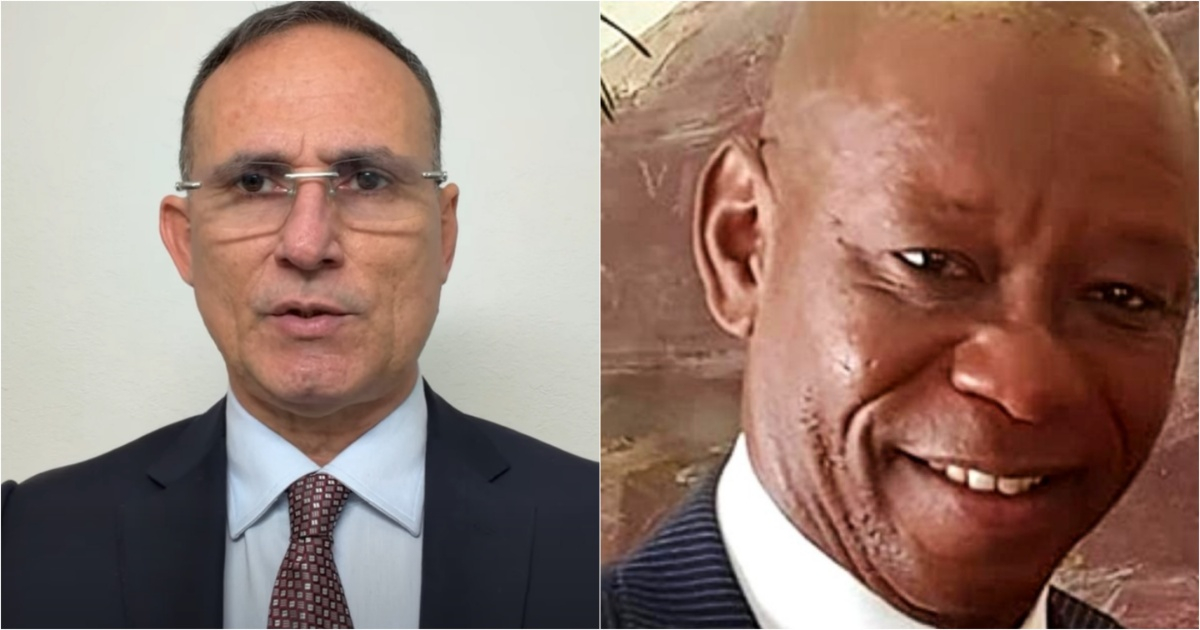
Cuban opposition leader José Daniel Ferrer has publicly responded to fellow dissident Manuel Cuesta Morúa regarding the pressure exerted by the Trump Administration on the Cuban government.
Ferrer, in a commentary on CiberCuba, refuted Cuesta Morúa's claims that the U.S.'s maximum pressure policy is suffocating Cuba, stating, "The U.S.'s strategy targets the regime, not the nation. When Obama pursued engagement, repression escalated like never before."
He argued, "The repression intensifies as activism against the regime grows, and maximum pressure remains the only effective measure to curb the government’s oppressive actions, as witnessed on July 11, 2021."
According to Ferrer, "The regime acts with more brutality when it believes there are no repercussions. However, if the U.S. shows serious intent and correlates increased repression with harsher penalties, the government will be restrained." He believes that if European and Canadian allies also adopted a maximum pressure approach, it would expedite this containment. "The U.S. must persist with its current policy—it stands in solidarity with the Cuban people and democratic opposition," Ferrer concluded.
Ferrer’s remarks counter an interview where Cuesta Morúa identifies the crisis's root: a political system incapable of managing the country, responding with greater control instead of opening spaces.
In an EFE interview, the newly elected president of the Council for the Democratic Transition in Cuba (CDTC) stated, "90% of this nation desires change," citing this majority as a foundation for a sovereign, internal democratic transition.
Cuesta Morúa depicts a nation ensnared in a "geopolitical trap" of its own making, with a government unwilling to negotiate with Cubans or the international community. He urges Washington to support and respect Cuban sovereignty in any negotiation process.
"Should a negotiation table open among Cubans, the U.S. should support and facilitate it to ensure the process succeeds," he suggested. He cautioned against relying on external actors for transition, referencing Venezuela's experience as a warning.
One contentious point in Cuesta Morúa's analysis is the strategy of cutting off oil and fuel supplies, which worsens blackouts and economic stagnation in a country importing two-thirds of its energy.
He asserts that such tactics don't advance democracy, warning, "Provoking unrest only strengthens the state's repressive machinery," and could lead to a "worse humanitarian situation" than the current general collapse.
Cuesta Morúa also dismisses military intervention as a solution, emphasizing that it wouldn't address "the substantial demands of Cubans for democratization."
Instead, he proposes a "humanitarian solution" integrating political and diplomatic pressure with clear objectives: freeing political prisoners, initiating negotiations with Cubans, and opening the economy.
Key Insights on U.S. Pressure Policy and Cuban Crisis
How does José Daniel Ferrer view the U.S.'s maximum pressure policy on Cuba?
Ferrer believes that the U.S.'s maximum pressure policy targets the Cuban regime rather than the nation itself, aiming to curb government oppression and support democratic opposition.
What is Manuel Cuesta Morúa's stance on foreign involvement in Cuba's transition?
Cuesta Morúa advocates for a transition led by Cubans themselves, urging foreign entities to support but not impose solutions, highlighting the need for sovereignty and internal negotiation.
What are the potential consequences of the U.S. cutting off Cuba's fuel supplies?
Cuesta Morúa warns that reducing fuel supplies exacerbates blackouts and economic stagnation without advancing democracy, potentially worsening the humanitarian situation.