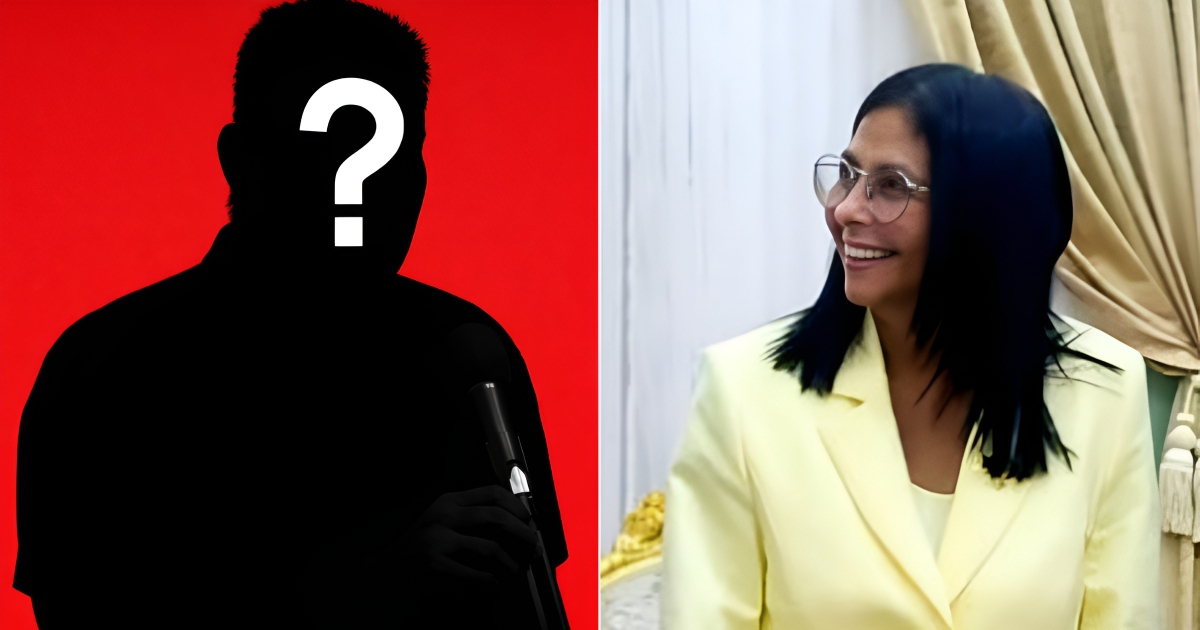
On January 3, 2026, when Nicolás Maduro fell into the hands of the United States, Venezuela didn't experience a power vacuum but rather an internally orchestrated transformation. The person who rose to fill the gap was Delcy Rodríguez: not as a charismatic leader or legitimate president, but as an orchestrator of the regime's collapse, a manager of the aftermath, and a functional piece for Washington.
This Venezuelan precedent now serves as a mirror for Cuba. The critical question isn't who will be the next president of the island, but who can assume the role Delcy played for Chavismo: ensuring internal continuity, executing external concessions, and averting a complete system collapse.
The Anatomy of Power: Delcy Rodríguez
Delcy Rodríguez's ascent wasn't without its shadows. Subsequent reports, including testimonies from former U.S. officials, suggest that the Rodríguez siblings actively collaborated with Washington in Maduro's downfall, believing his era was over and seeking to preserve their power from within.
According to this narrative, Delcy underestimated a crucial element: the lack of legitimacy the U.S. attributed not only to Maduro but to the entire Chavista core. Far from becoming an accepted heir, her role was to manage the regime's dismantling, hand over strategic assets, and meet demands under the threat of sharing Maduro's fate.
In this light, rather than acting as a transitional president, Delcy was the architect of the collapse, a tolerated figure as long as she executed the externally imposed agenda. Her swearing-in as interim president on January 5, 2026, before a delegitimized Chavista Assembly, was symbolic, emphasizing that power remained within the circle. Soon after, she engaged directly with Washington, a move confirmed by high-level meetings and public warnings from figures like Marco Rubio.
Cuba Faces a Similar Dilemma
In Havana, though the context differs, the tensions are comparable. The economic crisis, energy collapse, loss of Venezuelan support, and direct pressure from the Donald Trump administration have placed the Cuban regime at a crossroads.
The historical leadership is exhausted, Miguel Díaz-Canel lacks legitimacy, and real power remains concentrated in opaque structures like GAESA and the elites managing the Castro's financial and business networks. In this scenario, Cuba will need its own "Delcy": someone capable of dialoguing with the United States, offering economic concessions, maintaining internal control, and ensuring the system doesn't collapse uncontrollably.
The name most frequently mentioned is Óscar Pérez-Oliva Fraga.
Óscar Pérez-Oliva Fraga: A Fitting Profile
Unlike the visible leaders of Castroism, Pérez-Oliva Fraga is largely unknown to the public. He has no social media presence, doesn't deliver ideological speeches, and his career has unfolded far from revolutionary epics. This invisibility is part of his strength.
An electronic engineer aged 54, he is the great-nephew of Fidel and Raúl Castro, son of Mirsa Fraga Castro, and grandson of Ángela Castro. This family connection ensures internal trust, but his career has been built not in repression or propaganda, but in managing enterprises within the regime's so-called "dollarized economy."
Having worked with Maquimport, Mariel projects, and currently holding strategic roles as Deputy Prime Minister and Minister of Foreign Trade and Foreign Investment, Pérez-Oliva Fraga maintains direct contact with GAESA, the military-business conglomerate controlling foreign exchange, tourism, ports, and foreign investment. In Cuba, this control is more valuable than any political speech.
Not a Leader, But an Administrator
Analysts agree on one point: Pérez-Oliva Fraga is not a Fidel, nor does he aspire to be. He lacks charisma, doesn't mobilize masses, and doesn't embody an epic narrative. Precisely because of this, he fits the mold of the "Cuban Delcy."
His technocratic profile makes him acceptable to external actors; his surname makes him trustworthy to the elite; his economic role places him at the center of any real negotiation. He wouldn't be the face of democratization, but the manager of minimal concessions aimed at buying time and breathing space.
The Venezuelan experience shows that Washington isn't looking for charismatic leaders or recycled revolutionaries, but useful interlocutors. Delcy Rodríguez was effective because she delivered, opened up, and executed. Cuba, sooner or later, will have to offer something similar.
The Invisible Power
The comparison also serves as a warning. In Venezuela, Delcy could only operate because she had military backing and controlled, directly or indirectly, strategic economic flows. In Cuba, that core lies in GAESA. Thus, beyond names, the real question is which structure will support the "Cuban Delcy."
If Castroism opts for a negotiated exit, it won't be with an ideologue or visible oppressor, but with someone capable of speaking the language of commerce, investment, and stability. Pérez-Oliva Fraga fits this pattern better than any other name currently circulating in Havana.
Are there other potential "Delcys" in Cuba? While Óscar Pérez-Oliva Fraga appears to fit the Venezuelan model most closely, he isn't the only name considered in analyses. Figures like Carlos Fernández de Cossío, a deputy foreign minister specializing in U.S. relations, or Johana Tablada de la Torre, a diplomat skilled in rhetoric toward Washington, could join the ranks given their international visibility and proven cunning.
However, their level of control over the economic and security levers that would define a real negotiation remains uncertain. Other actors, such as Gerardo Hernández, leading the Committees for the Defense of the Revolution, concentrate internal power in social control but aren't credible external interlocutors. The regime knows their supposed "popular legitimacy" is nothing more than a crude propaganda operation.
In the government sphere, Inés María Chapman Waugh, Deputy Prime Minister, holds rank and access to the executive core, though her power depends more on institutional coordination than structural control.
Finally, there's a factor rarely mentioned publicly: the leadership of GAESA, the military-business conglomerate controlling the country's foreign exchange and strategic sectors. Although Brigadier General Ania Guillermina Lastres Morera lacks a visible political profile, that's where the real power resides. Any viable "Cuban Delcy" would need, at a minimum, the endorsement—or direct oversight—of that structure.
A Transition Without the People
As happened in Venezuela, any reconfiguration in Cuba will occur without direct voting or citizen involvement. It will be a top-down decision, guided by loyalties, fears, and survival calculations. Once again, the Cuban people will be sidelined.
Therefore, the question isn't if there will be a "Delcy Rodríguez" in Cuba, but when and under what conditions. All signs indicate that the regime is already laying the groundwork. And when the time comes, they won't seek a leader to inspire but an operator to negotiate.
Understanding Cuba's Future Political Landscape
Who is Óscar Pérez-Oliva Fraga?
Óscar Pérez-Oliva Fraga is a Cuban electronic engineer and politician, great-nephew of Fidel and Raúl Castro. He serves as Deputy Prime Minister and Minister of Foreign Trade and Foreign Investment, and is seen as a potential key figure for future negotiations with the United States.
What is GAESA's role in Cuba?
GAESA is a military-business conglomerate in Cuba that controls significant portions of the country's economy, including foreign exchange, tourism, ports, and foreign investment. It is a central power structure in Cuba, crucial for anyone seeking to negotiate or manage internal economic policies.
Why is a "Delcy Rodríguez" figure important for Cuba?
A "Delcy Rodríguez" figure is essential for Cuba as it represents an operator who can manage internal continuity, execute necessary negotiations with external parties like the United States, and prevent a total collapse of the system. This role is crucial in navigating potential transitions while maintaining the regime's control.