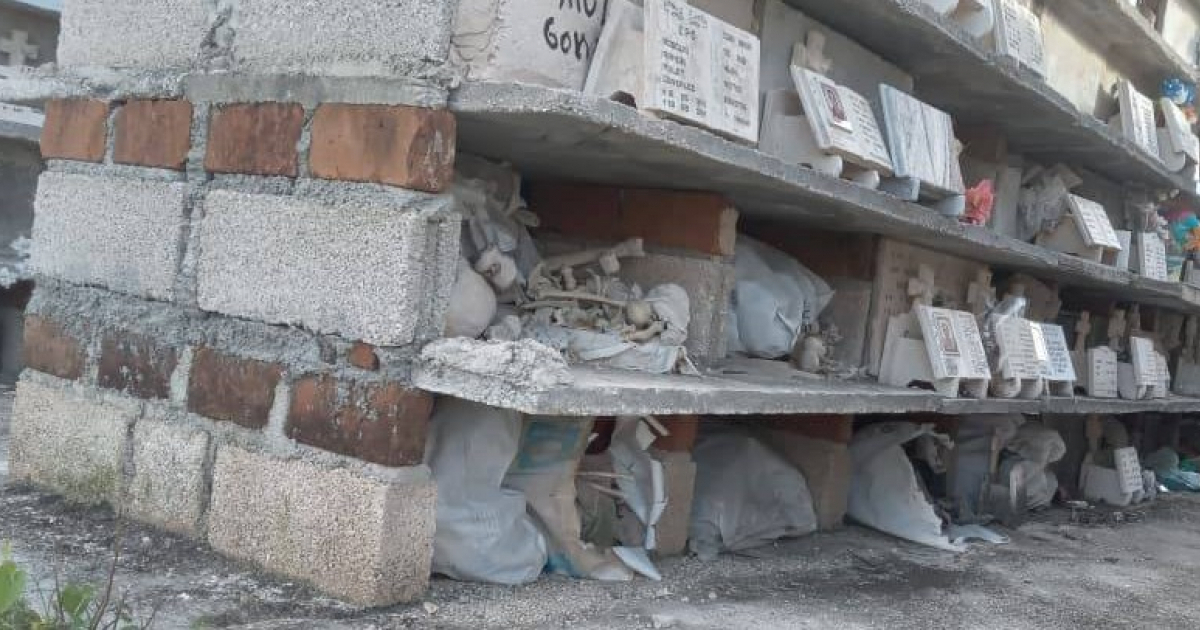
The municipal cemetery of Mayabe has transformed from a place of solace and reverence into a scene marked by neglect and disrespect.
Radio Holguín la Nueva reported on Facebook that what should be "a sacred space for mourning" has become an area of "desecration, abandonment, and desolation," violating the dignity of the deceased and exacerbating the grief of their families.
Images released show broken tombs with exposed skeletal remains, shattered coffins, and neglected ossuaries.
These grim conditions are not accidental; they are the visible outcome of years of government neglect and the collapse of necrological services.
The situation in Mayabe reflects a broader crisis that extends beyond mere infrastructure issues.
In a nation beset by severe material shortages—including food, transportation, and electricity—the social decay even reaches spaces meant to honor the dead.
When the government fails to provide basic necessities in life, it also falters in ensuring dignity after death. This results in a profound loss of ethical standards: indifference becomes normalized, and desecration becomes routine.
The blame does not lie with families unable to guard graves from afar or with limited resources; it falls on a government incapable of maintaining essential services and safeguarding spaces meant to be inviolable.
Radio Holguín la Nueva clearly depicted the scene: the cemetery "has ceased to be a place of rest and remembrance."
The photographs corroborate the severity of the situation: open mausoleums, demolished vaults, and remains displaced from their niches. This is not just neglect due to lack of maintenance; there is evidence of looting.
Throughout many cemeteries in the country, there have been reports of bone theft for sale for witchcraft purposes and the illegal commercialization of burial plots. The desecration of graves to extract remains has become a frequent practice.
The tragedy in Mayabe is not an isolated incident.
At the General Cemetery in Camagüey, open graves, destroyed vaults, stagnant water, overgrown weeds, and such severe deterioration have been documented that some mausoleums are topless and filled with debris.
In Las Tunas, at the Vicente García Cemetery, families have discovered scattered remains on the ground and stolen burial urns.
In Colón, Matanzas, the San Rafael cemetery shows open ossuaries, exposed bones, devastated chapels, and an unsanitary environment, as reported last July by Periódico Girón, which published images and testimonies from outraged workers and residents.
This pattern is repeated in other provinces: forced niches, missing remains, theft of funeral objects, and even body parts. The human and cultural consequences are devastating.
The continuity of memory is shattered, families' identities—many with emigrated relatives who cannot monitor graves from afar—are violated, and disrespect becomes normalized.
Cemeteries, envisioned as sacred spaces where generations pay homage, have turned into sites of neglect, theft, and desecration.
What is happening in Mayabe is, therefore, symptomatic of a state that fails to care for both the living and the dead.
The economic and service crisis does not fully explain the extent of the damage: it is worsened by the absence of effective policies, oversight, maintenance, and a public ethic that sets boundaries.
Until the government takes responsibility for ensuring necrological services and the protection of cemeteries, desecration will continue to escalate, and the anguish of families will keep intensifying.
Understanding the Crisis in Cuban Cemeteries
What are the main issues faced by the cemetery in Mayabe?
The cemetery in Mayabe faces severe neglect, desecration, and looting, resulting from government neglect and the collapse of necrological services. This has led to open graves, exposed remains, and rampant theft.
How does the situation in Mayabe reflect broader issues in Cuba?
The crisis in Mayabe is indicative of a larger issue in Cuba, where material shortages and government failures have led to widespread social decay, affecting even spaces meant to honor the deceased.
What are the consequences of cemetery neglect in Cuba?
Neglected cemeteries result in the loss of ethical standards, normalized indifference, and routine desecration, shattering family identities and disrupting the continuity of cultural memory.