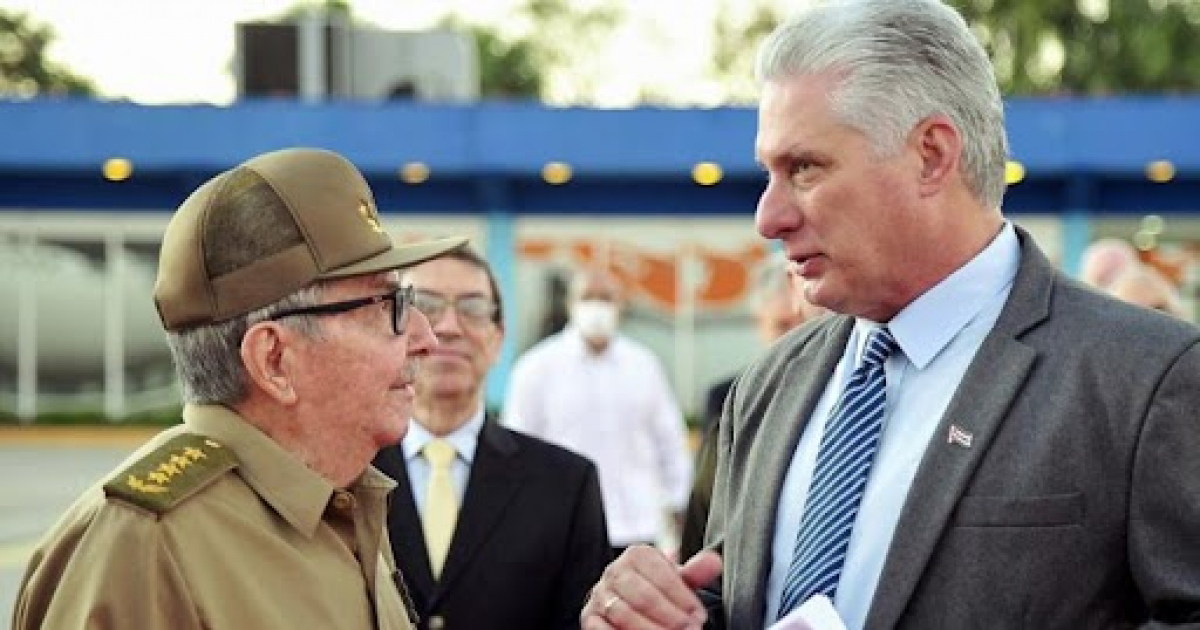
Journalist and author Gina Montaner recently penned a column in El Mundo, arguing that totalitarian regimes are devoid of creativity because they adhere strictly to dogma and never deviate from the script. She uses this concept to analyze the latest public appearance of Cuban leader Miguel Díaz-Canel, amidst rumors of high-level contacts between Washington and Havana.
In her commentary, Montaner observes that interest in Díaz-Canel surged following days when President Donald Trump and Secretary of State Marco Rubio hinted that the "roadmap" with Cuba might mirror that of Venezuela, focusing on the "strangulation" of the Cuban system, particularly through the blockade on fuel imports.
The columnist suggests that these hints, read "between the lines," spark speculation about a potential transition and the search for a "Cuban counterpart" to figures in the Venezuelan framework.
According to the article, Díaz-Canel expressed willingness for dialogue with the United States, but without "pressures," "preconditions," or compromising "our sovereignty."
Montaner interprets these statements as a reinforcement of the Castro regime's "resistance manual" and an announcement of a "contingency plan" focused on defending the model.
A Return to the Special Period
The column paints the current situation as a "déjà vu," reminiscent of the Special Period in the 1990s when the fall of the Soviet Union left the island without subsidies, leading to widespread hunger and deterioration.
The author argues that the current intensification of U.S. pressure and fuel shortages once again place Cubans in a vulnerable position, facing blackouts, food scarcity, and a humanitarian crisis that she describes as "not a figment of imagination."
Montaner also critiques the official call for "creative resistance," portraying it as an exhortation for the populace to "make do" in the face of hunger and lack of services, delivered by a leadership she sees as "lacking imagination"—contrasted with the progress of "free societies."
Within this context, she highlights the role of the Church and political intermediaries as channels that, she asserts, go beyond the public statements of Havana and Washington.
Gina Montaner is a journalist and writer, and the daughter of the late Carlos Alberto Montaner. She has written extensively on topics of freedom, politics, and personal experiences.
Understanding U.S.-Cuba Relations and Its Implications
What are the main challenges facing Cuba due to U.S. policies?
Cuba faces significant challenges due to U.S. policies, including economic pressure from trade embargoes and fuel shortages, which contribute to humanitarian crises and impact daily life on the island.
How does Gina Montaner view the Cuban government's approach to current challenges?
Gina Montaner criticizes the Cuban government's approach as lacking creativity, arguing that their calls for "creative resistance" are insufficient and highlight a failure to innovate in addressing the country's issues.