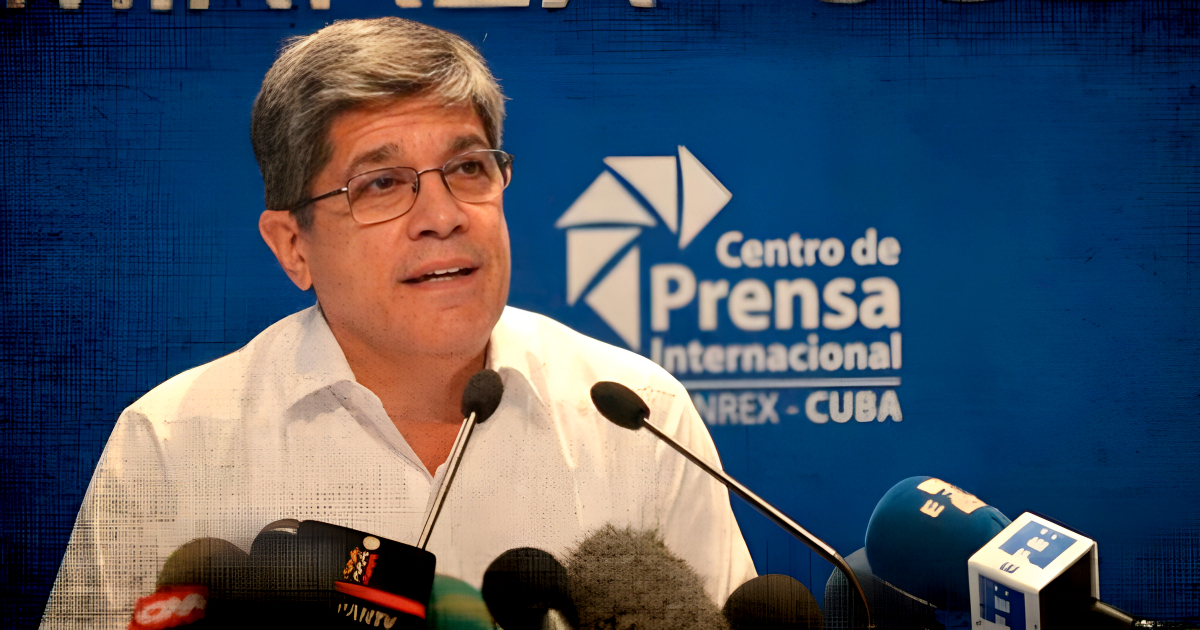
On Tuesday, Havana dismissed the notion of setting up a negotiation table with the United States, despite acknowledging an exchange of messages since the capture of former Venezuelan president Nicolás Maduro on January 3. This event has significantly altered the political landscape across the continent.
In an interview with EFE, Cuba's Deputy Foreign Minister, Carlos Fernández de Cossío, stated that "it would be incorrect to say a bilateral negotiation is being crafted," emphasizing that "such dialogue has not commenced."
He clarified, "The U.S. government is well aware of Cuba's stance on engaging in talks, and they have not rejected it." This assertion contrasts sharply with recent comments from U.S. President Donald Trump, who claimed his administration is involved in "high-level negotiations" with Cuban leaders.
Fernández de Cossío also dismissed any indirect contacts through intermediaries such as Mexico or the Vatican, reiterating the regime's boundaries: there will be no discussions on political or economic reforms, nor on the release of political prisoners—issues that are integral to Venezuela's ongoing transition process.
"Cuba faces the same limitations that Washington would encounter when discussing its Constitution or migrant raids in Minneapolis," the official remarked, rejecting any external conditions.
However, the deputy foreign minister acknowledged the country is in a critical state and hinted at the imminent launch of a contingency plan. "We have limited options and a need for reorganization that will demand significant effort, creativity, and sacrifice. This will be a challenging reorganization process for the population," he warned.
This statement comes amid a near-total energy blockade and new sanctions from Washington, which has labeled the Cuban regime an "unusual and extraordinary threat" to U.S. national security.
Havana's Firm Stance Against Washington
Fernández de Cossío's comments are part of the Cuban regime's recent strategy, following his confirmation that there will not be a dialogue with the United States involving political or economic reforms.
In a Monday interview with The Associated Press, he made it clear that the Cuban leadership will not negotiate its Constitution, economic system, or socialist model, considering these "non-negotiable internal matters."
The deputy minister explained that Havana's openness to dialogue is confined to technical or cooperative topics, such as security, migration, or drug trafficking, but not to structural changes of the system. "We are open to dialogue, but not to negotiations over our political system," he asserted.
By maintaining these limits, the Cuban regime aims to safeguard the constitutional pillars that ensure its grip on power: the irreversibility of socialism (article 4), the dominant role of the Party (article 5), and the prohibition of altering this political order (article 229).
This stance conflicts with Washington's vision under the Donroe Doctrine, championed by President Trump and Secretary of State Marco Rubio, advocating democratic transitions for authoritarian regimes in the hemisphere.
Havana's refusal to discuss its Constitution or political model is seen in the U.S. as explicit resistance to change, at a time when the White House has made it clear that stability cannot be achieved without systemic transformation.
Key Questions on Cuba's Political Stance and U.S. Relations
What is Cuba's current position on negotiating with the United States?
Cuba is open to dialogue on technical or cooperative issues but refuses to negotiate on political or economic reforms or the release of political prisoners.
How has the U.S. responded to Cuba's stance on negotiations?
The U.S. administration claims to be engaged in high-level negotiations with Cuba, though this is disputed by Cuban officials.
What are the implications of Cuba's refusal to discuss its political system?
Cuba's refusal is seen as resistance to change, which contradicts the U.S. vision of democratic transitions in authoritarian regimes, potentially leading to continued tensions.