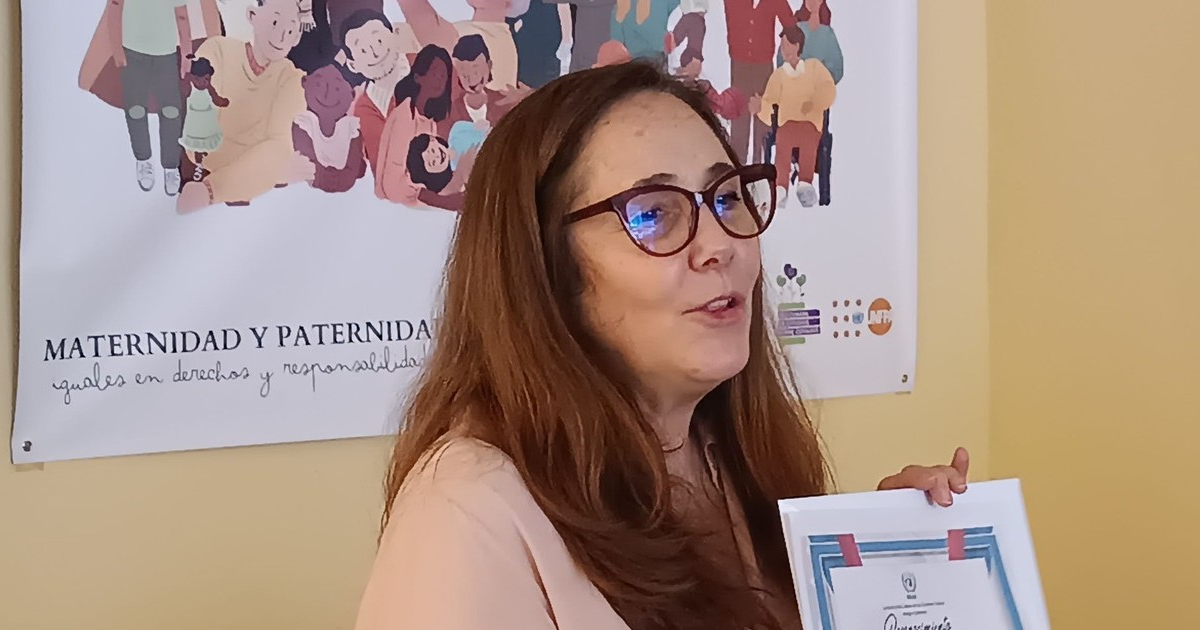
Mariela Castro, head of the National Center for Sexual Education (CENESEX) and a prominent political figure closely tied to Cuba's government, recently declared in an interview that "there is no room for negotiation" with the United States, echoing a long-standing slogan of the Castro regime.
The daughter of General Raúl Castro, she reiterated the persistent confrontational stance that has characterized relations between Havana and Washington for over sixty years.
During her conversation with Resumen Latinoamericano, Castro elaborated on how the Cuban government continues to employ a "defense strategy" rooted in the so-called "doctrine of the people's war."
She mentioned that this strategy involves mobilizing the entire populace to be prepared for various forms of aggression, with a focus on countering the U.S. military's use of new technologies. Cuba, she stressed, is not an aggressor but is preparing to defend itself while also supporting other nations in their defensive efforts.
Her remarks reflect the siege mentality the regime has long used to justify the militarization of society, political control, and the suppression of civil liberties, even as the country confronts an unparalleled economic, social, and migratory crisis.
Mariela insisted that, following Fidel Castro's ideological path, "principles are non-negotiable," and that with what she refers to as "imperialism and all its facets," there is no room for negotiation, only dialogue.
For her, the sovereignty of the people is an unyielding concept, which in practice has served as a pretext to shut down any real avenues for understanding that might involve internal reforms or political changes in Cuba.
In her statements, she also criticized the current U.S. president, accusing him of seeking to seize resources like Venezuelan oil.
Regarding Cuba, she claimed that Washington's primary interest is to "dismantle the example" of a country that has, according to her, resisted the "empire" for 67 years.
"They have done everything, as Trump himself said, yet they have failed to destroy this revolution. While facing more aggression, the unity and defensive capabilities of our people grow stronger," she declared.
Castro reiterated another familiar official slogan: that external pressures only serve to strengthen the unity and defensive readiness of the Cuban populace.
However, this narrative overlooks the fact that the supposed "unity" is maintained through the repression of dissent, the absence of free elections, and the absolute control of power by a political and military elite that has ruled unaccountably for decades.
Her intervention not only underscores the rigid continuity of Castroist thought but also highlights the disconnect between official discourse and the everyday reality of Cubans, who are currently facing shortages, blackouts, inflation, massive emigration, and the collapse of public services.
While millions of citizens seek practical solutions to their daily crises, those in power continue to cling to ideological slogans that fail to offer concrete answers to the country's problems.
Statements Aligned with the Ministry of Foreign Affairs
Mariela's statements align with those of Deputy Foreign Minister Carlos Fernández de Cossío, who stated that the Cuban government is not currently engaged in dialogue with the United States, although it is open to one if certain conditions are met.
These remarks were made on Monday to the Associated Press amid escalating tensions between the two countries, and President Donald Trump's assertion of nearing an agreement with the Cuban regime.
Fernández de Cossío clarified that there is no "dialogue table" with Washington at the moment and that there is no talk of a formal negotiation.
"We are open to dialogue. If we can have a dialogue, that might lead to a negotiation," he noted.
The diplomat stated that Cuba is ready to engage in "informal dialogue" aiming for respectful and serious coexistence, despite the differences between the two governments.
However, he emphasized that certain issues, such as the Constitution, the economy, and the socialist system, are not up for discussion in Havana.
"But there are many other topics we can address," he added.
Trump's Perspective
The deputy foreign minister's comments came just days after the U.S. leader mentioned that his administration had begun conversations with Cuban leaders, following threats to impose tariffs on countries supplying oil to the Island.
Trump labeled Cuba as a "failed state" and asserted that the country "no longer receives money from Venezuela or anywhere else."
"I want to take care of the people who came from Cuba, those who fled in rafts across shark-infested waters. Many would like to return, at least to visit their families. And I think we are very close to achieving that. We are dealing directly with Cuba's leaders right now," he added.
His comments confirm active contacts with Havana, although the White House has not disclosed details about the possible content or terms of the negotiations.
Trump had previously expressed his willingness to reach a "deal with Cuba" that benefits both the Cuban population and Americans, but emphasized that any rapprochement would be undertaken "from a position of strength."
"Cuba is a nation in crisis, without oil or money. We want to help the Cuban people, not the regime," he stated.
Key Questions on U.S.-Cuba Relations
What is Mariela Castro's stance on negotiations with the U.S.?
Mariela Castro maintains that there is no possibility of negotiation with the United States, adhering to the long-standing confrontational rhetoric of the Cuban regime.
What strategy does the Cuban government employ against U.S. aggression?
The Cuban government uses a "defense strategy" based on the "doctrine of the people's war," preparing the entire populace for various forms of aggression, especially against the use of new technologies by the U.S. military.
What does Carlos Fernández de Cossío say about current dialogues with the U.S.?
Carlos Fernández de Cossío stated that there is no formal dialogue with the U.S. at present, though Cuba is open to informal discussions to achieve a respectful coexistence.