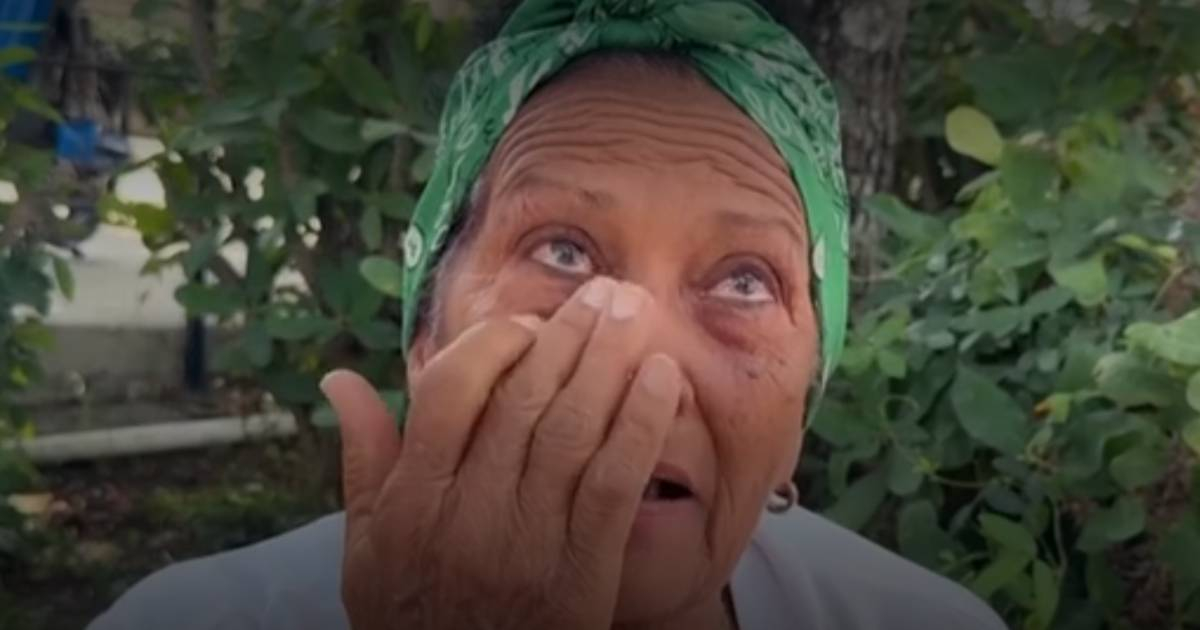
A Cuban woman, her voice trembling and tears in her eyes, encapsulated the desperation felt by countless families on the island with her poignant words: "I don't want to be rich, but I don't want to die of hunger." Her testimony, featured by CNN, humanizes an energy crisis that has moved beyond technical issues, severely impacting daily survival.
Speaking from a nation where power outages last up to 15 hours a day, domestic gas is nonexistent, and cooking has become a daunting challenge, she asked for nothing extravagant—just the essentials. Her plea is simply to eat, to live with basic dignity, and not to rely on "a miracle" for improvement, as she herself put it.
The energy collapse has worsened following the U.S. decision to definitively halt oil shipments from Venezuela to Cuba. After Donald Trump authorized intervention in Venezuelan territory and the capture of Nicolás Maduro, the U.S. president declared there would be no more crude oil sent to the island from Caracas, a key supplier for the Cuban regime over the years.
The repercussions are palpable on the streets. The scarcity of fuel has brought public transportation to a standstill, further limiting mobility and increasing the cost of travel in private cars, which are out of reach for most Cubans. "There are no buses," shared another island resident interviewed by CNN, while a young woman starkly summed up the situation: "No salary can last the month."
According to international media reports, Cuba requires about 110,000 barrels of oil daily but can only produce a fraction of that. The rest depends on external supplies that are now in jeopardy. Recent estimates suggest that current reserves would suffice for just a few weeks, foreshadowing longer blackouts and further deterioration of daily life.
Washington has toughened its stance. A new executive order signed by Trump threatens additional sanctions on countries supplying oil to Cuba, citing the Havana regime as a threat to U.S. national security and foreign policy. Energy supply has thus become a central point of political leverage.
Cuban leader Miguel Díaz-Canel accused the U.S. of trying to "strangle" the Cuban economy, dismissing the measures as baseless. His foreign minister, Bruno Rodríguez Parrilla, described it as blackmail, calling it a new escalation of the blockade. Meanwhile, official rhetoric clashes with the harsh reality faced by households enduring hours without electricity, gas, and adequate food.
Amidst these tensions, Mexico announced it would send humanitarian aid with food and basic supplies, expressing a commitment to maintain the supply for humanitarian reasons. However, for many Cubans, this assistance does little to alleviate the pervasive sense of neglect.
Understanding Cuba's Energy Dilemma
What are the primary causes of Cuba's energy crisis?
The energy crisis in Cuba is primarily caused by the cessation of oil shipments from Venezuela, a major supplier, following U.S. sanctions. This, combined with the country's limited domestic production, exacerbates the situation.
How has the U.S. influenced the energy situation in Cuba?
The U.S. has influenced Cuba's energy situation by imposing sanctions and halting oil shipments from Venezuela, which has been a crucial supplier to the island. This has intensified the energy crisis and is part of a broader strategy to apply political pressure on the Cuban government.