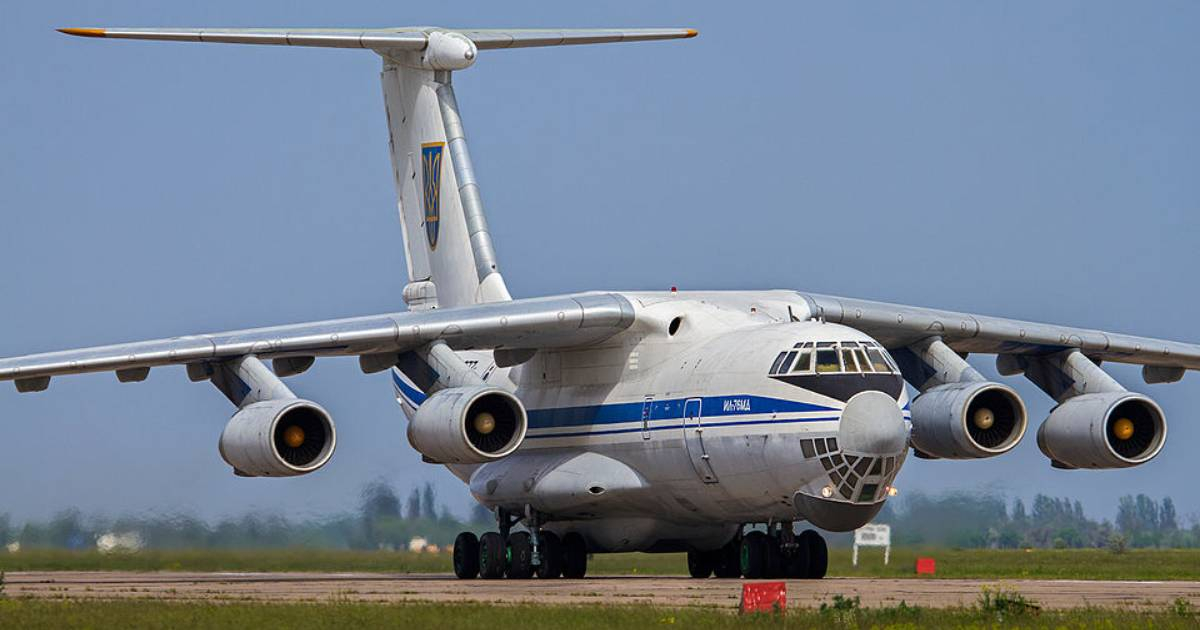
A Russian cargo aircraft, currently under U.S. sanctions, has recently touched down at a Cuban military base, reigniting concerns in Washington amidst a particularly sensitive period for Havana.
The flight, involving an Ilyushin Il-76 linked to the Kremlin's military apparatus, followed a pattern that U.S. analysts associate with movements preceding the capture of Nicolás Maduro in Venezuela, according to Fox News reports.
Operated by Russia's state-run airline Aviacon Zitotrans, which is on the sanction lists of the U.S., Canada, and Ukraine, the aircraft was detected at the San Antonio de los Baños military airfield in Artemisa province, roughly 30 kilometers south of Havana. This aircraft is typically used for transporting heavy military equipment and personnel, with a capacity to carry up to 50 tons of cargo.
Flight records reveal that the plane made stops in Russian cities such as St. Petersburg and Sochi, as well as in Mauritania and the Dominican Republic. This detail has raised questions about the willingness of various governments to permit the transit of a sanctioned aircraft. Experts note that each authorization reflects a political decision amidst Western restrictions on Moscow.
This incident does not go unnoticed given the immediate precedent. The same aircraft was seen flying over Venezuela, Nicaragua, and Cuba in late October 2025, coinciding with rising tensions between Washington and Caracas. Shortly thereafter, the U.S. conducted the operation that led to Nicolás Maduro's capture, a significant regional shift that left Cuba without its primary political and energy ally.
Currently, the Russian cargo plane's landing occurs as President Donald Trump intensifies pressure on Miguel Díaz-Canel's government. Recently, the White House declared a national emergency concerning Cuba, labeling the regime an "unusual and extraordinary threat" to U.S. national security. Trump also announced sanctions against any country supplying oil to the island without Washington's approval.
Military ties between Russia and Cuba, although not as intense as during the Cold War, have once again become a concern for the United States. Over the past decade, Moscow has revived defense and intelligence cooperation with the island, an action that Washington views as a strategic risk close to its mainland.
The exact contents of the Il-76's recent flight remain shrouded in mystery. During prior operations in Venezuela, Russian media identified the same aircraft as responsible for transporting advanced air defense systems. In the current context, this silence fuels suspicions and fears, both outside and within the island, where many Cubans anxiously observe each new military movement that could further exacerbate the country's already dire situation.
Implications of Russian Military Presence in Cuba
Why is the landing of a Russian cargo plane in Cuba significant?
The landing is significant due to the aircraft's connection to Russia's military and its presence in a country close to the United States. It raises concerns about potential military cooperation between Russia and Cuba, amidst existing geopolitical tensions.
What are the potential political implications of this event?
The event may exacerbate tensions between the U.S. and Cuba, as well as influence relations between Russia and the U.S. It highlights the geopolitical chess game in the region and may affect international sanctions and diplomatic strategies.
What might the plane have been transporting?
While the exact cargo is unknown, the aircraft has previously been linked to transporting advanced military equipment, such as air defense systems, raising concerns about similar cargo in the current situation.