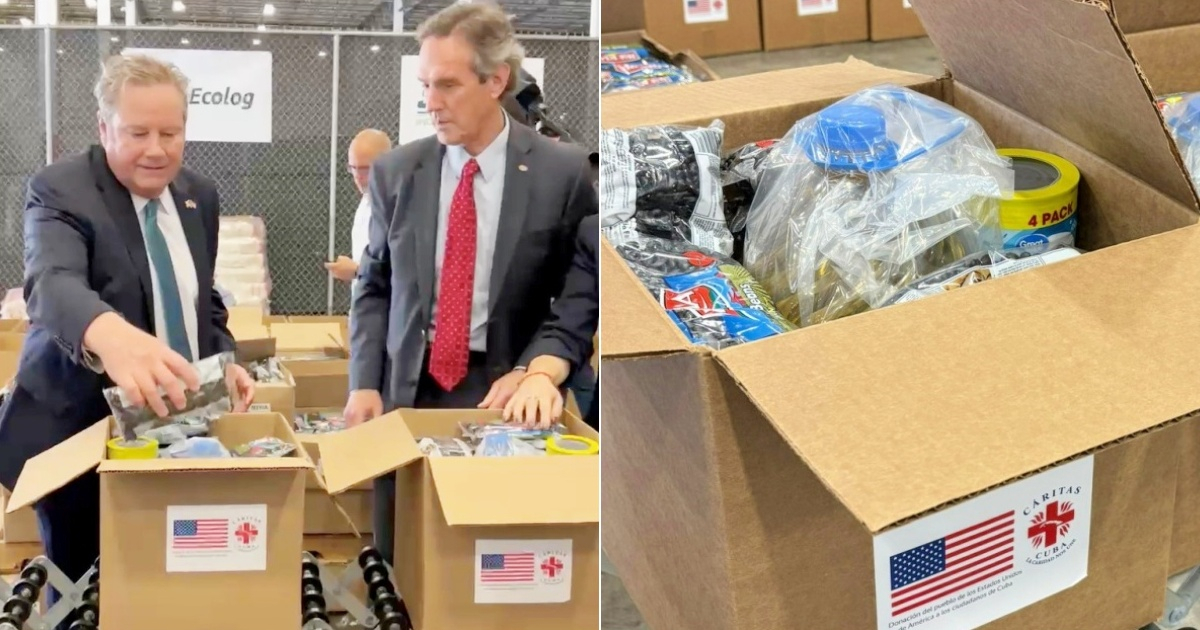
"This is a humanitarian crisis spawned by the incompetence and repression of the Cuban regime," stated Jeremy P. Lewin, the Acting Deputy Secretary of State for Foreign Assistance, Humanitarian, and Religious Freedom Affairs, during a State Department briefing on January 15. His remarks painted a stark picture of the current conditions on the island.
Lewin announced the commencement of humanitarian aid directly to the Cuban people, valued at three million dollars. This initiative follows the devastation caused by Hurricane Melissa and aligns with the commitment made by President Donald Trump's administration.
The aid is being delivered through the Catholic Church and Caritas Cuba to ensure it bypasses the Cuban government entirely. "We are grateful to the Church and Caritas Cuba for taking this risk. The regime has previously obstructed aid distribution, but we hope this time it reaches those in dire need," Lewin emphasized.
He further asserted, "The hurricane represents just a fraction of a much larger humanitarian crisis, which the regime's incompetence and repression have precipitated."
Reaffirming Washington's dedication to the Cuban populace rather than its government, Lewin warned, "If the regime interferes, steals, or diverts these supplies, they will have to answer to their own people and to us."
The Trump administration is keen on creating a "new path" for direct assistance that bypasses the Cuban state apparatus. The continuation of aid will hinge on the regime's actions. "If this succeeds, we can increase the assistance. None of this government's aid will benefit the Cuban regime, neither directly nor indirectly," Lewin insisted.
When questioned about the cessation of Venezuelan oil shipments to Cuba following Nicolás Maduro's capture by U.S. forces, Lewin dismissed suggestions of a contradiction between that measure and the humanitarian aid. "Venezuelan oil did not benefit the Cuban people. It was an illegitimate payment from Maduro's regime to their protectors in Havana," he clarified.
Lewin argued that the Cuban humanitarian crisis "has nothing to do with sanctions or a lack of oil, but rather a failed political and economic system that's persisted for six decades."
The initial aid shipment reached Holguín via charter flights organized by a State Department contractor. Subsequent deliveries will be made by sea to various provinces. These packages include essential food items like rice, beans, pasta, and canned goods, which Caritas Cuba will distribute directly.
"There's nothing political about cans of tuna or bags of rice," Lewin responded to Cuban Foreign Minister Bruno Rodríguez's accusations that the aid was an "opportunistic gesture" amid the national crisis. Lewin countered, "The only ones politicizing this are those within the regime, who cannot admit their inability to provide for their own people."
Key Insights on Cuba's Humanitarian Crisis
What is the cause of the humanitarian crisis in Cuba, according to the U.S.?
The U.S. attributes the humanitarian crisis in Cuba to the incompetence and repression of the Cuban regime, rather than external factors such as sanctions or oil shortages.
How is the U.S. delivering humanitarian aid to Cuba?
The U.S. is channeling aid through the Catholic Church and Caritas Cuba to ensure it bypasses the Cuban government and directly benefits the Cuban people.
What does the U.S. hope to achieve with its aid strategy?
The U.S. aims to establish a new direct assistance path that circumvents the Cuban state, with the hope of increasing aid if the regime does not interfere.