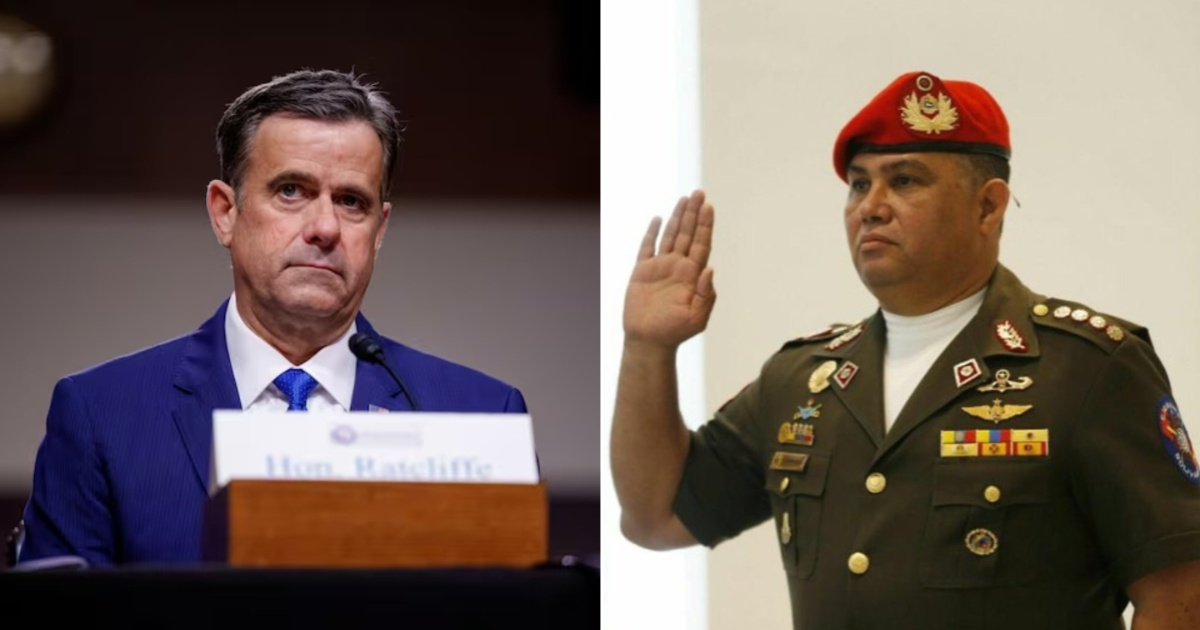
John Ratcliffe, the director of the Central Intelligence Agency (CIA), recently traveled to Caracas for discussions with Venezuela's acting president, Delcy Rodríguez, and Gustavo González López, head of the Presidential Honor Guard and director of the General Directorate of Military Counterintelligence (DGCIM), according to U.S. government sources cited by CNN.
An official, speaking on the condition of anonymity, revealed that Ratcliffe explored potential economic cooperation and emphasized that Venezuela “can no longer serve as a safe haven for U.S. adversaries, particularly drug traffickers.”
The meeting aimed to build trust and indicates Ratcliffe's intention for the CIA to adopt a “more proactive” role in the region.
This visit occurs as President Donald Trump has “asserted his control over Venezuela” following the capture of Nicolás Maduro earlier in January.
Since then, Washington has “taken over the transition process” and assumed control of the country's oil production, the report states.
This meeting signals a strategic shift following Maduro's capture and the restructuring of intelligence services.
The traditional sway of Cuban intelligence in Caracas is being replaced by the direct presence of the CIA on Venezuelan soil.
For more than twenty years, the involvement of Cuban advisors in intelligence, counterintelligence, training, and social control has been documented by international bodies and human rights organizations.
The UN’s Independent International Fact-Finding Mission on Venezuela highlighted in its September 2020 report and subsequent updates that a “parallel intelligence structure” existed, where Cuban officials and advisors played technical and operational roles within the DGCIM and SEBIN.
A 2018 report by the OAS documented a “Cuban advisory and oversight network” over Venezuelan intelligence agencies, particularly SEBIN and DGCIM.
In this context, Ratcliffe’s meeting with Rodríguez and the DGCIM chief is seen as an indication that the U.S. is not only seeking to influence Venezuela's political direction but also to “redesign its economic and security framework,” amidst a transition under Washington's direct oversight.
Implications of CIA's Role in Venezuela
What is the significance of John Ratcliffe's visit to Caracas?
Ratcliffe's visit signifies a strategic shift with the CIA taking a more active role in Venezuela, aiming to build trust and explore economic collaboration, while moving away from traditional Cuban intelligence influence.
How long has Cuban intelligence been involved in Venezuela?
Cuban intelligence advisors have been involved in Venezuela for over two decades, playing roles in intelligence, counterintelligence, training, and social control.
What changes have occurred in Venezuela's leadership recently?
Recently, Nicolás Maduro was captured, leading to the U.S. asserting control over Venezuela's transition and oil production, marking a significant political and economic shift.