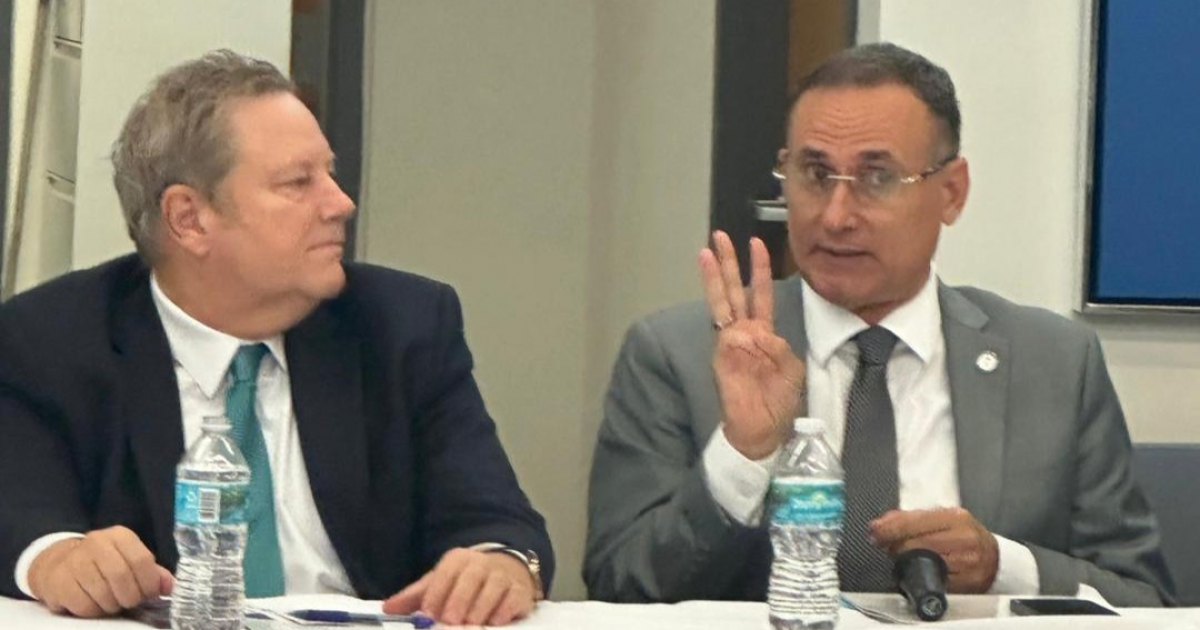
Prominent Cuban dissident José Daniel Ferrer has expressed optimism about dialogues with U.S. representatives, describing them as highly productive. He emphasized that Washington not only shows solidarity with the Cuban people but could also be a pivotal ally in rebuilding the nation once a political transition occurs.
Ferrer shared on X that his discussions with Mike Hammer, the head of the U.S. Embassy's mission in Havana, have opened up new possibilities for future cooperation. "Along with current solidarity, we are confident that the United States will be our greatest ally in rebuilding our homeland," he stated, underscoring the necessity of creating bridges toward a different future for Cuba.
Encouragement for Peaceful Action
Ferrer’s statements come amid a politically charged atmosphere. On Thursday, he urged Cubans to leverage current conditions to push for change, detach from regime structures, and lead a broad movement for freedom and democracy. He encouraged the population to sever ties with state organizations and join pro-democracy groups, either openly or discreetly.
"Create profiles with pseudonyms on social networks and express your true feelings, denouncing all the injustices and severe issues affecting Cubans," he advised. Ferrer further encouraged people to demand the release of political prisoners and, where possible, use graffiti to advocate for freedom, highlighting its ease and significant impact.
International Solidarity and Reconstruction
Although Ferrer's post was brief, his mention of a "fruitful conversation" with the diplomat is politically significant. It signals acknowledgment that Cuban civil society in exile and U.S. authorities are in discussions about Cuba's future and the potential role of the United States in its transition. Throughout 2025, Mike Hammer has actively engaged with artists and civil society representatives, reaffirming support for fundamental freedoms and freedom of expression, despite Cuban security surveillance.
Moreover, the U.S. has provided humanitarian aid through the Catholic Church to ease the conditions of families affected by the crisis, emphasizing that this assistance aims to alleviate suffering amidst rapidly deteriorating living conditions.
A Strategic Ally Amid Rising Tensions
Ferrer’s remarks arrive during heightened tensions between the United States and Havana, marked by initial diplomatic contacts following a military operation in Venezuela that led to Nicolás Maduro's capture. In this context, Ferrer has openly declared the U.S. as an indispensable partner for achieving a free and prosperous future for Cuba, distancing himself from the official narrative that traditionally portrays Washington as an adversary.
On Monday, in a message to Díaz-Canel, he warned, "If you continue to oppress and repress the people, you will be responsible for what happens. An enslaved people wish for salvation, and if the United States provides it, the vast majority of Cubans will be grateful. (...) You are very abusive with the unarmed people but too cowardly to face the United States."
The notion that the United States could play a central role in Cuba's reconstruction after decades of economic and human rights crises has been embraced by sectors of the Cuban opposition and exiles. They see it as a crucial element for a transition involving international support and cooperation to overcome poverty, lack of freedoms, and structural deficiencies affecting the country.
Ferrer’s Role in Cuban Opposition
José Daniel Ferrer, the founder of the Patriotic Union of Cuba (UNPACU), has been a leading figure in the island’s pro-democracy struggle for years, enduring detentions, imprisonment, and persecution. His current political strategy combines calls for internal change with the pursuit of international support to enhance political and moral pressure on the regime.
Ferrer’s advocacy for considering the United States as a strategic ally in Cuba’s reconstruction represents a further step in his vision of a transition involving external actors committed to democracy and human rights. He insists that freeing the Cuban people requires a blend of internal actions, citizen organization, and international relations that promote political openness.
U.S. Role in Cuba's Future: Questions and Answers
Why does José Daniel Ferrer view the U.S. as a crucial ally?
Ferrer believes the U.S. can provide essential support in rebuilding Cuba, offering solidarity and potential cooperation during a political transition.
What actions does Ferrer encourage Cubans to take?
He urges Cubans to disengage from state structures, join pro-democracy groups, and use social media to express dissent and highlight injustices.
What has been the U.S. engagement in Cuba during 2025?
Mike Hammer, the U.S. mission head in Cuba, has actively engaged with civil society and provided humanitarian aid through the Catholic Church to support affected families.