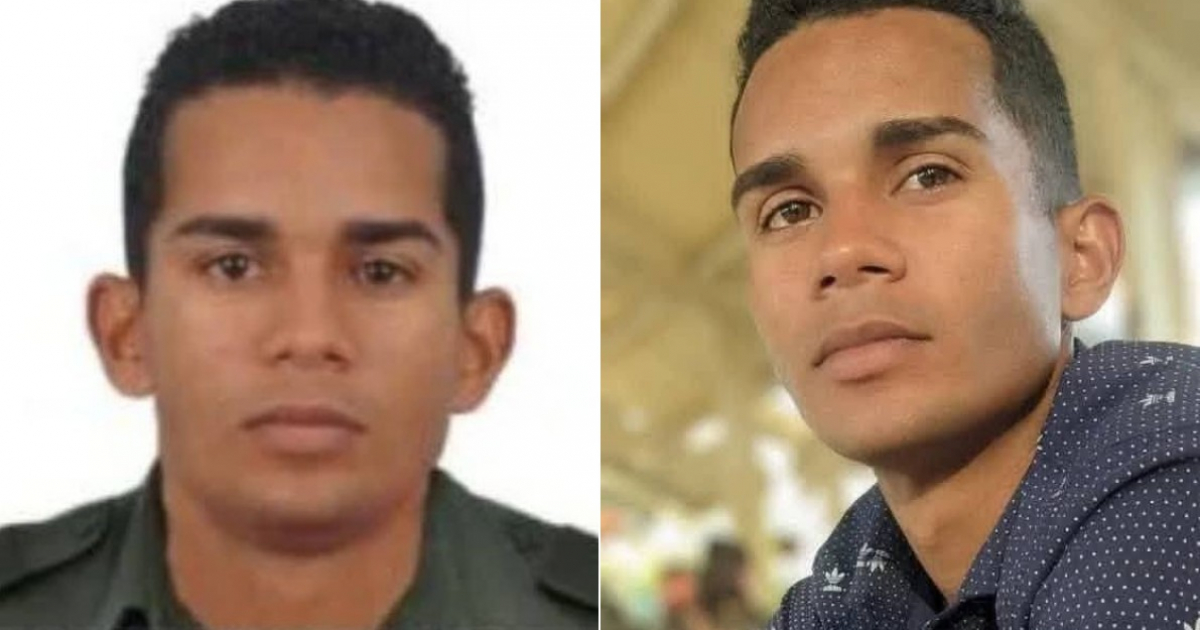
The mother of Fernando Antonio Báez Hidalgo, the youngest of 32 Cuban soldiers who lost their lives on January 3rd in Caracas during an operation by the United States to capture Nicolás Maduro, opened up to Juventud Rebelde about her son's life and her immense loss.
At just 26, Fernando served as a bodyguard and held the rank of lieutenant in the Ministry of the Interior. "This has been devastating. I feel like a piece of me has been torn away. He was a deeply desired son, the only one I had," expressed Maidelín Hidalgo Hidalgo, aged 53.
Fernando grew up in a household shaped by the early loss of his father, who passed away when Fernando was just 15. "I fought for him, and he fought for me," Maidelín shared.
Fernando excelled academically, consistently ranking among the top students. He pursued a technical degree in Veterinary Medicine and later chose to focus on personal security during his military service.
Family Dreams and Aspirations
His brother, Yoanis Báez Estrada, described Fernando as "a great son, companion, and brother," someone who was calm, enjoyed baseball, and loved movies. Fernando and his mother had plans to eventually move to the capital together. "He dreamed of buying a house in Havana. Our current home is modest and in need of repair. He would tell me it made more sense to purchase a home in Havana, and I would join him there," Maidelín recalled.
Fernando had been in Venezuela for just over five months, maintaining daily communication with his mother. Their last conversation took place on the evening of January 2nd, around 9:00 PM.
The Tragic Morning
In the early hours of the next day, upon hearing news of bombings in Caracas, Maidelín sent a message to her son but received no response. "When the hours passed and I saw people in green uniforms arrive at my house, there was no need for words," she recounted.
The 32 Cuban soldiers' remains were returned to Havana at dawn on January 15th, amidst significant official ceremonies and public tributes. The bodies were transported via a Cubana de Aviación aircraft and then taken through Avenida Rancho Boyeros to the MINFAR headquarters, where a public tribute was held.
Official Silence and Unanswered Questions
The deaths occurred during an international operation aimed at capturing Maduro, which led to the collapse of the Venezuelan regime. Interim President Delcy Rodríguez assumed control of the country in a fragile transition overseen internationally.
Despite ongoing official tributes in Cuba, there remains a lack of clarity regarding the nature of the Cuban mission in Venezuela. The terms of the agreement, the total number of Cuban personnel deployed, and the details of the operation have not been disclosed.
The Cuban government released biographies of the deceased under the slogan "Honor and Glory," confirming their affiliation with the FAR and MININT, contradicting years of official denials of Cuban military involvement in supporting the Venezuelan regime.
The profiles reveal a consistent pattern of varying generations and ranks—from young soldiers to seasoned colonels—mostly hailing from the eastern part of the country and sent on an "internationalist mission" that was officially denied.
The official narrative highlights common elements such as their membership in the UJC and the Party, involvement in "operational support," and posthumous promotions as a symbolic closure to each story. There are no mentions of wives, children, or families, nor details about the specific missions they undertook in Venezuela.
Key Questions About Cuban Military Involvement in Venezuela
What was the official mission of Cuban soldiers in Venezuela?
The Cuban government has not disclosed the specific mission of its soldiers in Venezuela, leaving many questions about their role and activities.
How did the Cuban public react to the soldiers' deaths?
The soldiers' deaths were met with significant public mourning and official tributes in Cuba, although there are ongoing demands for more transparency about the mission.
Who assumed control of Venezuela after Maduro's capture?
Interim President Delcy Rodríguez took over leadership of Venezuela following the collapse of Maduro's regime, under international supervision.