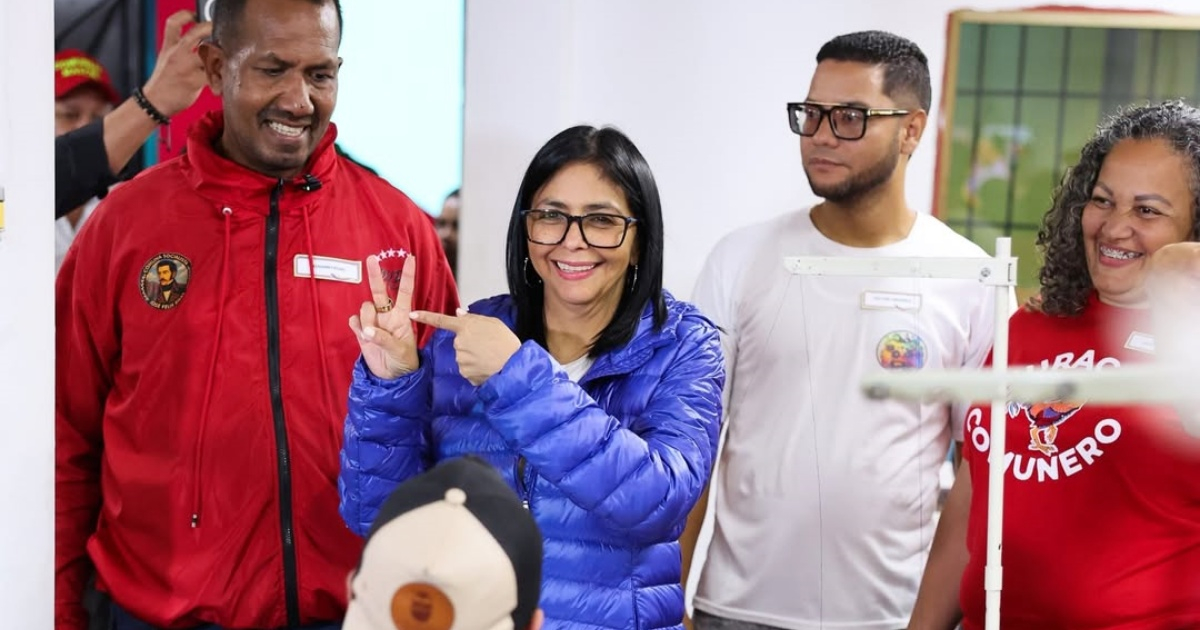
January 13, 2026, ushered in another turbulent chapter in Venezuela's recent history. With ten days having passed since Nicolás Maduro's arrest by U.S. forces and Delcy Rodríguez's appointment as interim president in Caracas, the nation finds itself cautiously navigating the uncertain path of transition.
Amid mass releases from prisons, conflicting figures, internal tensions within the Chavista regime, and diplomatic moves from Washington, Venezuela's political landscape is undergoing a transformation. However, the populace remains ensnared in fear, skepticism, and economic instability.
Scrutiny Over Prisoner Releases
The interim government announced the release of 116 political prisoners as a "gesture of national easing" within the transition framework. Nevertheless, human rights organizations and the democratic opposition question the accuracy of this figure.
According to Foro Penal, only 56 releases have been verified so far. Meanwhile, the Democratic Unity Platform (PUD) and allies like María Corina Machado claim 73 to 76 confirmed cases, yet they continue to accuse the government of exaggerating the numbers and politically manipulating the narrative of reconciliation.
NGOs also report that many released individuals have been subjected to restrictive measures, preventing them from leaving the country, engaging in politics, or communicating freely, thereby diminishing the actual impact of these releases. "There can be no transition with political prisoners," Machado declared in a press conference, demanding an unconditional amnesty for the over 700 individuals allegedly detained for political reasons, according to unofficial estimates.
Lack of Transparency in Prisoner Releases
Transparency remains a significant issue, as neither Delcy Rodríguez's government nor opposition platforms have provided a complete, verifiable list of those released. Some organizations have shared isolated names, and diplomatic sources have confirmed that at least one Hungarian and three Spanish citizens were recently freed. According to the Madrid government, the three Spaniards may choose whether to return or remain in Venezuela.
Conversely, Colombian prisoner family organizations report that 19 nationals remain detained, suggesting a selective and unclear release process. "Family anxiety multiplies when official information is absent, and each released name is shrouded in mystery," a Foro Penal spokesperson commented.
Political Reconfiguration After Maduro
The nation has been politically unsteady since Nicolás Maduro's capture by U.S. forces on January 3, a move reportedly orchestrated with logistical support from within the Chavista ranks. Delcy Rodríguez assumed the role of interim president with military backing and internal institutional control.
Nonetheless, the Chavista regime faces internal fissures, with figures like Diosdado Cabello attempting to distance themselves from the "Cartel of the Suns," accused by the U.S. of drug trafficking and organized crime. Tensions within the PSUV (United Socialist Party of Venezuela) grow as its members confront international pressure and internal distrust.
From the opposition side, key meetings are being prepared in Washington, where leaders such as Edmundo González, Henrique Capriles, and Machado aim to outline a shared roadmap for participating in potential institutional redesign, new elections, and a transition with safeguards.
U.S. Influence, Oil, and Reconstruction
The United States has taken a central role in the unfolding events. Recent reports from American media highlighted the involvement of Senator Marco Rubio and senior security advisors in the strategy leading to Maduro's arrest and support for the new interim government. The Trump administration has pledged to attract up to $100 billion in foreign investments to rebuild Venezuela's oil sector, contingent on "deep reforms" in governance, rule of law, and economic assurances.
The State Department stated, "Venezuela's political transition must be accompanied by economic freedom and respect for human rights." Concurrently, international bodies like the Inter-American Commission on Human Rights have raised concerns over ongoing repressive practices, arbitrary detentions, and structural justice deficits. The IACHR urged unconditional releases accompanied by victim reparations mechanisms.
Oil Market Re-entry and Economic Outlook
One of the most notable announcements in Caracas was Venezuela's swift return to the global oil market. Rodríguez's administration has begun issuing special licenses to commercial entities like Vitol and Trafigura, which are reportedly exporting accumulated crude from maritime terminals. The new government's plans include urgently placing up to 50 million barrels to gain immediate liquidity, in a nation where the bolívar continues to plummet and inflation is rampant.
While expectations are that lifting international sanctions and achieving political stabilization could lead to double-digit economic growth this year, experts caution that the oil infrastructure is severely degraded, with outdated refineries, inactive wells, and external debt exceeding $150 billion. Recovery will be lengthy, requiring not only investment but also structural changes in the economic model and the restoration of institutional trust.
A Transition with Uncertainties
Venezuela is in the midst of a political transformation. The fall of Maduro has opened a new political cycle, yet challenges remain immense: political prisoners still lack full freedom, institutional uncertainty persists, economic promises are on shaky ground, and civil society is fractured. As the world watches and Washington sets the pace, Venezuelans continue to await clear signals of justice, truth, and reconstruction. The transition has begun, but fear lingers.
Understanding Venezuela's Political Transition
What led to Nicolás Maduro's arrest?
Nicolás Maduro was arrested by U.S. forces on January 3, 2026, in an operation reportedly planned with logistical support from sectors within the Chavista regime.
How many political prisoners have been released in Venezuela?
The interim government announced 116 releases, but human rights groups verified 56, while other sources indicate 73 to 76 confirmed releases, with discrepancies remaining.
What role does the United States play in Venezuela's transition?
The U.S. has been pivotal, with involvement in Maduro's arrest and promises of significant investment in Venezuela's oil sector, contingent on governance and economic reforms.