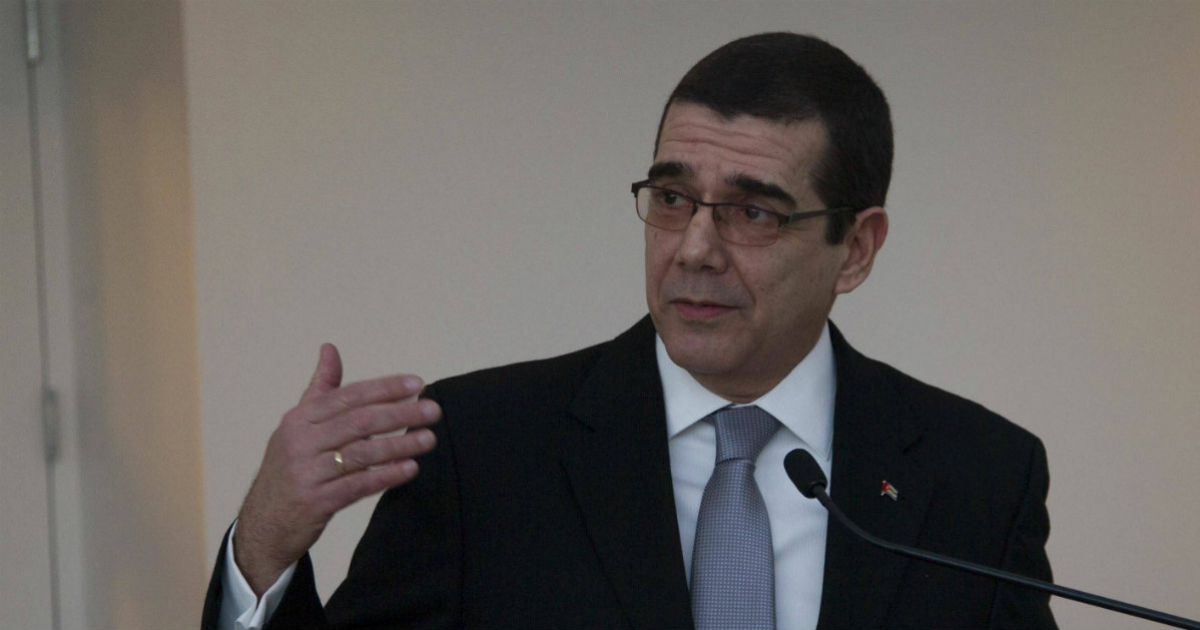
As Donald Trump intensifies his rhetoric against the Cuban regime, stating that the next step could be to "invade and destroy the place," a prominent figure from Havana's diplomatic past has countered with a phrase encapsulating decades of defiance: “Fear is not on our menu.”
This declaration comes from José Ramón Cabañas Rodríguez, the former Cuban ambassador to the United States. He responded to the threats made by the U.S. president and the hardening of Washington's stance following the fall of Nicolás Maduro in Venezuela, a key political and economic lifeline for Cuba for over twenty years.
In an interview with the international outlet Open, Cabañas dismissed Trump's warnings by reminding that Cuba has endured invasions, assassination attempts against Fidel Castro, and more than six decades of sanctions.
“They’ve been trying to do that for over 67 years. What’s different now?” the diplomat stated, invoking a narrative of resilience that the regime has perpetuated for generations.
Cabañas' remarks arrive at a particularly sensitive time for Havana. Recently, Trump claimed that Cuba is "hanging by a thread" after losing the oil and funds from Caracas, making it clear that he sees no room for increased pressure without resorting to direct military action. Although he mentioned it's not necessary at this moment, he emphasized that the system's collapse might occur due to internal exhaustion.
On Truth Social, the American president was even more explicit, warning that “there will be no more oil or money for Cuba” and suggesting the regime should “make a deal before it’s too late.”
In this context, Cabañas’ response aims not only to challenge Trump but also to reinforce the Cuban government's rhetoric of resistance amid a populace weary from shortages, an energy crisis, and mass emigration.
The former ambassador, who was the first Cuban diplomatic representative in Washington following the thaw initiated by Barack Obama, draws from his experience of witnessing both the rapprochement and subsequent tightening during Trump’s first term.
Nevertheless, the contrast is stark. While Havana insists that "fear is not on the menu," millions of Cubans are dealing with power outages, rampant inflation, and the uncertainty of a nation becoming increasingly isolated. Meanwhile, Washington is making it clear that the noose is tightening and that, this time, Cuba no longer has Venezuela's support.
Understanding U.S.-Cuba Relations in the Current Climate
What are the main consequences of the strained U.S.-Cuba relations?
The strained relations have resulted in increased economic hardships for Cuba, including shortages, energy crises, and isolation, contributing to mass emigration and widespread uncertainty among the population.
How has the fall of Nicolás Maduro impacted Cuba?
The fall of Nicolás Maduro has significantly impacted Cuba as it has lost a crucial ally that provided vital economic support in the form of oil and financial aid, exacerbating the island's economic difficulties.
What historical challenges has Cuba faced in its relationship with the United States?
Historically, Cuba has faced numerous challenges with the United States, including invasions, assassination plots against its leaders, and enduring over 60 years of economic sanctions.