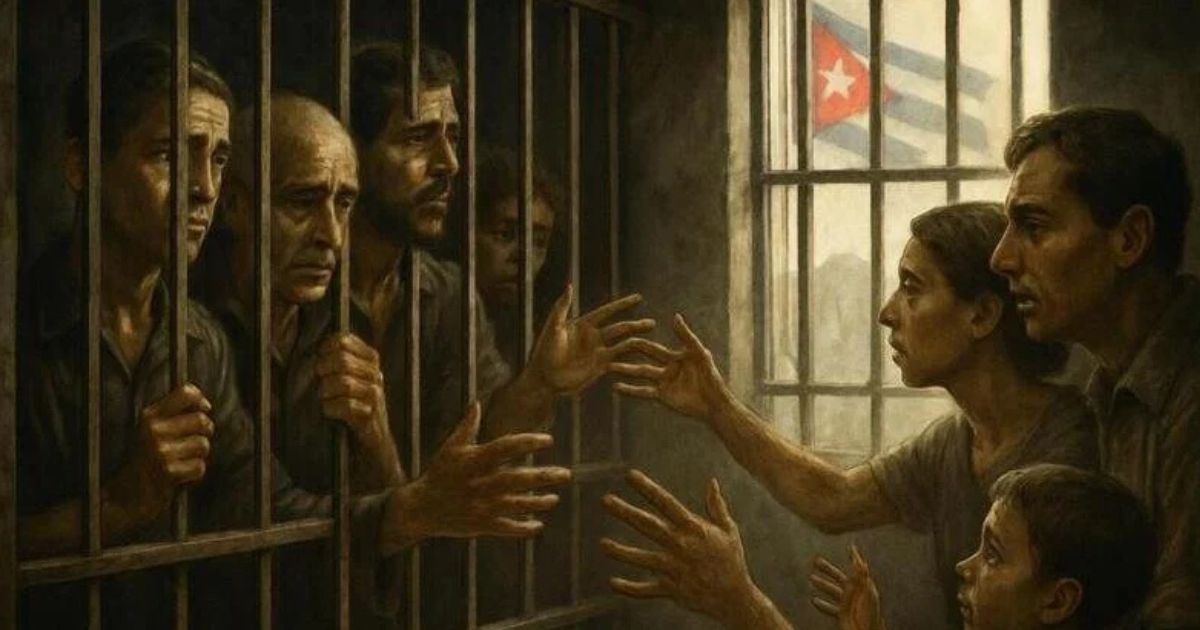
More than 300 Cubans and various organizations, both within and outside the nation, have united to issue an urgent appeal for the liberation of political prisoners in Cuba. This call demands coordinated action from civic society and the global community against the regime's repression.
The statement, circulated on social media by Cuban intellectual and activist Anamely Ramos, was collectively crafted and endorsed by former political prisoners, relatives of those incarcerated, activists, academics, and artists.
Signatories emphasize that Cuba cannot continue to be a glaring omission on the regional human rights agenda, especially as other authoritarian states like Venezuela and Nicaragua announce prisoner releases, albeit without transparency or guarantees.
The EFE news agency noted that last year, Cuba released 553 individuals as part of an agreement with the United States, mediated by the Vatican during the final days of Joe Biden's administration.
Various NGOs criticized that process for being opaque and incomplete, highlighting that over half of those released were not political prisoners, according to the press agency.
In this latest appeal, signatories decry the fact that the country still holds over a thousand political prisoners — a staggering number the regime seeks to downplay internationally.
They reminded that between January and March 2025, the Cuban state pledged to release 553 prisoners, yet independent organizations recorded only around 250 releases, leaving hundreds behind and continuing the harassment of their families.
The document urges international organizations, democratic governments, media outlets, and the Vatican to take a firm stand in demanding the immediate and unconditional release of all political prisoners and an end to the criminalization of dissent.
Additionally, the statement directly addresses the mothers, fathers, and families of those imprisoned, acknowledging their exhaustion, fear, and the daily violence they endure.
It calls for them to maintain a coordinated and supported presence, refusing to allow the regime to use their children as bargaining chips or tools of political blackmail.
The appeal concludes by emphasizing that now is a pivotal moment to act collectively and not wait for unilateral gestures from those in power. "It's about naming the injustice, pressing hard, and not letting this historic moment slip by," the document asserts.
Among the signatories are numerous exiled political prisoners from the historical exile, human rights defenders, independent journalists, and Cuban artists abroad.
The list includes ex-prisoners from the Plantados group, historic dissidents like José Daniel Ferrer and Martha Beatriz Roque, and artists such as Tania Bruguera.
The text was shared on social media as an open initiative to garner further support.
This renewed demand arises amid a climate where U.S. President Donald Trump has issued a stark warning to the Cuban regime, stating that "no more oil or money" will flow from Venezuela to the island and suggesting that Havana "make a deal before it's too late."
Key Questions Regarding Political Prisoners in Cuba
What is the current situation of political prisoners in Cuba?
Cuba continues to detain over a thousand individuals for political reasons, a number the regime attempts to minimize on the international stage.
How has the international community responded to Cuba's political prisoners?
While there have been coordinated appeals from civic society and international organizations, criticism remains regarding the lack of transparency and thoroughness in Cuba's prisoner release processes.
What was the outcome of Cuba's previous prisoner release agreement?
The previous agreement, mediated by the Vatican and involving the U.S., saw 553 releases, yet many were not political prisoners, and the process was criticized for its opacity.