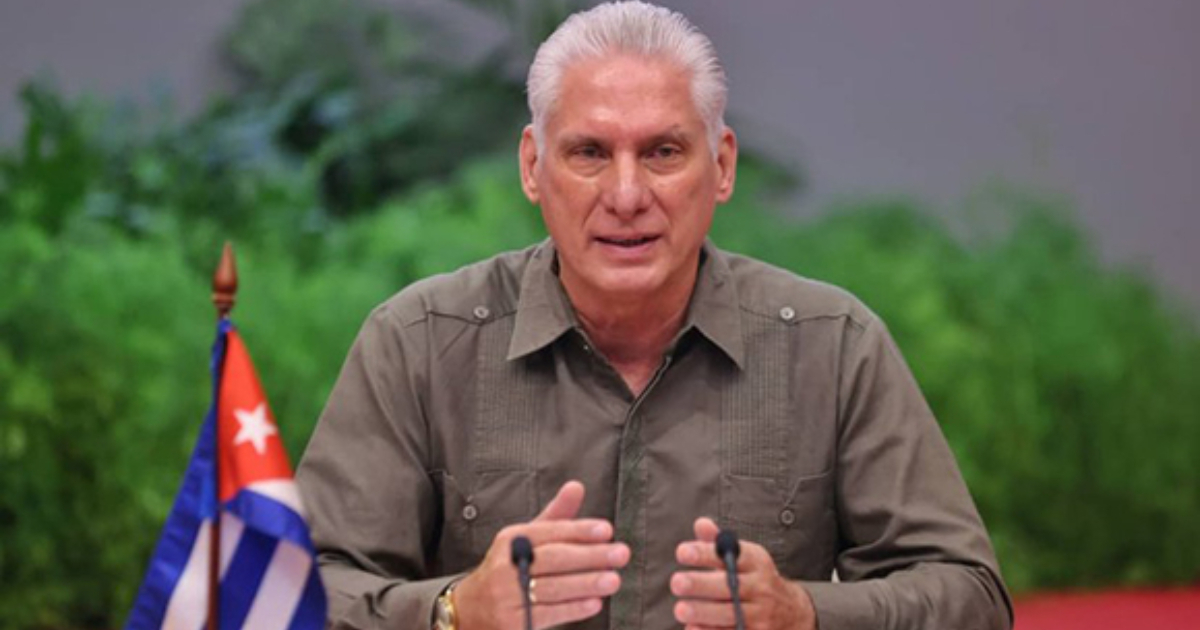
Recent statements by Miguel Díaz-Canel denying any ongoing discussions with the United States have triggered a flood of reactions from Cubans both on the island and abroad. These reactions, filled with irony, skepticism, and outright mockery, have been directed at the Cuban leader.
On Monday, the Cuban head of state asserted that "there are no conversations with the U.S. government, except for technical contacts in the migratory field." This came in response to comments from President Donald Trump, who had claimed that "talks are happening with Cuba," without providing further details on the nature of these exchanges.
Public Skepticism and Social Media Reactions
Díaz-Canel emphasized that Havana is open to "a serious and responsible dialogue with various U.S. administrations," as long as it is founded on "sovereign equality, mutual respect, and non-interference in internal affairs." He also blamed the economic embargo and "the failed policy and privileges of the Cuban Adjustment Act" for the migratory exodus.
However, the message backfired on social media. Hundreds of users expressed disbelief and sarcasm, recalling past episodes where the regime denied events that were later confirmed. On a post by Cubadebate, one user commented, "Hahaha just like there were no Cuban soldiers in Venezuela." Another jested, "Maybe they are already talking, and the president hasn't been informed... It seems like he's always the last to know."
Perceived Lack of Authority
Many comments focused on Díaz-Canel’s perceived lack of real power. "If the U.S. talks to anyone, it’s Raúl who is in charge," one reader remarked. "They may not be talking to him, but they sure are with the circus owner," added another.
Users also expressed fatigue over the lack of solutions and the country’s current state. "They should start talking and reach an agreement because at this rate, in five years, we'll be extinct like the dinosaurs," one user wrote. Another pointed out, "And who is he to know if there are talks or not? He's just a puppet who only says what the real rulers of Cuba tell him."
Comparisons to Venezuela
On the Facebook page of CiberCuba Noticias, where the information was also shared, reactions maintained the same tone of distrust. "If there are talks, he's the last to know," commented one individual. "The last to know of infidelity is always the husband, and who told the lemon that he gets to decide," noted another.
Many drew parallels between the Cuban leader’s denial and that of former Venezuelan President Nicolás Maduro before his detention. "There were no Cuban military in Venezuela until they were all swept away," one user commented. "Maduro also said there were no talks, etc., etc.," another wrote.
Direct Negotiations and Leadership Criticism
Some speculated that Trump might be negotiating directly with the real power brokers in Cuba: "Perhaps they don’t view Díaz-Canel as the president and are talking directly with Raúl. And the puppet is oblivious until... boom, he's whisked away to New York."
Among the comments, one summarized the widespread distrust: "Conversations aren’t held with puppets; they’re held with those pulling the strings." Another was more blunt: "Canel doesn’t realize the conversations aren’t with him. Or he’s so clueless he actually believes he’s the president."
Some mentioned the regime's apparent nervousness following the military operation in Venezuela. "He's playing with the wrong people... these are different times, fool," one user noted. Another added, "Your time is running out, better leave before they make you disappear. You’re of no value. They are giving you time."
Messages of irony regarding the lack of leadership also surfaced: "If they’re going to bomb, I just hope they use smart bombs that only target the leaders," one woman wrote. Another summed up: "If the USA talked, it wasn’t with him; his masters are the Castros."
Others focused on the worn-out official rhetoric. "Just like there were no military in Venezuela, as there are no blackouts in Cuba... I’m beginning to understand communists: when they say no, it means yes," a reader commented.
The responses highlight the level of mistrust towards official statements and the widespread belief that Díaz-Canel lacks real control over the country's strategic decisions. This episode occurs amidst heightened political tension in the region, following Nicolás Maduro's arrest in Caracas and increasing pressure from Washington on allied regimes.
Despite Díaz-Canel's insistence on the absence of formal contacts with the United States, public skepticism and open mockery on social media reveal that many Cubans have long stopped believing his words.
Understanding the Cuban Political Climate
Why are Cubans skeptical of Díaz-Canel's denial of talks with the U.S.?
Cubans are skeptical because there have been past instances where the government denied situations that were later confirmed. This has led to a general distrust in official statements.
What impact do social media reactions have on the Cuban government?
Social media reactions can amplify public sentiment and highlight widespread skepticism or disapproval of governmental actions, thus impacting the government's image and credibility.
How does Díaz-Canel's leadership compare to that of former leaders?
Many perceive Díaz-Canel's leadership as lacking the authority and influence of previous leaders like Raúl Castro, often viewing him as a figurehead rather than the real decision-maker.