Despite President Donald Trump's declaration that there will be “no more oil or money for Cuba,” the United States is permitting Mexico to continue supplying fuel to the island, as revealed by CBS News on Monday.
The report, authored by journalist Margaret Brennan, highlights a distinct gap between Trump's political rhetoric and the practical policy of Washington.
According to U.S. Secretary of Energy Chris Wright and another senior official, the American administration has not obstructed the shipment of Mexican crude to Cuba, even though Trump vowed publicly to cut off all economic lifelines to the Castro regime.
Cuba is currently experiencing one of its most severe energy crises in recent history, marked by power outages lasting up to 20 hours daily, a collapsed electrical grid, and limited fuel reserves. The loss of Venezuelan oil following the capture of Nicolás Maduro—who supported Havana for years in exchange for security and medical assistance—has left the nation teetering on the brink of an energy abyss.
Mexican Oil as a Lifeline
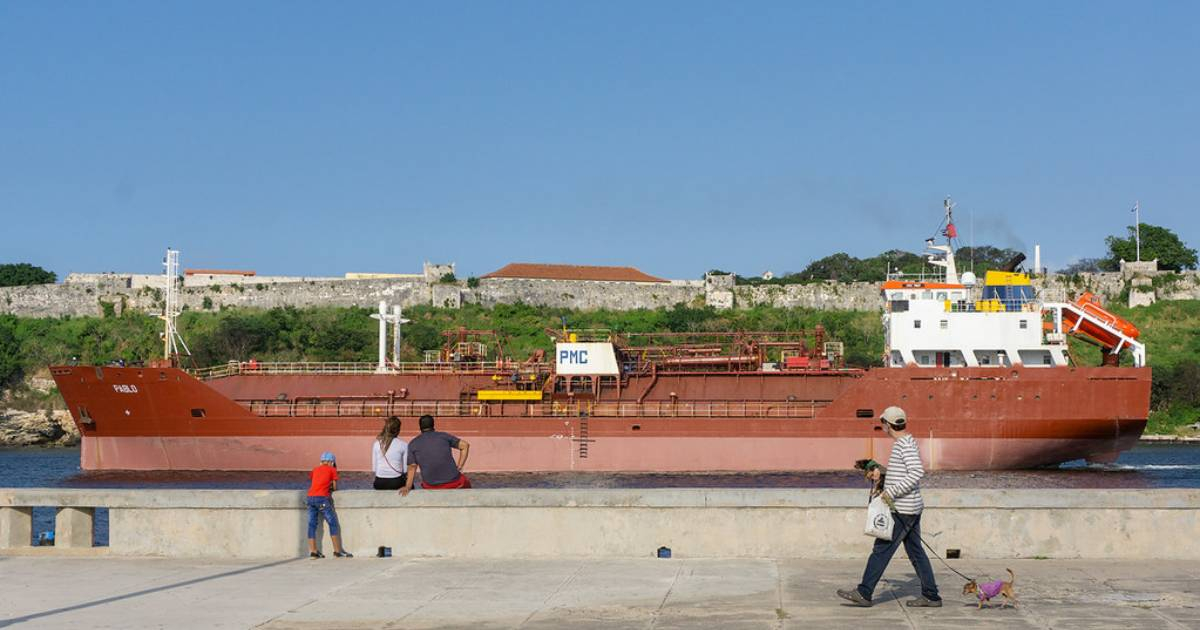
The administration of Claudia Sheinbaum has justified these shipments as “humanitarian aid,” while Mexican oil tankers such as the Ocean Mariner continue to dock in Cuban ports amid the daily darkness endured by millions of families on the island.
According to CBS News, Washington is aware that a complete energy blockade could further devastate Cuba's already faltering electrical system, a scenario the U.S. is not immediately pursuing.
Strategic Ambivalence
A U.S. official explained that the intention is not to trigger a sudden collapse of the Cuban government but rather to pressure Havana into abandoning its authoritarian communist model and engaging in negotiations.
This dual approach clarifies why, despite Trump's public threats urging the regime to “make a deal before it's too late,” Mexican supplies are tolerated, as they are crucial in preventing a total energy collapse.
From Havana, leader Miguel Díaz-Canel denied any political negotiations with the United States, relying instead on the rhetoric of "International Law" and sovereignty, though he acknowledged that only technical contacts on migration exist.
Without Venezuela, and with Russia preoccupied by the war in Ukraine, the regime faces unprecedented pressure, coupled with a cash-strapped economy that has resorted to reselling oil to survive, as confirmed by U.S. officials.
Impact of U.S. Policies on Cuba's Energy Crisis
Why is the U.S. allowing Mexico to provide oil to Cuba?
The U.S. is permitting these shipments to avoid a complete collapse of Cuba's already struggling energy infrastructure, despite Trump's public statements against supporting the Cuban regime.
What is the current state of Cuba's energy crisis?
Cuba is undergoing severe energy shortages, with frequent and prolonged power outages, a failing electrical grid, and dwindling fuel supplies.
How is Mexico justifying its oil shipments to Cuba?
Mexico regards these oil shipments as "humanitarian aid," essential for assisting Cuba during its energy crisis.
What is the U.S. strategy regarding Cuba's government?
The U.S. aims to exert pressure on Cuba to abandon its communist regime and engage in negotiations rather than causing an abrupt collapse of the government.