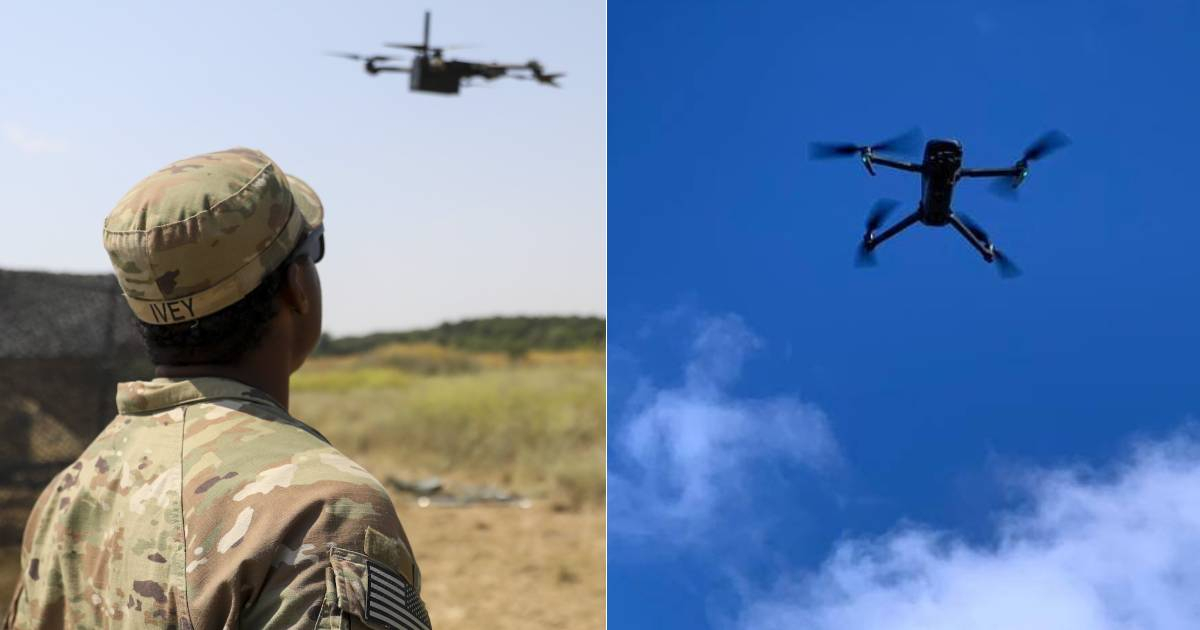
While the United States showcases drones as a pivotal element of its air superiority and national security strategy, Cuba's regime displays them as part of military exercises steeped in symbolism and propaganda.
The U.S. Secretary of Homeland Security, Kristi Noem, stated that drones signify "the new frontier of American air superiority." Under President Donald Trump's leadership, the nation is entering a new phase to safeguard its borders and territory.
Noem elaborated that the establishment of a specialized executive office for unmanned aerial systems aims to bolster internal security, protect critical infrastructure, and ensure safety during large-scale events, such as the upcoming 250th anniversary of the U.S. and the 2026 World Cup.
In stark contrast, Cuba presents a different scenario. During the National Defense Day in Holguín, official media displayed images of military exercises featuring drones alongside outdated artillery, militia members, reservists, students, and civilians. This occurs under the slogan of the "War of All the People," urging defense of sovereignty against a vaguely defined external threat.
The footage shows drones being operated in rural settings, with no public details on their range, actual purpose, or integration into a modern defense system. Rather than a technological showcase, they serve as part of a political performance where the focus is not on military capability but on the narrative of unity, discipline, and loyalty to the regime.
For many Cubans, both on the island and abroad, the contrast is stark. As the country grapples with prolonged power outages, food shortages, transportation crises, and a relentless exodus, the government mobilizes civilians and youths for exercises that have little relevance to the real issues facing the populace.
In this context, the drones displayed in Holguín do not represent air superiority or a response to tangible threats. Instead, they function as propagandistic "toys" within a recurring political-military ritual rooted in fear of an external enemy and a resistance discourse that no longer resonates with the everyday lives of Cubans.
Understanding the Role of Drones in Cuba and the U.S.
How does the U.S. utilize drones for national security?
The U.S. uses drones to enhance air superiority, protect borders, secure critical infrastructure, and ensure safety during large events, as part of a strategic plan to advance national security.
What is the significance of drones in Cuban military exercises?
In Cuba, drones are part of military exercises that emphasize political symbolism and propaganda rather than actual military capability, serving as tools to promote unity and loyalty to the regime.
What are the public perceptions of Cuba's military use of drones?
Many Cubans view the military use of drones as a superficial display that does not address the pressing issues of power outages, food shortages, and other crises affecting daily life.