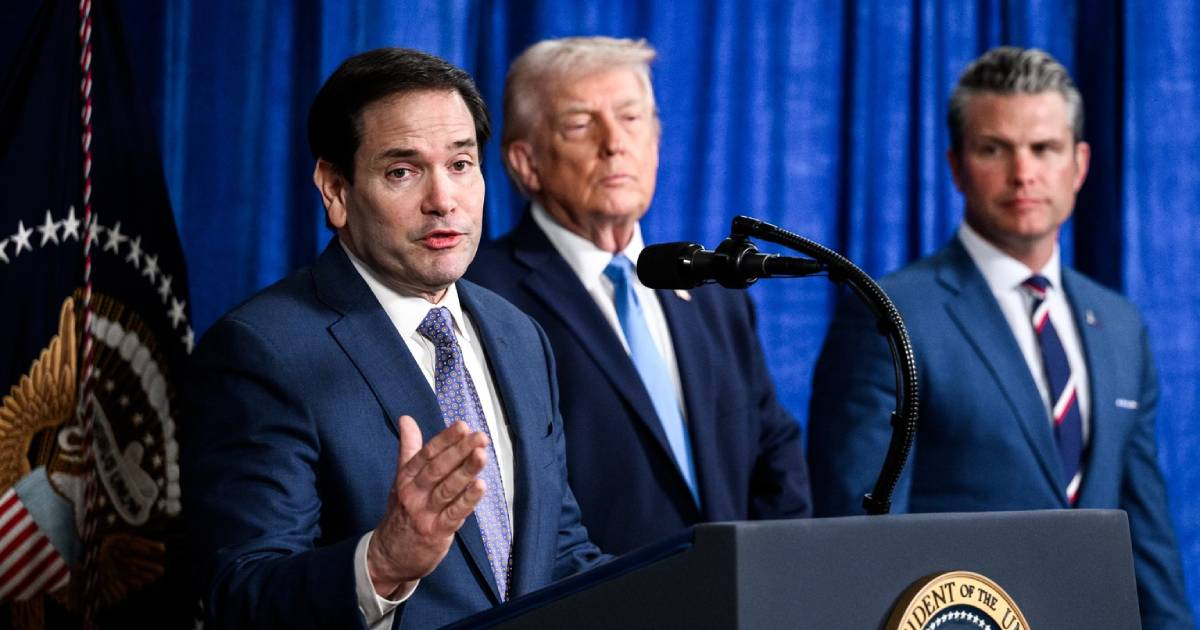
A curious blend of mockery, provocation, and threat emerged when Donald Trump floated the idea of Marco Rubio becoming "president of Cuba." Far from being dismissed as mere social media banter, the suggestion quickly gained traction.
Within mere hours, the remark from the former U.S. president circulated widely across influential media in Latin America, the United States, and Europe. It sparked headlines, analyses, and political discussions that once again positioned Cuba at the heart of narratives centered on pressure and confrontation.
The buzz began when Trump shared a post on his Truth Social platform hinting that Rubio could assume leadership in Cuba "once the government falls," to which he replied succinctly, "Sounds good to me."
This brief statement was enough for outlets like The New York Post to highlight the suggestion as more than just a jest, pointing to Rubio's significant political influence as the current Secretary of State and his history of a hardline stance against Havana.
The New York tabloid also emphasized the broader context: Trump had explicitly threatened to cut off oil and financial support flowing to Cuba from Venezuela and warned that the Cuban regime "should be worried."
In Latin America, Argentina's La Nación interpreted the comment as part of a broader escalation. The publication noted that Trump's remark was accompanied by direct pressures and warnings of potential intervention should Havana fail to "reach an agreement," especially in light of the recent capture of Nicolás Maduro following a U.S. military operation.
Central America's Prensa Libre openly discussed the escalation of regional tensions. The Guatemalan newspaper linked Trump's words to the end of Venezuelan support for Cuba and an increasingly aggressive U.S. foreign policy towards Havana's allies. They saw the mention of Rubio as a direct political message: pressure, warning, and a show of strength.
The echo of these developments reached Europe as well. France 24 Español presented a profile on Marco Rubio, portraying him as one of the most influential figures in U.S. policy towards Latin America. They highlighted his openly anti-communist rhetoric and strategy grounded in sanctions and pressure.
Even though Trump appeared to be joking, the channel noted that his statement fits into a hypothetical scenario now taken seriously by many, given Rubio's central role in Washington's regional agenda.
For Cubans both on and off the island, the international reverberations of this comment are significant. Beyond the mocking tone, Trump's insistence on severing resources, demanding agreements "before it's too late," and hinting at a power shift in Cuba places the island under a renewed spotlight of uncertainty.
Potential Implications of Trump's Comments on Cuba
Why did Trump's comment about Marco Rubio as president of Cuba gain so much attention?
Trump's comment gained attention due to its provocative nature and the context of ongoing U.S.-Cuba relations. It resonated globally because it was shared by a former president known for his unpredictable remarks, and it suggested a significant shift in Cuban leadership, which has been a longstanding point of contention in international politics.
How does Marco Rubio's political stance impact U.S.-Cuba relations?
Marco Rubio is known for his hardline stance against the Cuban government, advocating for sanctions and pressure to encourage political change. His position as a key figure in U.S. policy towards Latin America means that his influence could lead to stricter measures against Havana, impacting diplomatic and economic interactions.