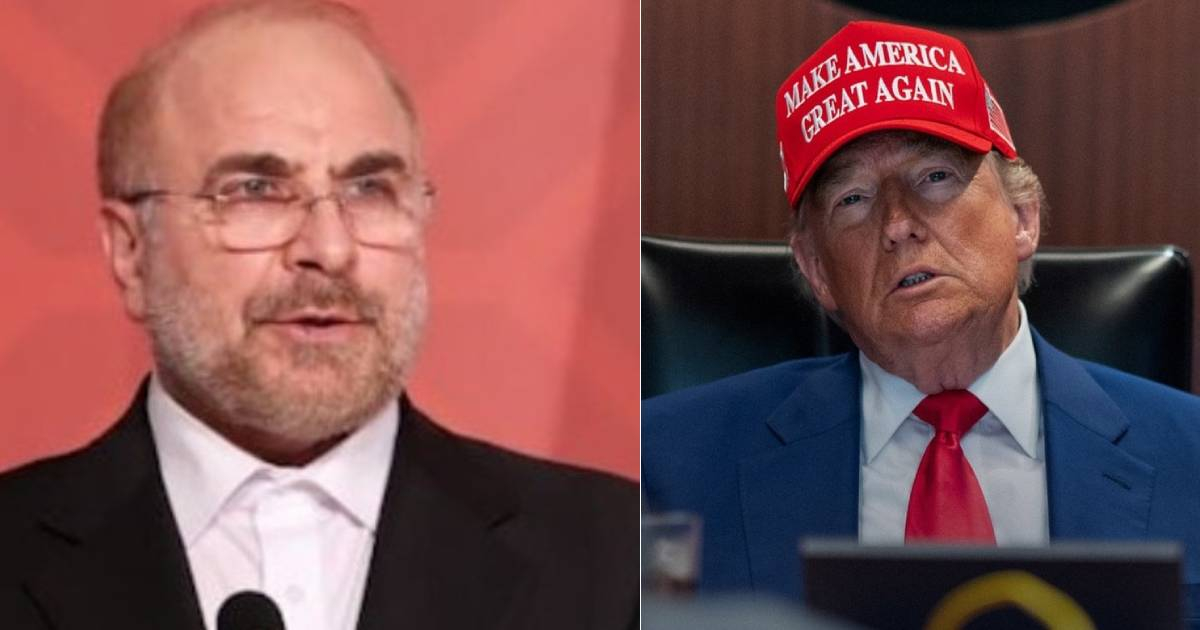
The situation in Iran intensified on Sunday, taking on a distinctly political and military dimension following President Donald Trump's comments. He claimed that the United States is "ready to assist" the Iranian people amid the largest anti-government protests in years. Teheran's response was swift and came with a direct warning.
Mohammad Baqer Qalibaf, the Speaker of the Iranian Parliament, delivered a stern message to Washington and its allies. He warned that any assault on Iran would render American bases and ships in the region, as well as Israel, "legitimate targets," according to a report from Reuters.
This statement came as the nation faces a wave of unrest that, according to human rights groups, has resulted in over 500 deaths in just two weeks.
Qalibaf's words highlight the Iranian leadership's anxiety over potential foreign intervention. Trump has repeatedly stated on social media that "Iran seeks freedom, perhaps like never before," and suggested that his administration is considering options ranging from tougher sanctions to military action should the crackdown on demonstrators persist.
The protests, which initially erupted in late December over rising prices, quickly evolved into a direct challenge to the clerical regime that has ruled since 1979.
In response, Iranian authorities have ramped up the suppression, accusing "terrorists" and external enemies of inciting chaos and have restricted the flow of information through internet blackouts.
Tehran's official stance continues to assert that the U.S. and Israel are aiming to destabilize the country. From Washington, Trump and senior officials like Secretary of State Marco Rubio have expressed support for the "brave people of Iran," although they have not specified what kind of concrete aid the U.S. might be willing to provide.
Israel has heightened its alert level in anticipation of potential U.S. involvement, while analysts warn that, although the protests may not immediately topple the regime, they are leaving it more vulnerable and exposed than in past crises.
Amidst funerals, burning streets, and thousands of arrests, the standoff between Trump and Iran's leadership adds another layer of uncertainty to a situation already marked by human suffering and the fear of regional escalation.
Iran Crisis and International Response
What prompted the recent protests in Iran?
The protests began in late December due to rising prices but quickly turned into a direct challenge against the ruling clerical regime.
How has the Iranian government responded to the protests?
The Iranian government has intensified its crackdown, accusing external enemies of inciting chaos and restricting information flow through internet blackouts.
What has been the international reaction to the situation in Iran?
The U.S., led by President Trump, has expressed support for the Iranian people, with discussions of potential aid. Israel has increased its alert level amid fears of U.S. involvement.