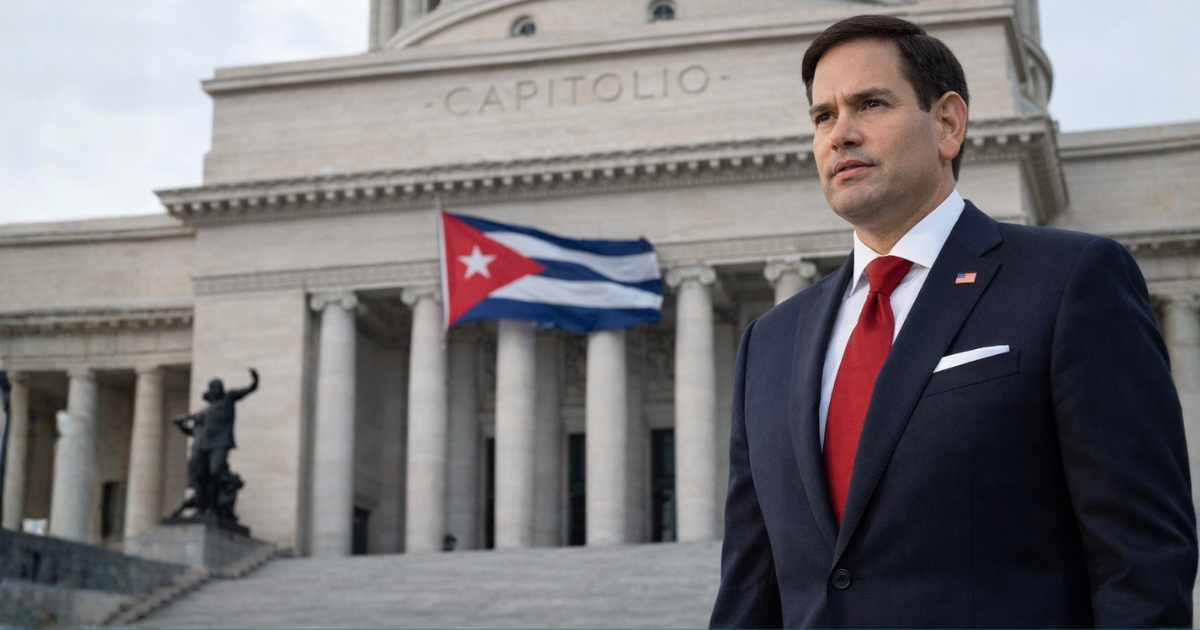
The public endorsement by Donald Trump of the idea that his influential Secretary of State, Marco Rubio, could potentially become the president of Cuba following a political shift on the island has reignited an old debate. Is this legally feasible, politically practical, or merely a tactic to exert pressure on the Havana regime?
Marco Rubio: A Thorn in Castro's Side
Marco Rubio, the son of Cuban immigrants born in Miami and the current U.S. Secretary of State, is one of the most vocal critics of the Havana regime. He has consistently linked the futures of Cuba and Venezuela, advocating for sanctions and actions that led to the capture of Nicolás Maduro.
In recent interviews, Rubio has described Cuba as a "major problem," emphasizing that Maduro’s security apparatus was under Cuban control, and warned that the island might soon become the next target for Washington's pressure.
Trump's Approval: "Sounds Good to Me"
President Donald Trump reignited speculation by resharing a social media post fantasizing about Marco Rubio as "President of Cuba" after the potential collapse of the regime, captioned with: "Sounds good to me!"
This simple act, amidst heightened tensions with Havana following Maduro's capture and the announcement of "no more oil or money for Cuba," fueled discussions on social media and among the exile community about a possible U.S.-guided transition in which Rubio could play a pivotal role.
Constitutional Considerations
The 2019 Cuban Constitution requires that the president be a native-born Cuban, a National Assembly deputy, and crucially, not hold any other citizenship—automatically disqualifying someone like Rubio, who is U.S.-born and fully engaged in American politics.
Conversely, the 1940 Constitution recognized children of Cubans born abroad as native Cubans if they settled in Cuba and did not prohibit dual citizenship, theoretically allowing someone like Rubio, born in Miami to Cuban parents, to aspire to the presidency in a democratic restoration scenario.
Between Speculation and Political Messaging
Although the notion of a "President Marco Rubio" in Havana appears more rhetorical than realistic today, it serves as a powerful message to the Cuban regime. Not only has their primary international adversary stripped them of their Venezuelan ally, but he also features in imaginary scenarios to occupy the Palace of the Revolution.
For such a fantasy to even remotely approach reality, more than a tweet would be needed: a regime change in Cuba, a new constitution accommodating the diaspora, a redefinition of citizenship, and crucially, the will of the Cuban people themselves.
Questions About Marco Rubio and Cuban Leadership
Is it legally possible for Marco Rubio to become the president of Cuba?
Under the current 2019 Cuban Constitution, it is not legally possible as it requires the president to be a native-born Cuban and not to hold any other citizenship. Marco Rubio, being U.S.-born and an American citizen, is disqualified.
What did Donald Trump say about Marco Rubio becoming the president of Cuba?
Donald Trump endorsed a social media post suggesting Marco Rubio as the president of Cuba after a regime collapse, adding the comment "Sounds good to me!"
What role does Marco Rubio play in U.S. policy towards Cuba and Venezuela?
Marco Rubio is a significant critic of the Cuban regime and has linked the futures of Cuba and Venezuela, supporting sanctions and actions that led to the capture of Nicolás Maduro.