The cracks in Cuba's official narrative have once again been exposed following the debunked claim of an oil tanker theft in the Caribbean. This comes at a time when the regime's vulnerability is increasingly evident due to its heavy reliance on energy from the faltering Caracas-Havana axis.
Cuban economist Pedro Monreal openly criticized the report published by Cubadebate, which labeled the U.S. interception of the oil tanker Olina as a "theft."
"Get your stories straight. There’s an official Venezuelan statement that doesn’t call it ‘theft’ but rather the 'first successful joint operation' between the U.S. and Venezuela," Monreal commented on X.
The criticism arose after Venezuela released an official statement describing the incident as a coordinated operation between Washington and Caracas, directly contradicting the narrative pushed by Havana.
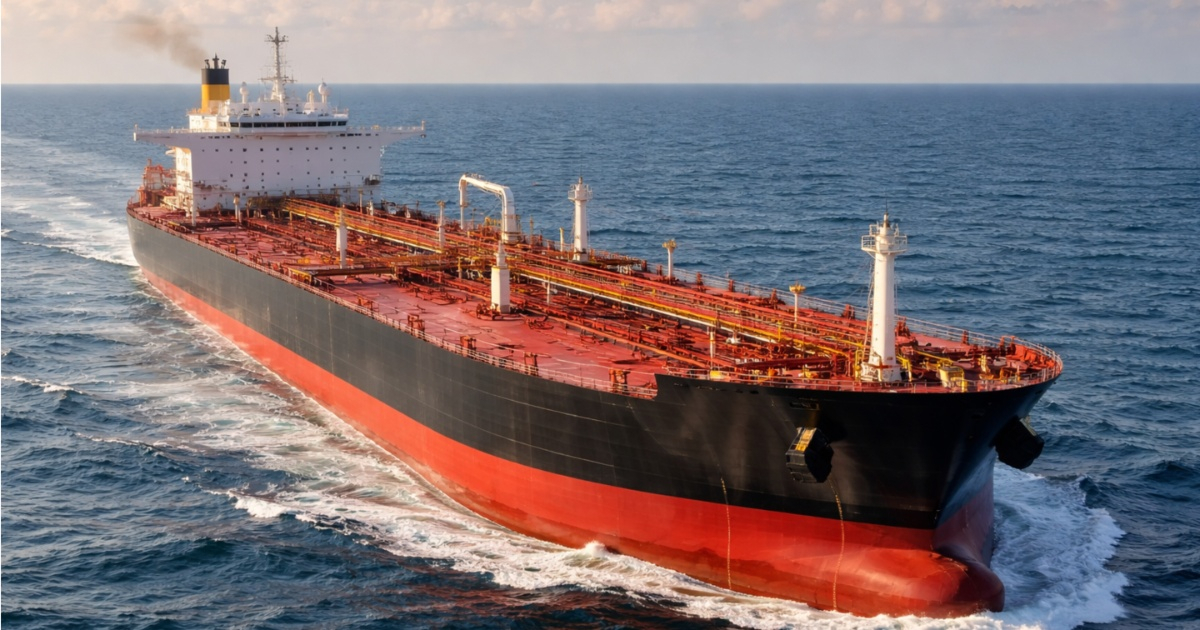
Cubadebate reported that the U.S. Coast Guard "seized" the Olina near Trinidad and Tobago, labeling the event as "theft" and portraying it as part of a supposed "false narrative" by Washington regarding hemispheric security restoration.
The official Cuban media suggested that the operation could escalate tensions with Russia, to whom the tanker purportedly transported fuel, framing the event as a unilateral show of force by the United States.
However, an EFE news agency report confirmed that the Venezuelan government officially acknowledged the interception of the tanker—also known as Minerva—was part of a coordinated action between Caracas and Washington.
The Ministry of Hydrocarbons and state-owned PDVSA stated it was a "successful joint operation" that allowed the ship's return to Venezuelan waters after departing without authorization or payment to the South American country's authorities.
U.S. President Donald Trump confirmed that the operation was conducted "in coordination with Venezuela's interim authorities."
Via his Truth Social account, Trump explained that the boarding was executed by Marines deployed from the aircraft carrier USS Gerald R. Ford, involving the Department of Defense and the Department of Homeland Security.
The seized oil, he noted, would be sold through a mechanism established by his administration for such operations.
Meanwhile, the U.S. Southern Command emphasized that the operation aimed to send a "clear message" against transnational illegal activities and was conducted without resistance.
The oil tanker Olina—previously known as Minerva M—is listed among vessels sanctioned by the United States for allegedly being involved in transporting energy exports from Russia to finance the war in Ukraine, as reported by the New York Times.
The acknowledgment of direct cooperation between Washington and Caracas is particularly significant following the capture of Nicolás Maduro and shortly after Vice President Delcy Rodríguez announced an "exploratory" process to restore diplomatic channels with the United States.
This political and energy reconfiguration places the Cuban regime in an especially vulnerable position. For over two decades, Cuba's electrical system and much of its economy relied heavily on Venezuelan oil.
The collapse of the chavista regime and the loss of strategic support have plunged Havana into a deep energy crisis, characterized by prolonged blackouts, fuel shortages, and increasing reliance on unstable external deliveries.
The interception of the Olina adds to a series of tanker seizures and boardings where the U.S. has acted against sanctioned oil transportation networks, a practice that directly threatens the alternative channels the Cuban regime has used to alleviate its energy deficit.
Every detained or redirected vessel adds more pressure to Cuba's already fragile ability to supply fuel to its electrical system and strategic economic sectors.
In this context, Cubadebate's insistence on labeling the operation as "theft" not only contradicts official statements from Caracas and Washington but also reveals the Cuban propaganda machine’s disconnect from a reality that is increasingly turning against the regime.
The evidence of cooperation between the United States and the new Venezuelan scenario contributes to the growing isolation of Havana and foreshadows an even more challenging period for a system critically dependent on external oil to sustain itself.
Key Questions on U.S.-Venezuela Cooperation and Cuba's Energy Crisis
What led to the interception of the oil tanker Olina?
The oil tanker Olina was intercepted as part of a coordinated operation between Venezuela and the United States, following its departure from Venezuelan waters without authorization or payment.
How does this operation affect Cuba's energy situation?
The interception of the Olina adds pressure to Cuba's energy crisis by disrupting alternative fuel supply channels, exacerbating the country's dependency on unstable external sources.
What implications does the U.S.-Venezuela cooperation have for Havana?
The cooperation highlights Havana's growing isolation and signals a shift in regional dynamics, potentially undermining Cuba's traditional energy support from Venezuela.