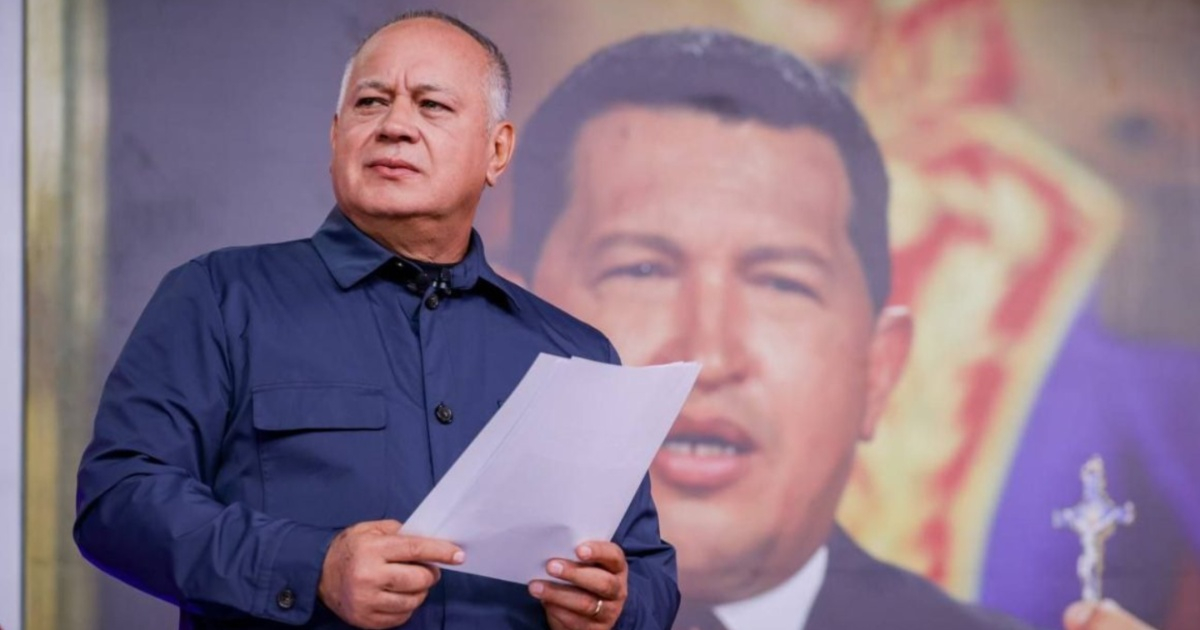
The United States Department of Justice has turned its attention to Diosdado Cabello, considered one of the most powerful figures within the Chavista movement, as part of an investigation that reportedly uncovers an international cocaine trafficking network. According to documents referenced by the Colombian newspaper El Tiempo, the network allegedly connects to illegal Colombian armed groups and has links to the Sinaloa cartel, including Joaquín "El Chapo" Guzmán, who is currently incarcerated in the United States.
A central incident in these files dates back to April 2006. A DC-9 aircraft departed from Venezuela's Maiquetía International Airport, carrying 5.6 tons of high-purity cocaine destined for Ciudad del Carmen in Mexico's Campeche state. The plane reportedly took off from the presidential hangar, with only the pilot and co-pilot on board.
Upon arriving in Mexico, Miguel Vicente Vázquez Guerra, identified as the co-pilot, was apprehended while the pilot managed to escape. The investigation suggests that Vázquez Guerra was a trusted pilot for "El Chapo" Guzmán. The cocaine shipment was intended for transfer to another aircraft allegedly carrying members of the Sinaloa cartel, with the supposed approval of Venezuelan regime officials.
The documents attribute Cabello's involvement in this operation to his alleged control over key figures in security and intelligence. Court records indicate that the cocaine was transported in five trucks through Caracas to the presidential hangar, under the protection of the National Guard. The DC-9’s flight plan was reportedly sanctioned by Vassyly Villarroel, a retired captain of the Bolivarian National Guard, who allegedly received bribes to facilitate the operation.
After the seizure in Mexico, Villarroel allegedly informed Venezuelan collaborators of the need to pay a $2.5 million bribe to Cabello to "protect" the officials involved in the shipment. This testimony is said to come from Villarroel, who was captured in 2015 and is part of the U.S. case records.
The documents further claim that Villarroel collaborated with Colombian drug traffickers like Daniel "El Loco" Barrera and the Calle Serna brothers, leaders of Los Rastrojos, allowing these drug lords to use Venezuelan territory as a refuge and transit route for large cocaine shipments. Businessman Walid Makled is also mentioned as connected to these activities, pointing to mechanisms of paying bribes to high-ranking officers, according to Colombian media sources.
The investigation extends beyond past events. Recent evidence allegedly ties Cabello to drug trafficking activities in cooperation with the ELN (National Liberation Army), Segunda Marquetalia, and FARC dissidents. Documents mention Cabello's trips to clandestine airstrips managed by the ELN along the Colombia-Venezuela border during 2022 and 2024.
According to the described records, cocaine departed Venezuela on flights sanctioned by high-ranking military officials and through covert operations to evade detection in South and Central America. By late 2024, Cabello allegedly received direct profits from the drugs, and in 2025, Colombian traffickers discussed with an associate of his about continuing their operations through Venezuela.
The criminal structure involves a group called "los Generales," described as high-ranking Venezuelan military officers supporting the regime and engaging in illicit activities. The report also asserts that Cabello's grip on intelligence and armed collectives is coordinated through his cousin, Alexis José Rodríguez Cabello, identified as the director of Sebin.
The document outlines that the United States has two ongoing federal cases against Nicolás Maduro and senior officials on narcoterrorism charges. The formal indictment includes Maduro, Cilia Flores, and Diosdado Cabello, alongside ex-generals Hugo Armando "Pollo" Carvajal and Clíver Alcalá. Also mentioned are Colombian figures like Iván Márquez of Segunda Marquetalia and Jesús Santrich, who was reportedly killed in Venezuela during a military operation.
The investigation spans from 1999 to 2020, depicting ongoing collaboration between Venezuelan regime officials and Colombian insurgent leaders to transport tons of cocaine. This includes supposed agreements between the "Cartel of the Suns," dissidents, and the Sinaloa cartel, with collaborative witnesses like Marlon Marín providing details on meetings and coordination.
Understanding Diosdado Cabello's Alleged Connections
What role does Diosdado Cabello allegedly play in drug trafficking?
Diosdado Cabello is alleged to have significant control over security and intelligence, facilitating cocaine trafficking networks linked to the Sinaloa cartel and Colombian armed groups.
Who are "los Generales" and what is their involvement?
"Los Generales" refer to high-ranking Venezuelan military officers implicated in supporting the regime and participating in illegal drug trafficking operations.
How has the United States responded to these allegations?
The United States has initiated two federal cases against Nicolás Maduro and other high-ranking officials, including Diosdado Cabello, on charges related to narcoterrorism.