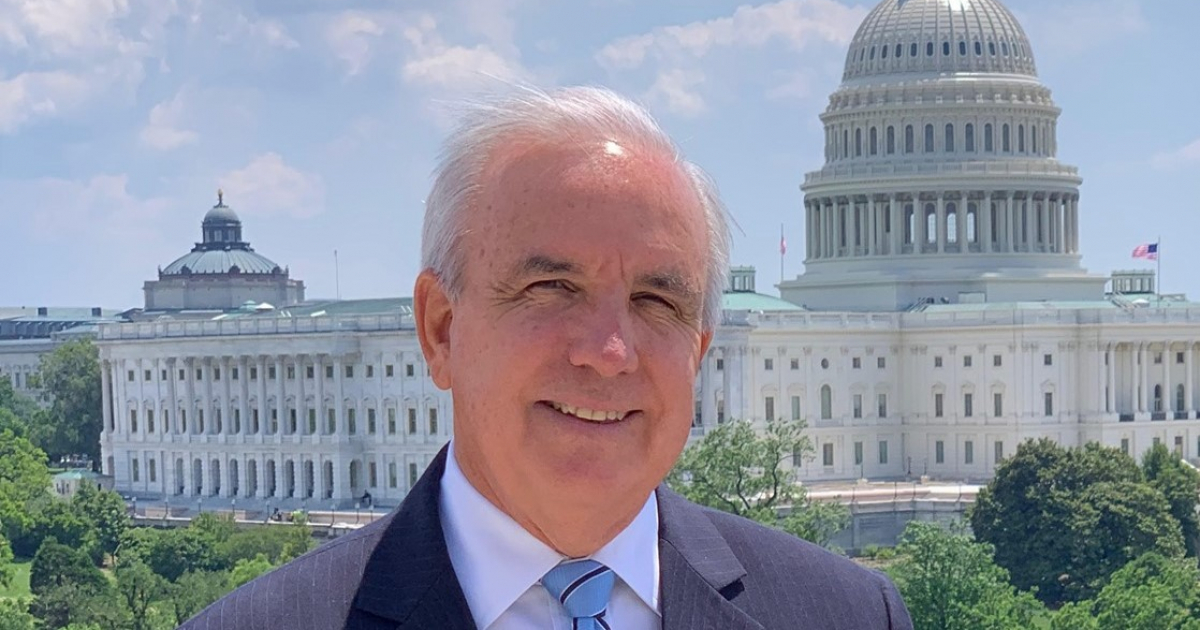
Republican Congressman from Florida, Carlos Giménez, has emphasized that the current collapse of Venezuela presents a direct opportunity to push for the end of the Cuban regime. He declared on his X account, "With Venezuela crumbling, our focus shifts to Cuba. The plan is moving full steam ahead."
In the same post, he quoted a phrase attributed to José Martí—"Everything to the fire. Even art. To fuel the blaze"—and stressed the importance of leveraging this momentum to foster the regime's downfall.
This statement comes amid heightened political tensions in the region, following a recent U.S. operation in Venezuela resulting in the capture of dictator Nicolás Maduro, who was subsequently taken to New York to face narcoterrorism charges.
Earlier, Giménez shared a post from the OSINTdefender account that displayed the movement of a Cubana de Aviación Ilyushin Il-96-300 plane off the Venezuelan coast, seemingly waiting for permission to land in Caracas before returning to the Island.
"Let me be clear: the days of the Cuban regime colonizing Venezuela and oppressing its people are over!" the Cuban-American politician declared, reinforcing his argument that Havana's influence in Caracas is waning.
Giménez, recognized as a strong voice from the conservative wing of the U.S. Congress on hemispheric issues, has frequently argued that authoritarian regimes in Latin America, like Cuba's, must be confronted as a central part of Washington's foreign policy.
The arrest of Maduro sparked a wave of reactions in the U.S. Congress, especially among Cuban-American lawmakers who publicly celebrated the event as a turning point for allied governments in the region.
On Saturday, several Florida legislators reacted with enthusiasm to the news of the U.S. military assault on the Venezuelan regime.
Among them, Giménez declared, "Maduro has fallen, Díaz-Canel and Ortega are next. We will see each other in a free Venezuela. Our hemisphere will be the hemisphere of freedom!"
Similarly, Congressman Mario Díaz-Balart described the military operation as "an example of decisive leadership" and stated that the action ordered by President Trump was in response to an "unprecedented threat" to U.S. national security.
Díaz-Balart claimed that the Maduro regime had been trafficking drugs, kidnapping citizens, and collaborating with actors deemed enemies of Washington, including Iran, China, Russia, Cuba, Hezbollah, and Hamas.
Meanwhile, Congresswoman María Elvira Salazar also praised what she described as the end of the "narco-terror imposed by the Maduro regime" and lauded the leadership of President Trump and Secretary of State Marco Rubio.
In her message, she called for the "legitimate leaders of Venezuela" to restore freedom and rebuild the nation, asserting that a "new cry for freedom echoes throughout the hemisphere."
In this climate of regional political shifts, Giménez's remarks bolster the narrative that the collapse of Chavismo could signal the onset of more intense pressures on other allied regimes, with Cuba as a primary focus.
Impact of Venezuela's Political Shift on Cuba
How does Venezuela's situation affect Cuba?
Venezuela's political instability presents an opportunity to apply pressure on Cuba, aiming to end its regime, as both countries have historically supported each other.
What role does Carlos Giménez play in U.S. foreign policy towards Cuba?
Carlos Giménez is a prominent voice in the U.S. Congress advocating for strong actions against authoritarian regimes like Cuba as part of Washington's foreign policy in Latin America.
How did the U.S. Congress respond to Maduro's arrest?
The arrest of Nicolás Maduro was met with positive reactions from U.S. Congress members, particularly Cuban-American legislators who view it as a turning point for allied governments in the region.