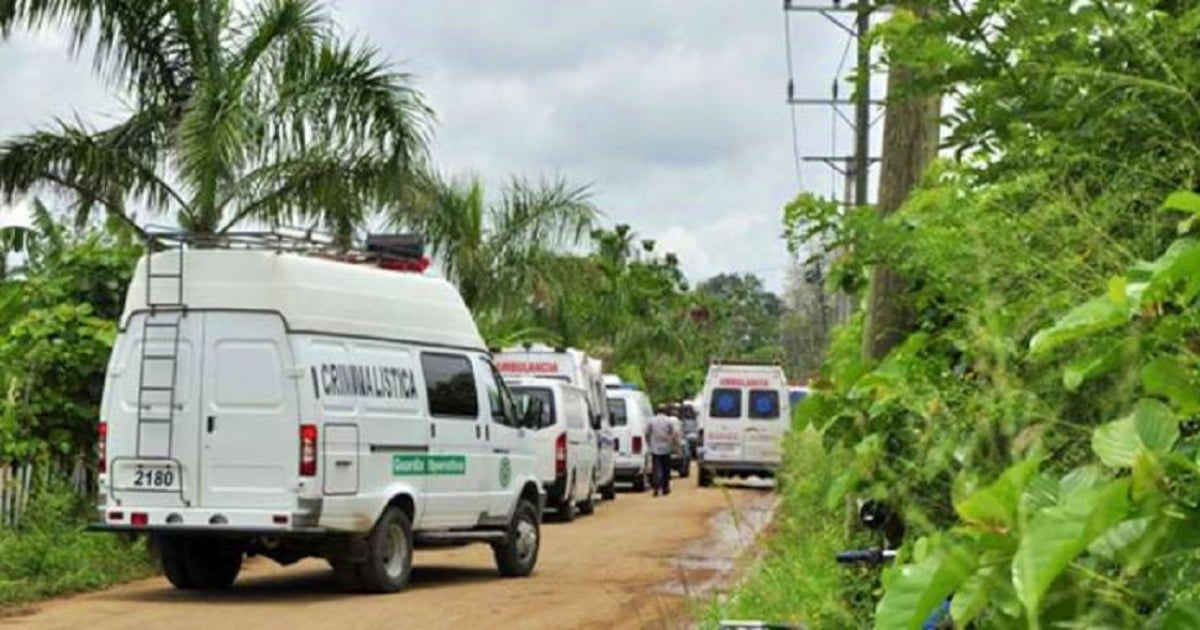
A Cuban nurse, identified as Magaly Aragón Aragón, was brutally murdered on January 6th at the Las Mulas prison camp in Jatibonico, located in the Sancti Spíritus province. The 59-year-old victim was discovered in a nearby sugarcane field, having suffered a violent sexual assault that ultimately ended in femicide, according to feminist platforms on social media.
This incident marks the first verified gender-based killing in Cuba this year, highlighting the severe impunity and lack of institutional protection faced by women in the country, even within state-run spaces.
Magaly Aragón, survived by two adult children, was killed by a man with a history of violence, as confirmed by independent gender observatories Yo Sí Te Creo en Cuba (YSTCC) and the Observatorio de Género de Alas Tensas (OGAT).
"We emphasize and denounce the sexual nature of the violence that ended Magaly's life, along with the perpetrator's history of violence," stated OGAT and YSTCC in a joint statement.
The alleged attacker, an inmate at the Las Mulas correctional camp where the victim worked, confessed to the murder and led authorities to the body, which he reportedly abused post-mortem, as reported by Martí Noticias. The suspect, identified as Yoel Soriano Santana, was serving a 26-year sentence for a similar murder at the time of the femicide.
Entered into the prison system on November 17, 2005, Soriano Santana's previous crime involved strangulation or asphyxiation, leading community sources to suggest necrophilia as a possible motive, given the similarities to his past offense. Necrophilia is defined as a sexual attraction to or intercourse with corpses.
Ongoing Crisis: Rising Femicide Cases in Cuba
As of January 8th, OGAT and YSTCC have recorded one femicide and one attempted femicide this month alone. They are also investigating 12 additional potential femicides, four attempted femicides, and one gender-motivated murder of a man that occurred in 2025.
The death of Magaly Aragón adds to a troubling and persistent trend of gender-based violence in Cuba. According to OGAT and YSTCC, at least 48 women were killed for gender-related reasons in 2025, amidst a lack of official statistics and specific laws to protect women at risk.
One of the most harrowing cases from last year involved Yuleidis Sánchez Rodríguez, a mother of three who was attacked on December 31st by her partner in Santiago de Cuba and succumbed to her injuries the following day. The attacker had prior reports of gender-based violence, underscoring, according to observatories, "the absence of preventive action by Cuban police."
Urgent Call for Legislative and Institutional Reform
Feminist observatories have consistently highlighted the legal and institutional void concerning femicides in Cuba. Despite the new Penal Code referencing gender violence, there is no comprehensive law on gender violence or an autonomous definition of femicide. There are also no shelters or immediate response protocols for women at risk, leaving many victims vulnerable to their aggressors, even after reporting them.
The platforms urge citizens to break the silence, emphasizing that reporting such crimes is not a crime itself: "CITIZENS, REPORTING THESE CRIMES IS NOT A CRIME. If you know of any extreme gender violence cases, contact the YSTCC Femicide Observatory."
The confirmation of Magaly Aragón's murder as the first femicide of the year occurs amidst a backdrop of structural impunity, where the state's response remains evasive, opaque, and reactive. Independent observatories have taken on roles that should belong to the state, gathering information, investigating, supporting families, and raising awareness for those who can no longer speak for themselves.
Magaly Aragón's murder in a state-controlled prison camp following a sexual assault symbolizes the extreme vulnerability women face in Cuba, even in their workplaces. Institutional negligence, the absence of specific laws, and the systematic invisibility of gender-based violence create an environment where tragedies recur with different names but identical patterns.
In 2026, Cuban society cannot afford to turn a blind eye. It is crucial to legislate, protect, and take action before more victims are added to a list that should have ceased to grow long ago.
Understanding Femicide in Cuba
What was the significance of Magaly Aragón's murder in Cuba?
Magaly Aragón's murder is significant as it highlights the severe lack of protection and institutional response for women facing gender-based violence in Cuba. Her case underscores the patterns of impunity and vulnerability women experience, even in state-run environments.
How are independent observatories in Cuba addressing femicide?
Independent observatories like OGAT and YSTCC are actively collecting data, investigating cases, supporting affected families, and advocating for legal and institutional reforms to address and prevent femicide in Cuba.
What challenges do women in Cuba face regarding gender-based violence?
Women in Cuba face significant challenges, including a lack of comprehensive legal protections, inadequate institutional responses, and the absence of shelters or immediate support mechanisms, leaving them vulnerable to repeated violence.