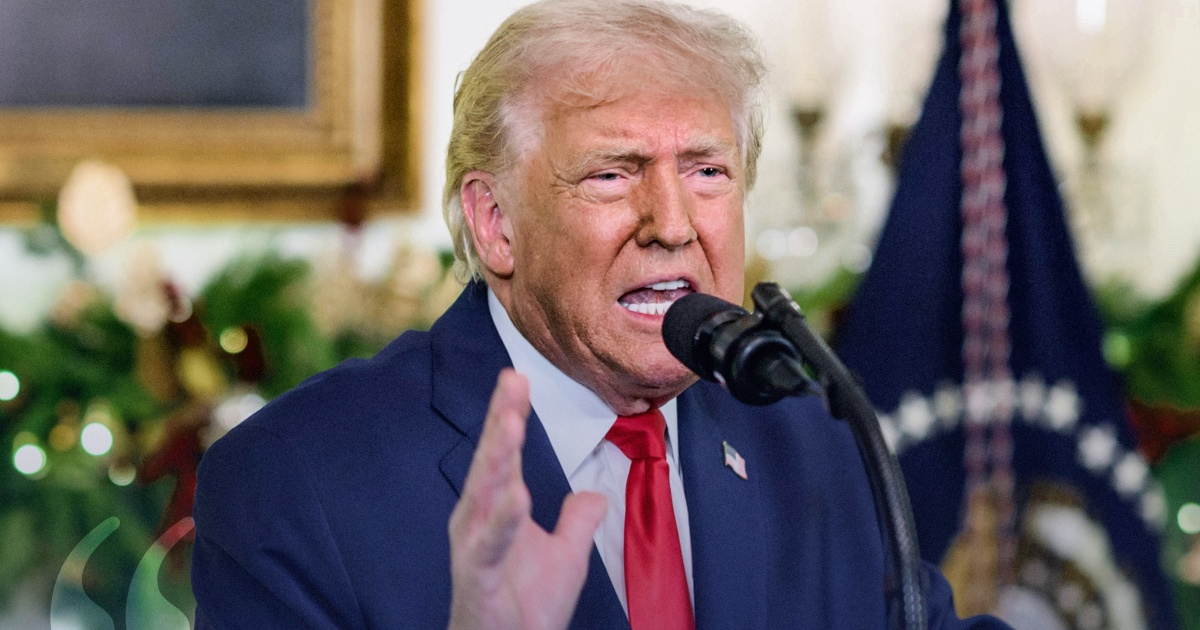
Former U.S. President Donald Trump has hinted that Washington's oversight of Venezuela could persist for an extended period.
In a Thursday interview with The New York Times, Trump emphasized that his administration's involvement and control over the South American nation are far from temporary. He mentioned that a "profitable reconstruction" had already commenced following the capture of former leader Nicolás Maduro.
When questioned about the potential duration of this oversight—whether three months, six months, or beyond—Trump suggested it would last "much longer."
"Only time will tell," he reiterated, affirming his administration's commitment to spearheading Venezuela's transformation, not only politically but also economically and in the energy sector.
"We're going to use the oil, and we're going to take the oil," he declared.
He added, "We're driving down oil prices and will provide funds to Venezuela, which is in desperate need."
New Partnership with Delcy Rodríguez
Trump clarified that the transition is being carried out in cooperation with Venezuela's new interim government led by Delcy Rodríguez, a figure close to the Chavismo movement, now effectively recognized by Washington.
"We have a great relationship with the current administration," Trump stated, highlighting, "They are providing us with everything we deem necessary."
Although Rodríguez was the vice president under Nicolás Maduro, now detained in New York facing narcotics and terrorism charges, the White House has decided to maintain open and direct communications with her government.
"We are in constant communication with her and the government," Trump confirmed.
Oil: The Core of Control
Trump's most revealing announcement was a plan to refine and sell up to 50 million barrels of Venezuelan oil, previously restricted by U.S. sanctions.
"We're going to be using oil and taking oil," he reiterated.
This operation signifies a turning point, not only by freeing frozen resources but by establishing a model of direct control over Venezuela's oil exports.
The U.S. Department of Energy has been explicit: "The only oil transported to and from Venezuela will be through channels approved by U.S. law and interests."
In practice, this means Washington will oversee every oil transaction originating from Venezuela.
Vice President J.D. Vance stated plainly: "We control the energy resources and tell the regime: you are allowed to sell oil as long as it benefits the United States."
He added, "We can control Venezuela's purse strings by dictating where its oil can be sold."
Meanwhile, Marco Rubio explained that Venezuelan crude shipments seized in the North Atlantic and Caribbean Sea are part of the new export framework.
"The interim authorities of Venezuela want that seized oil to be part of this agreement," he noted.
He warned, "They understand that the only way to move oil and generate revenue without economic collapse is by cooperating and working with the United States."
A Plan in Three Phases Without Timelines
The U.S.-led redesign of Venezuela lacks a specific timeline but has a defined structure.
Rubio outlined that the plan will unfold in three phases: "The first step is stabilizing the country. The second phase involves recovery, ensuring the West has access to Venezuelan markets. The third stage will be the transition."
The White House has refrained from offering concrete dates, though Trump has committed to eventually presenting a tentative schedule for elections in the country.
For now, the primary focus seems to be securing oil flow under favorable conditions for the U.S., maintaining political control of the transition, and aligning key players both within and outside Venezuela.
Regional Implications and a Warning to Petro
The transformation of Venezuela also has regional implications.
During the interview with The New York Times, Trump paused to take a call from Colombian President Gustavo Petro.
Moments earlier, he had issued a direct warning to the Colombian leader: "You better watch your back."
After the hour-long phone conversation, tensions eased.
A statement from the Colombian embassy in the U.S. stated, "The Colombian Government welcomes the constructive tone of the conversation and highlights that preparations for the meeting between the two presidents in Washington are underway through established diplomatic channels."
According to the Times, Trump believed that the "decapitation of the Maduro regime" had a deterrent effect on other regional governments, forcing them to align with the new U.S. strategy in Latin America.
Venezuela Under U.S. Oversight
Statements from Trump and his team indicate a new logic of intervention.
Venezuela is no longer merely a geopolitical dispute point but a platform from which the United States seeks to project power, control resources, and shape the political future of the hemisphere.
"We're going to rebuild the country in a very profitable way," Trump insisted, making it clear that this is not merely a humanitarian or diplomatic operation but a venture with geostrategic and economic benefits for Washington.
The ongoing process redefines the notion of sovereignty for Venezuela.
With an interim government validated by the White House, resources managed by U.S. agencies, and a transition without a set timeline, the country has effectively fallen under indefinite oversight.
Understanding U.S. Involvement in Venezuela
Why is the U.S. interested in Venezuela's oil?
The U.S. is interested in Venezuela's oil due to its vast reserves, which can be strategically used to influence global oil prices and ensure energy security for the United States.
What is the role of Delcy Rodríguez in Venezuela's interim government?
Delcy Rodríguez, previously vice president under Nicolás Maduro, leads the interim government recognized by Washington, facilitating communication and cooperation with the U.S. to manage the country's transition.
How does the U.S. plan to control Venezuela's oil exports?
The U.S. plans to control Venezuela's oil exports by overseeing transactions through American-approved channels, ensuring that sales align with U.S. interests and legal frameworks.