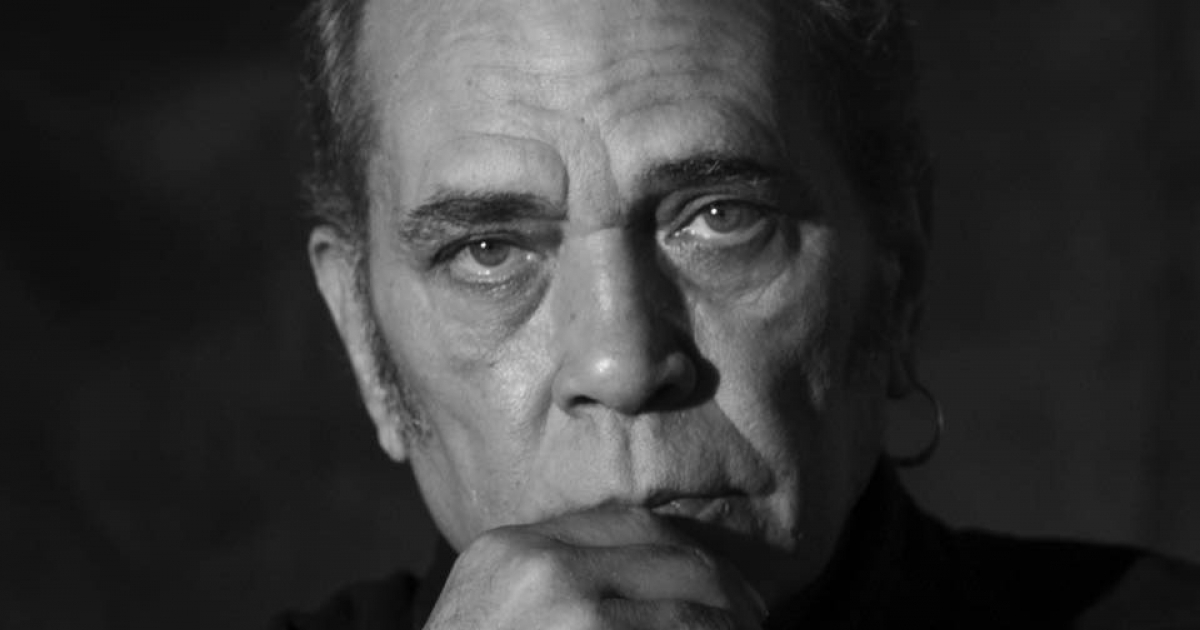
Cuban actor Luis Alberto García took to Facebook to condemn the increasing criminalization of critical thinking in Cuba, following a government official's statement on television asserting that "to doubt is to betray."
García labeled the statement as "one of the most fascist remarks" he's heard in years and identified himself as a "militant of all doubts," given the ample reasons he's been provided.
"It's entirely natural for the fear of repeating past failures and missteps to cause a person to dread their recurrence," he asserted.
The actor criticized the official stance aimed at stifling reflection and inquiry, pointing out that critical thinking has historically driven scientific, philosophical, and artistic progress worldwide.
"Are you betting on denying us the chance to ask: 'What if we do it differently? Better? More just? More efficient? Without so many lies? More 'EVOLUTIONARY'?" he questioned.
Luis Alberto stood firm on citizens' rights to question and discuss politics, government decisions, and the country's direction.
"Without doubt, politics and ideologies become meaningless. Are you advocating for a populace (ours and yours) that banishes doubt and accepts everything without question? Are we just root vegetables?" he challenged.
The post was a reaction to comments made by Jorge Legañoa, Vice President of the Union of Cuban Journalists (UPEC), who on the National News described doubt as a form of "treason" amidst the U.S. attack on Venezuela and the capture of Nicolás Maduro.
Legañoa argued that those questioning the Island's resilience are succumbing to despair and anti-Cuban euphoria, urging the populace to remain united and confident in the revolution's endurance.
He also sought to strengthen the regime's narrative on the nation's stability, warning that any breach of internal trust could be exploited by those wishing to harm the revolution.
Additionally, he cautioned against the threat of external actors using the "failed state" argument to justify a "humanitarian intervention," which he claimed would mask violence and annexation.
In response, Luis Alberto García criticized the government's attempts to enforce blind obedience as the sole pathway to legitimacy and the pressure placed on citizens to accept all official decisions without scrutiny.
"It's unbelievable that someone intelligent would doubt themselves or remain silent to appease," the actor voiced.
His post concluded with a call to uphold the freedom to question and individual responsibility against the official narrative: "I am Hamlet. A militant of all doubts… Never limiting," he declared.
García's stance resonates as a show of support for Cubans who, despite censorship, dare to challenge official decisions in the pursuit of a more transparent future for the country.
Exploring Critical Thinking in Cuba
What did Luis Alberto García criticize about the Cuban government?
Luis Alberto García criticized the Cuban government's stance on suppressing critical thinking and reflection, arguing that it stifles progress and individual responsibility.
Why did García describe himself as a "militant of all doubts"?
García described himself as a "militant of all doubts" because he believes that questioning and doubting are essential for progress and preventing the repetition of past mistakes.
How did Jorge Legañoa respond to criticism of Cuba's policies?
Jorge Legañoa defended Cuba's policies by labeling doubt as betrayal and emphasized the need for unity and confidence in the revolution's resilience against external threats.