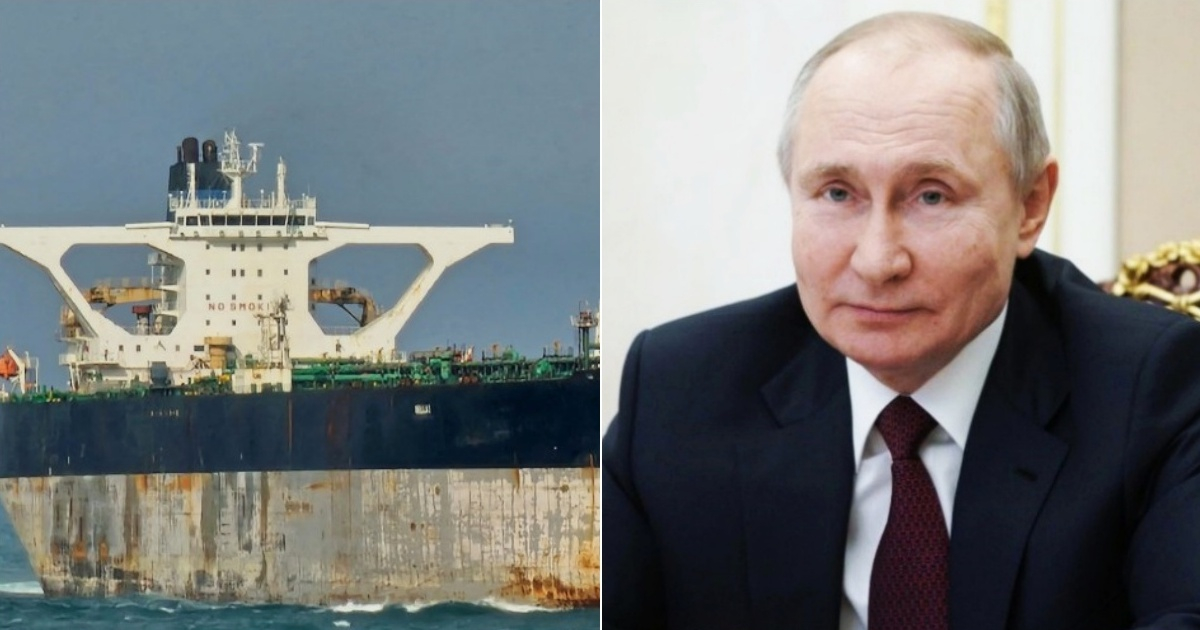
The ongoing energy and geopolitical conflict between Russia and the United States has taken a dramatic turn on the high seas.
On Wednesday, Moscow condemned what it termed an "illegal interception" of the oil tanker Marinera, which was sailing under a Russian flag in international waters when it was seized by the U.S. Coast Guard.
The Russian government argues that this action is a blatant violation of international law and significantly heightens tensions between the two global powers.
U.S. Pursuit and Alleged Sanctions Violations
The interception occurred in the North Atlantic after a pursuit by U.S. forces that lasted over two weeks. The ship, previously known as Bella 1, was accused of being part of a network transporting sanctioned oil from Venezuela, as part of U.S. efforts to cut off oil revenues to governments it deems hostile.
Moscow's Official Response: Accusations of Rights Violations
Russia quickly responded through its Ministry of Transport, which issued a statement condemning the U.S. boarding of the Marinera in "open sea, outside the territorial waters of any State," directly contravening the 1982 United Nations Convention on the Law of the Sea.
The ministry reported that around 3 p.m. Moscow time, U.S. naval forces boarded the vessel, after which contact with the ship was lost.
The statement highlighted that the Marinera had received a "temporary permit to sail under the state flag of the Russian Federation" on December 24, 2025, in accordance with national legislation and international law.
Foreign Ministry Criticizes Disproportionate Focus
Russia's Ministry of Foreign Affairs also harshly criticized the U.S. operation. It described the situation surrounding the Marinera as "abnormal," noting it was a civilian vessel under Russian flag in international waters.
The ministry accused U.S. and NATO forces of excessive and disproportionate attention to the ship's civilian status, pointing out that the Marinera had been pursued for days by the U.S. Coast Guard, actions inconsistent with Western rhetoric on freedom of navigation.
The ministry concluded, urging Western nations to adhere to their own principles of freedom of navigation.
The Marinera: A Symbol in the Energy Conflict
The Marinera's story extends beyond a simple flag swap. The tanker was implicated in transporting sanctioned crude from Venezuela and Iran, with an initial capture attempt by the U.S. in the Caribbean in December 2025.
During the chase, the crew took evasive actions, including painting a Russian flag on the hull, altering the vessel's name, and re-registering it under Russian jurisdiction.
U.S. officials cited by The New York Times indicated the boarding was accomplished without resistance, with no Russian ships nearby during the operation. However, behind the scenes, Moscow had deployed a silent military operation.
U.S. Maritime Campaign Intensifies
The Marinera's seizure is part of a broader maritime campaign led by the Trump administration to disrupt the oil trade from sanctioned regimes. This marks the third such action since December, according to European defense sources reported by The Guardian.
Following the Marinera's capture, the U.S. announced a fourth interdiction of another vessel in the Caribbean, linked to the "ghost fleet" transporting Venezuelan oil and evading sanctions through flag changes and fictitious registrations.
These operations coincide with increased U.S. pressure on the Venezuelan government after the capture of Nicolás Maduro, now detained in New York on narcoterrorism charges.
Strategic Consequences of the Marinera Incident
The Marinera incident challenges international maritime law and illustrates the shift of economic warfare to the oceans, bearing significant strategic implications.
The presence of a Russian nuclear submarine in the Atlantic amid a U.S. operation raised alarms within NATO, although the alliance refrained from direct involvement.
Moscow's message was unmistakable: protecting its energy interests may involve military force if deemed necessary.
From Washington's perspective, the Marinera's seizure is part of a maximum pressure policy against Maduro's allies and the illicit oil trade networks supporting sanctioned regimes.
For Moscow, it constitutes a provocation undermining international legal order with potential repercussions ranging from the Atlantic to the Middle East.
Key Questions About the Marinera Incident
Why did the U.S. intercept the Marinera?
The U.S. intercepted the Marinera due to its alleged involvement in transporting sanctioned oil from Venezuela, as part of efforts to block oil revenues to hostile governments.
How did Russia respond to the U.S. actions?
Russia condemned the U.S. actions as a violation of international law and emphasized that the Marinera was operating legally under a Russian flag in international waters.
What are the strategic implications of the Marinera incident?
The incident underscores the extension of economic conflicts to maritime domains, with significant strategic implications, including the potential use of military force by Russia to protect its interests.