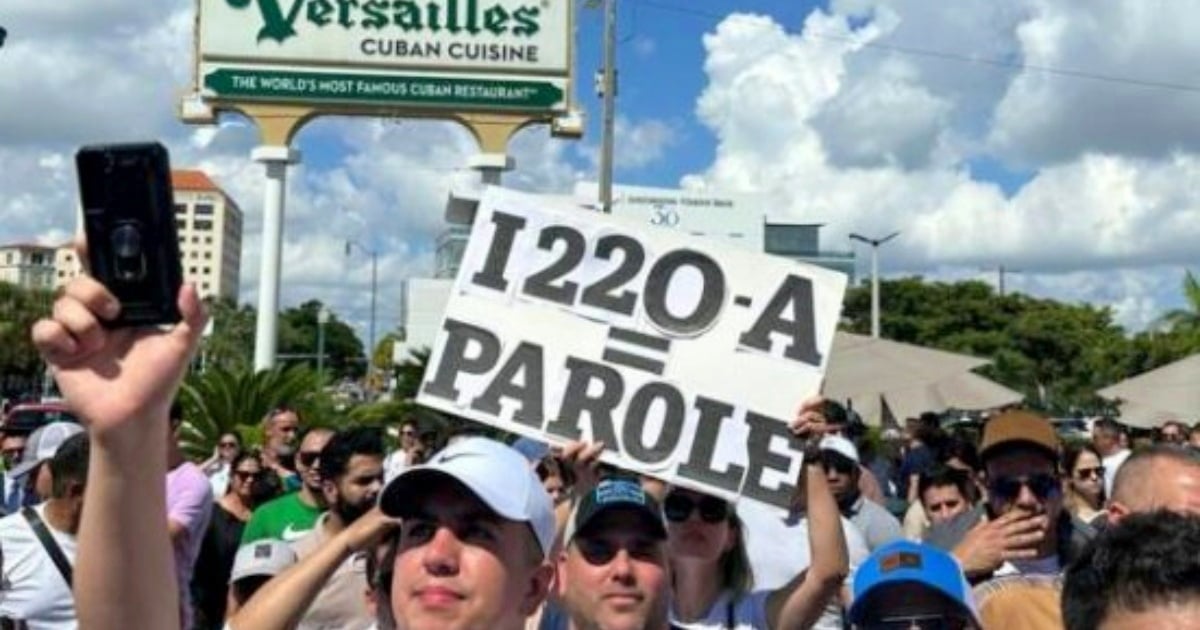
On Wednesday, the Second Circuit Court of Appeals in New York will hold a pivotal hearing that could reshape the immigration future for thousands of Cubans living in the United States who were processed using the I-220A form upon entering through the southern border.
The hearing, set to begin at 10:00 a.m., will feature arguments from immigration attorney Mark Prada, who is spearheading a significant legal challenge to have the I-220A acknowledged as a valid admission record under the Cuban Adjustment Act (CAA).
Since 1966, this legislation has allowed individuals to apply for permanent residency after one year and a day of physical presence in the country, provided they have been officially admitted or granted parole.
The case in question revolves around Aguilar Díaz, who was denied residency based on a prior decision by the Board of Immigration Appeals (BIA), which asserted that the I-220A form does not constitute parole and thus does not make one eligible for status adjustment.
Legal Implications of the I-220A
Prada explained, "Our argument hinges on the fact that those detained at the border have no rights to request or receive bail, meaning that the only legal release mechanism is through parole."
Although the immediate impact of a decision would be confined to New York, Connecticut, and Vermont, a favorable ruling could establish a significant legal precedent for similar cases across the nation.
Over 400,000 Cubans may be affected, many of whom are trapped in a migratory limbo, with pending asylum applications or under the threat of deportation.
Context of the Hearing
This hearing occurs amidst a tense climate: many immigrants with I-220A have faced detention, deportation, or relocation to third countries, stirring alarm among Cuban communities and immigrant rights organizations.
This legal battle follows closely on the heels of a similar process last month at the 11th Circuit Court of Appeals in Atlanta, where attorney Mark Prada also represented Cuban clients.
That December 12 hearing involved two Cuban women, including Labrada Hechavarría, who were denied permanent residency after being processed with an I-220A.
The defense argued that during the Biden administration, thousands of Cubans were incorrectly classified by Immigration and Customs Enforcement (ICE), receiving an I-220A instead of parole, thus preventing them from benefiting from the Cuban Adjustment Act.
Potential Impact of the Court's Decision
According to attorney José Guerrero, the government was left without arguments during that hearing, and the defense was "masterful." He noted the judges pressed the government, which even acknowledged processing errors.
The I-220A, a Release on Recognizance Order issued by ICE for migrants who cannot remain detained but whose cases are ongoing, is at the center of the dispute. Despite not being formally granted parole, these migrants remain under supervision and are required to appear in immigration court.
The issue is that the I-220A does not equate to formal admission or parole, automatically excluding them from the Cuban Adjustment Act, despite meeting the physical presence requirement.
The BIA has upheld this interpretation since its ruling in the Cabrera Fernández case in 2023, creating a legal void for thousands of Cubans who, despite living in the U.S. for over a year, cannot regularize their status.
The Second Circuit's decision, like that of the 11th Circuit, will not be immediate. It could take weeks or months, and either party could appeal to a full panel of judges or even the Supreme Court. However, these hearings are considered critical by lawyers and immigration activists.
A favorable outcome could enable Cubans with I-220A to adjust their status and obtain permanent residency, with wide-ranging humanitarian and legal implications. Conversely, a denial would solidify a restrictive legal precedent, prolonging the legal uncertainty for thousands.
In Miami, the December hearing prompted demonstrations of support outside the court. Entire families are waiting for a decision that could offer them a stable life in the United States.
With Wednesday’s hearing in New York, another chapter begins in a legal struggle that could determine the migratory fate of thousands of Cubans throughout the U.S.
Frequently Asked Questions About the I-220A Hearing
What is the significance of the I-220A form?
The I-220A form, or Release on Recognizance Order, is issued by ICE to migrants who cannot stay detained but whose cases are pending. It does not equate to formal admission or parole, which affects eligibility for the Cuban Adjustment Act.
How could a favorable ruling impact Cuban immigrants with I-220A?
A positive ruling could allow Cuban immigrants with the I-220A form to adjust their status and gain permanent residency, significantly impacting their legal and humanitarian situation in the U.S.
What are the potential outcomes of the Second Circuit's decision?
The decision could take weeks or months, with potential appeals to higher courts. A favorable outcome could change the legal landscape for many Cubans, while a denial would maintain a restrictive precedent.