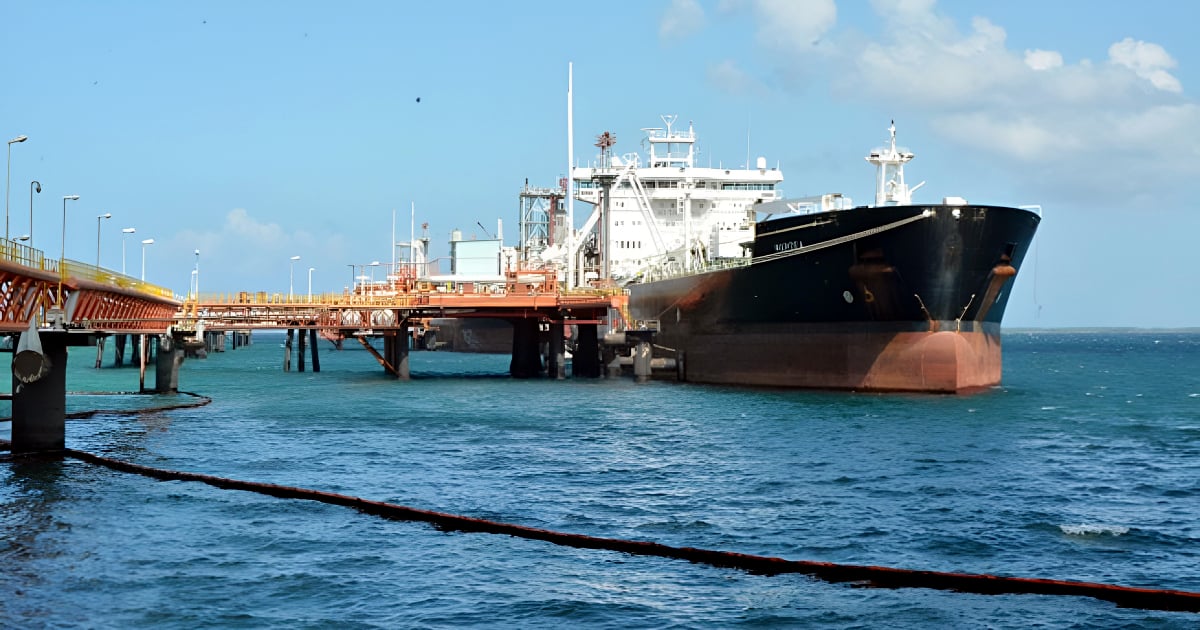
Recent satellite images and maritime tracking data reveal that the Cuban regime is reportedly moving its remaining oil reserves aboard six vessels managed by the military conglomerate GAESA, currently anchored in Matanzas Bay. This move signals a desperate attempt to manage resources amid the complete halt of Venezuelan supplies following Nicolás Maduro's capture and the collapse of the energy alliance that sustained Havana's regime for over twenty years.
The ships named Sandino, Ocean Integrity, Alicia, Marlin Ammolite, Pastorita, and María Cristina are currently docked at Matanzas' supertanker terminal. Another vessel, the Primula, is en route from Nipe and will soon join them, becoming the seventh tanker in the area.
According to Diario de Cuba, these vessels are operated by companies under GAESA's control and are typically used for transporting fuel between Cuban ports or as floating storage for ship-to-ship transfers, a common practice among the so-called "phantom fleet" linked to Venezuelan exports.
The congregation of these ships suggests that the regime might be unloading the last available fuel stocks or perhaps repositioning strategic reserves to maintain electricity generation in the coming days.
Currently, only one foreign tanker is headed toward Cuba: the Ocean Mariner from Mexico, expected to arrive in Havana on January 8. The last Russian crude shipment, carried by the Jasper, was unloaded in Matanzas on December 23 before heading to Santiago de Cuba.
The U.S. military intervention in Venezuela, which resulted in the capture of Maduro and his wife, Cilia Flores, has left the Cuban regime without its primary oil supplier. For years, Caracas supplied the island with 27,000 to 35,000 barrels of oil per day in exchange for medical, educational, and intelligence services. Without these shipments, Havana faces an imminent energy collapse.
Jorge Piñón, a researcher at the University of Texas Energy Institute, stated that if Cuba were to purchase its entire oil consumption on the international market, the annual cost would exceed $3 billion. Additionally, the poor quality of available fuel would drive up prices, particularly affecting diesel and fuel oil.
“The Cuban economy is exhausted, without credit and without allies,” economist Emilio Morales, president of the Havana Consulting Group, told Bloomberg. “The regime is emptying its own tanks to buy time, but the crisis is already structural. A collapse seems to be a matter of weeks.”
Impact of Oil Shortage on Cuba's Energy Sector
What has caused Cuba's current oil crisis?
The crisis stems from the complete halt of Venezuelan oil supplies following the capture of Nicolás Maduro and the collapse of the energy alliance that supported Cuba for over two decades.
How is GAESA involved in managing Cuba's oil reserves?
GAESA, a military conglomerate, operates the vessels currently holding Cuba's last oil reserves in Matanzas Bay. These ships are used for transporting fuel between ports and as floating storage for ship-to-ship transfers.
What are the potential economic impacts of this oil crisis on Cuba?
Without Venezuelan oil, Cuba faces an energy collapse, with the potential need to purchase oil on the international market at an annual cost exceeding $3 billion. This could further strain Cuba's already exhausted economy.