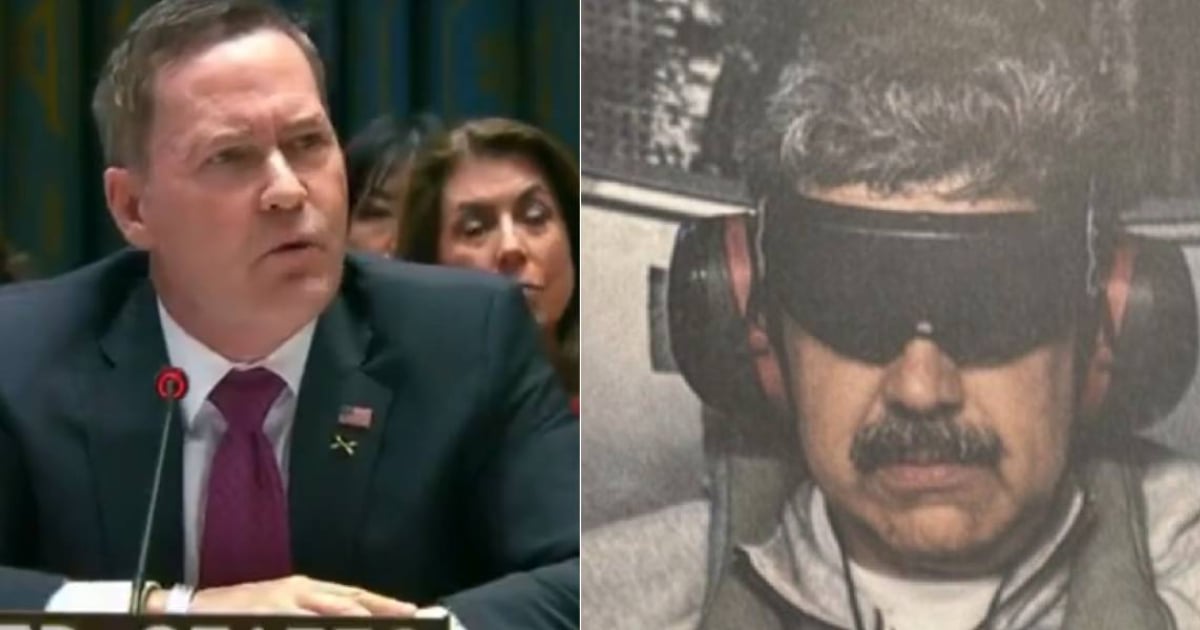
The United States addressed the U.N. Security Council on Monday, firmly rejecting claims of warfare or occupation following the detention of Nicolás Maduro. The session was characterized by intense diplomatic exchanges with nations like Russia and China, which questioned the legitimacy of the U.S. operation.
According to the EFE news agency, U.S. Ambassador to the United Nations Mike Waltz clarified that the action was not a military conflict or foreign occupation. Instead, he described it as a law enforcement operation targeting an individual deemed illegitimate and linked to drug trafficking by Washington.
"There is no war against Venezuela or its people. We are not occupying any nation," Waltz stated, defending the decision to apprehend Maduro and bring him to the United States for trial on charges spanning more than a decade.
Maduro's Illegitimacy Asserted by U.S.
During his address, the U.S. diplomat was unequivocal in denying any political or diplomatic recognition of the Venezuelan leader. "Maduro is not a legitimate head of state," he declared, citing electoral fraud and institutional manipulation as the basis of Maduro's hold on power, rather than genuine public support.
Waltz argued that treating Maduro as a legitimate president would be akin to granting diplomatic status to a narcoterrorist, which he believes contradicts the founding principles of the U.N.
Confrontation with Russia and China
The session was convened at the request of nations opposing the operation, including Russia and China, who condemned it as a breach of international law and a dangerous precedent in international relations.
Waltz directly addressed these criticisms, questioning the Security Council's role in equating leaders accused of drug trafficking with democratically elected governments. "If this body legitimizes a narcoterrorist, it must question what it truly represents," he asserted.
Operation Justification
The U.S. maintained that the detention was conducted under the constitutional responsibility of the President to protect American citizens, highlighting the deadly impact of drug trafficking linked to the Venezuelan regime on thousands of Americans.
The ambassador noted that President Donald Trump had previously offered diplomatic exits to Maduro, which were declined, before authorizing the operation.
U.S. Vision for Venezuela's Future
Despite the firm stance, Washington emphasized that its goal is not to punish the Venezuelan people but to facilitate a political transition that stabilizes the country and the region.
"We seek peace, freedom, and justice for the people of Venezuela," Waltz concluded, emphasizing that the U.S. will continue to act against narcoterrorism despite international opposition.
The debate revealed a new geopolitical rift within the Security Council and foretells prolonged tensions over Venezuela's future and the scope of U.S. intervention.
Rubio Denies U.S. is at War with Venezuela
U.S. Secretary of State Marco Rubio denied on Sunday that the U.S. is "at war with Venezuela" following Nicolás Maduro's capture, asserting that the operation ordered by President Donald Trump was a "legal and limited" action in the fight against drug trafficking.
In an interview on NBC's 'Meet the Press,' Rubio stated that Washington had not initiated a military intervention but rather a "law enforcement action" to execute a judicial order related to the drug trafficking and organized crime charges against the Chavista leader.
Key Questions About U.S. Actions in Venezuela
Why did the U.S. detain Nicolás Maduro?
The U.S. detained Nicolás Maduro as part of a law enforcement operation, viewing him as an illegitimate leader involved in drug trafficking, rather than as a legitimate head of state.
What was the reaction of Russia and China?
Russia and China criticized the U.S. operation, viewing it as a violation of international law and a dangerous precedent in global relations.
How does the U.S. justify its actions in Venezuela?
The U.S. justifies its actions by citing the need to protect American citizens from the detrimental effects of drug trafficking associated with the Venezuelan regime.