The military operation in Caracas and the capture of Nicolás Maduro have marked a pivotal moment in U.S. foreign policy towards Latin America.
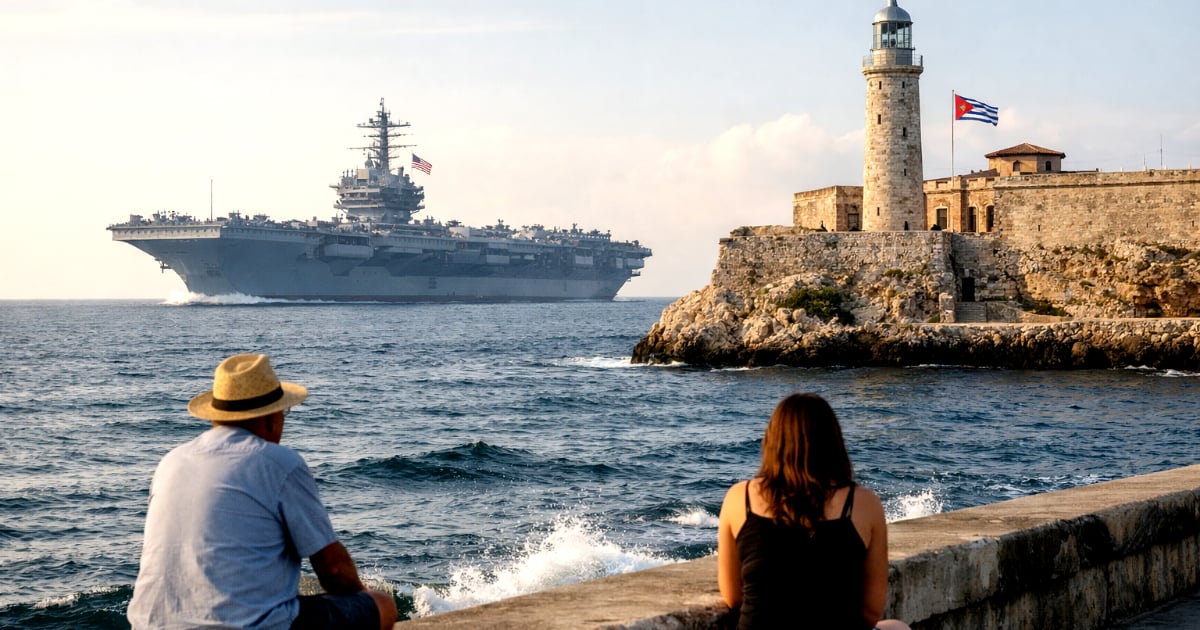
Behind this precise operation—carried out by Delta Force and personally endorsed by President Donald Trump—emerges a pressing question among diplomatic and intelligence circles: Is Cuba the next target?
The signs are significant. Recently, Washington's rhetoric has escalated from warnings to a dire prognosis. Aboard Air Force One, Trump declared, "Cuba is ready to fall," a statement that, despite its dramatic tone, hints at the White House perceiving an impending collapse of the Cuban regime.
Secretary of State Marco Rubio has long warned that the real adversary is not Caracas, but Havana. In December, he was unequivocal: "Cuba is the head of the monster. If you don't cut off the head, the venomous snake will continue to do harm in America." For Rubio, Maduro's capture is not merely a blow to Chavismo but a strategic move to isolate and weaken the core of continental socialism.
This alignment of military action, doctrine, and political narrative may signal a profound shift in policy towards Cuba, moving away from "diplomatic pressure" and towards active deterrence—a term central to the new National Security Strategy approved in December.
Ending the "Special Regime" in Cuba
For decades, Cuba was treated as an anomaly: a rhetorical enemy that was sanctioned but tolerated. The fall of Maduro alters that equation. Caracas was the economic lifeline of Castroism, providing oil and cash. Without this support, the Havana regime faces a financial void that Trump himself described as "deadly."
The new Republican approach seems aimed at capitalizing on this collapse without rushing into an invasion. "We don't think action is necessary: it appears to be collapsing on its own," Trump told reporters.
However, the fact that military action is not ruled out—backed by Rubio and Senator Lindsey Graham, who called Cuba "the head of the snake"—demonstrates that the option of force remains on the table as a pressure tactic.
The death of 32 Cuban agents in Venezuela not only dismantles years of denials by the Havana regime but provides Washington with concrete evidence of the militarization of the ties between the two countries.
The official admission of this presence, even when wrapped in heroic language, reshapes the region's strategic map: it turns Cuba into an active security player within the Venezuelan conflict, rather than just a political ally.
In Washington power circles, this revelation reinforces the notion that the Caracas-Havana axis can no longer be treated as a diplomatic or ideological issue but as a hemispheric national security problem.
The "Rubio Doctrine" and Its Impact
Marco Rubio's role as Secretary of State emerges as central in the hemispheric redesign.
His influence—amplified by his Cuban-American heritage and his vision of "democracy controlled by national security"—has transformed traditional rhetoric into a strategic framework combining regime change, energy sanctions, and resource control.
Since December, Rubio warned that "a transition in Venezuela would fatally weaken Cuba." And he was right: the Cuban economy, without Venezuelan oil or financial leeway, teeters on the brink of collapse.
Washington is aware, and Graham's moral discourse, denouncing "Cuba has killed priests and nuns," could aim to legitimize any future action under the banner of humanitarianism and historical justice.
In this context, Rubio promotes what some Pentagon advisors in Washington have already called, with irony and precision, the "Donroe Doctrine": a reinterpretation of the old Monroe Doctrine adapted to the Trump era, where "America for the Americans" translates to "the hemisphere for the secure."
Its premise is simple: no state on the continent can serve as a refuge for regimes that sustain criminal networks or threaten U.S. hegemony under the ideological guise of socialism.
This hybrid doctrine—half geostrategy, half moral crusade—turns regional security into the new language of freedom. And in that language, Cuba now occupies the symbolic place once held by Iraq: the uncomfortable epicenter that no one in Washington rules out addressing when the time comes.
What Lies Ahead?
The scenarios under discussion within the administration point to an assisted transition in Cuba. Washington might attempt to replicate the Venezuelan model: an "acceptable" interim figure to negotiate with the U.S., followed by a supervised electoral process.
The challenge, as analyst Michael Bustamante noted in The New York Times, is that "Cuba lacks a visible organic opposition; it is a single-party state in a way that Venezuela never was."
Thus, rather than a sudden change, a strategy of total political and economic strangulation may be on the horizon, accompanied by increased support for civil society and the promotion of human rights and democracy.
All this, combined with the end of Venezuelan oil, the tightening of the financial blockade, and the erosion of the revolutionary narrative, could push Havana towards an even greater crisis of legitimacy.
In 2026, the White House seems determined to close the cycle that began in 1959. And if the "fall of Cuba" occurs, as Trump predicts, it will not be through a classic invasion but through a combination of economic suffocation, diplomatic isolation, and internal erosion.
What Washington calls "the head of the snake" could be closer to the chopping block than Havana imagines.
Key Questions About U.S. Policy Toward Cuba and Latin America
Why is Cuba seen as a target by the Trump administration?
Cuba is perceived as the epicenter of socialism in Latin America, and its regime is seen as a threat to U.S. interests. The administration believes that weakening Cuba could impact socialist networks in the region.
What is the "Rubio Doctrine"?
The "Rubio Doctrine" refers to a strategic approach that aims to ensure no state in the Americas can harbor regimes that threaten U.S. hegemony under the guise of socialism, combining regime change with sanctions and security measures.
How might the U.S. approach a transition in Cuba?
The U.S. might seek to facilitate a transition in Cuba through political and economic pressure, along with support for civil society and a potential interim government to lead to democratic elections.
What impact could the end of Venezuelan oil have on Cuba?
The cessation of Venezuelan oil supplies could severely impact Cuba's economy, which relies heavily on this resource for energy and revenue, potentially leading to financial collapse.