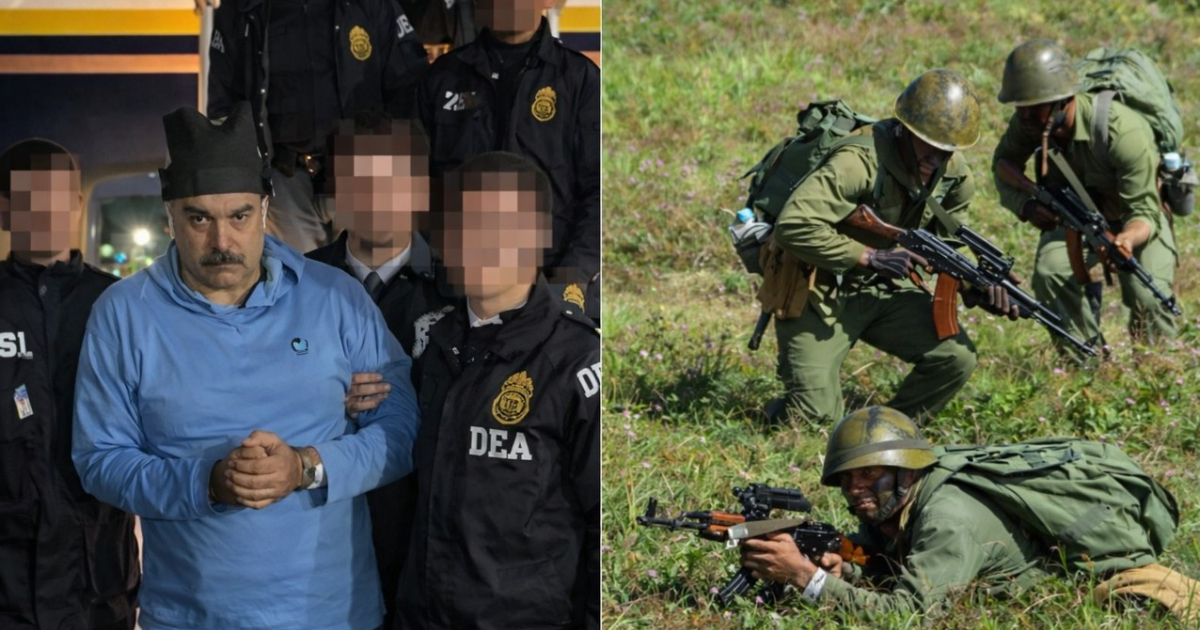
The Ministry of the Revolutionary Armed Forces in Cuba has ramped up its militant rhetoric following the removal of Nicolás Maduro from power.
"The command to cease fire will never be issued if it means surrendering to the enemy. There can be no resolutions based on capitulation or concessions. Our final triumph shall be ours, regardless of the challenging circumstances in which the struggle unfolds," reads a tweet from the Cuban military, featuring an image of an elderly Fidel Castro raising a rifle.
Another tweet asserts, "War should not be instigated, but we shall engage if the adversary compels it. The conflict can only end with 'victory or death,' and for Cuba, there can be no alternative but victory. We must expunge the terms surrender and defeat from our military vocabulary."
This past Sunday, U.S. Secretary of State Marco Rubio implied that Cuba might soon face increased American pressure.
During an appearance on NBC's 'Meet the Press,' Rubio refrained from confirming whether Cuba could be the next target for the Trump administration, but he hinted at the possibility of further actions.
"I am not going to discuss our next steps or policies at this moment, but it's no secret that we are not fans of the Cuban regime," stated the Cuban-American politician. He labeled the Cuban government as "a significant problem" following the events in Venezuela and Maduro's capture, highlighting Cuba's critical role in safeguarding the former Venezuelan leader.
Rubio further mentioned that Maduro's security apparatus was run by Cuban agents. "It was the Cubans, not the Venezuelans, who were guarding Maduro," he noted.
"His internal security and intelligence system—the ones who monitor others to prevent betrayal—are entirely led by Cubans." Rubio explained that this "internal colonization" partially accounts for the tight dependency between Caracas and Havana.
Key Questions on Cuba's Military Posture and U.S. Relations
What has Cuba's military vowed regarding conflict?
Cuba's military has vowed never to issue a command to cease fire if it implies surrendering, declaring that the conflict can only end with 'victory or death'.
How has the U.S. responded to Cuba's involvement in Venezuela?
U.S. Secretary of State Marco Rubio has hinted at the possibility of increased pressure on Cuba, identifying the Cuban government as a 'significant problem' due to its role in Venezuela and its protection of Nicolás Maduro.