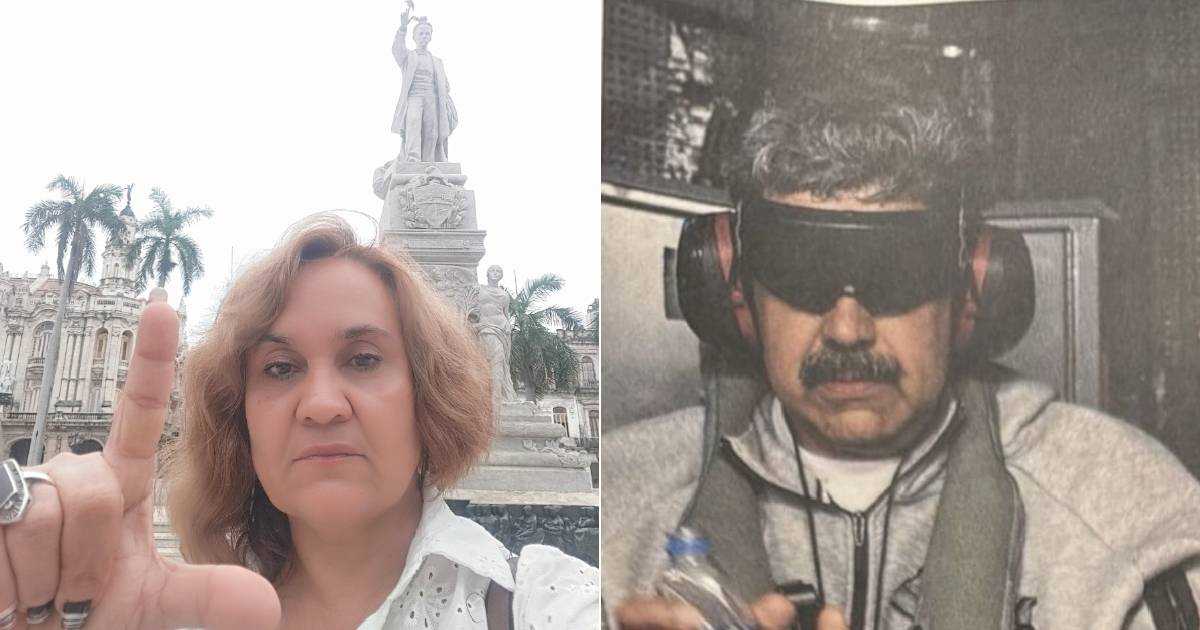
Jenny Pantoja Torres, a Cuban scholar, emphasized on Saturday that the removal of Nicolás Maduro does not automatically translate to Venezuela's liberation. She cautioned that an exit orchestrated by the United States may leave the country ensnared in a fresh cycle of external dependency.
In a detailed post on her Facebook page, Pantoja offered a nuanced perspective on the unfolding events in the South American nation following Maduro's capture by U.S. forces.
While she acknowledged relief at the departure of the Venezuelan leader from power, Pantoja criticized the approach taken, arguing it lacks political legitimacy and poses significant future risks for the nation.
She noted that, although Maduro was deemed an illegitimate president after disregarding the opposition's electoral victory led by Edmundo González and María Corina Machado in July 2024, a transition imposed by another power is not a preferable solution.
In her view, the ideal resolution should always emerge internally, even as she recognized that the Venezuelan people had found themselves stuck in a "dead-end," with all institutional pathways blocked.
Extending her analysis to Cuba, Pantoja warned that prolonged civic inaction leaves authoritarian societies vulnerable to becoming pawns of major powers, whether it be the United States, Russia, or China.
She identified the totalitarian system itself as a key factor undermining national sovereignty by diminishing citizens' ability to act and paving the way for external interventions.
Pantoja also questioned whether Washington genuinely supports the Venezuelan opposition, pointing out that she was not surprised by indications that the Donald Trump administration might disregard González and Machado in favor of a deal that aligns with its interests.
"Venezuelans still have a long journey to achieve true freedom," she stated, emphasizing that Maduro's capture does not necessarily signify a structural shift in power.
Reactions to her post revealed deep divisions within the Cuban exile community and citizenry. Some agreed that foreign intervention could lead to new authoritarian regimes or failed transitions, while others argued that, in contexts like Venezuela and Cuba, any internal solution might result in a massacre without success guarantees, making it inevitable to choose between morally flawed options.
The debate comes amidst a Venezuelan landscape marked by the appointment of Delcy Rodríguez as interim president by the Supreme Court, under explicit oversight and conditions from the United States, which amplifies doubts about the true nature of the ongoing transition and rekindles fears of a power restructuring without a genuine break from chavismo.
Recently, critical voices from the Cuban intellectual and artistic spheres have also spoken out regarding the manner in which Maduro was ousted.
Comedian Ulises Toirac, writer Jorge Fernández Era, and poet and improviser Alexis Díaz-Pimienta, among others, have questioned the removal of the Venezuelan leader through foreign military action, warning that the means are as crucial as the outcome, and that the intervention of a foreign power raises serious questions about sovereignty, legitimacy, and dangerous precedents for societies like Cuba.
Key Insights on Venezuela's Political Future
What are the risks of foreign intervention in Venezuela?
Foreign intervention could lead to new forms of external dependency and undermine political legitimacy, potentially resulting in failed transitions or the emergence of new authoritarian regimes.
Why is internal resolution preferred for Venezuela's political crisis?
An internal resolution is considered ideal as it is believed to foster genuine change driven by the people, avoiding reliance on external powers and ensuring that solutions are tailored to the country's specific needs.
How does the situation in Venezuela relate to Cuba?
The situation in Venezuela serves as a warning for Cuba, highlighting the dangers of prolonged civic inaction and the potential for external powers to exploit authoritarian regimes, undermining national sovereignty.