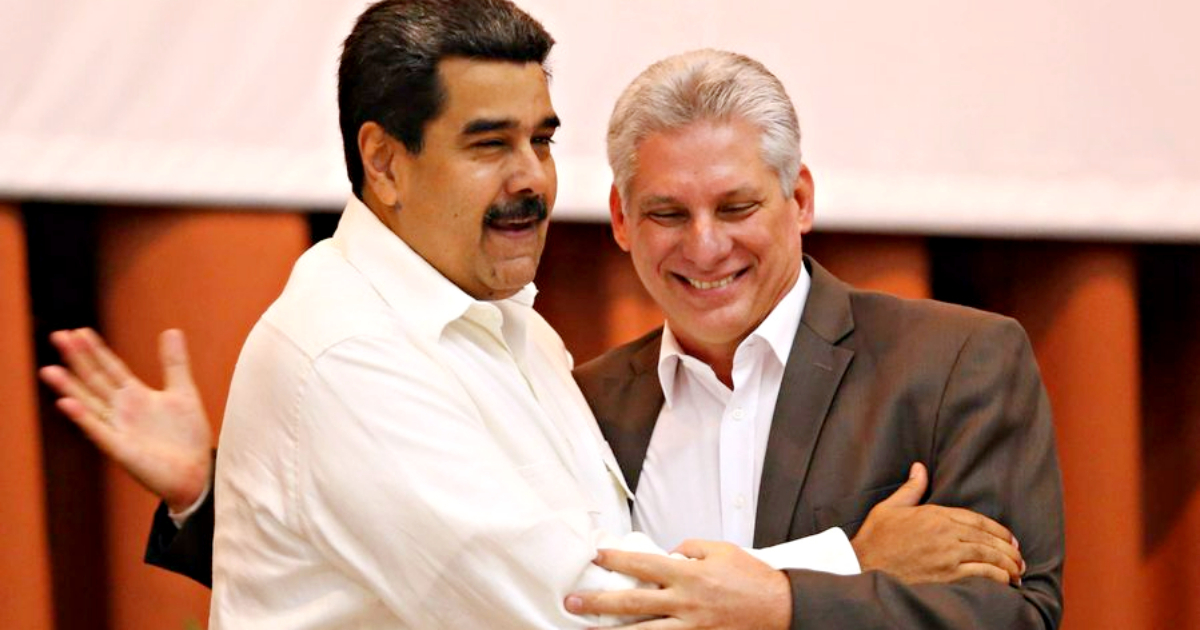
An impassioned speech by Miguel Díaz-Canel broadcast from Havana, in which he declared, "I will give my blood and life for Maduro," triggered a digital uproar among Cubans both on the island and abroad.
Within a day, CiberCuba's report on his statement amassed over 18,000 comments, becoming one of the platform's most discussed posts. This reaction highlights widespread discontent and a surge of sarcasm, anger, and hope following the arrest of Nicolás Maduro by U.S. forces.
Attempting to position himself as a steadfast ally of the Venezuelan leader, the Cuban ruler proclaimed, "Cuba will not abandon Venezuela and is ready to give everything for its sovereignty." However, his attempt at showcasing revolutionary solidarity backfired, provoking a storm of ridicule and rejection. "Start today, but let it be your blood, not the Cuban people's," wrote one user, capturing the prevailing sentiment.
Many recalled Cuba's military missions in Angola, Ethiopia, or Nicaragua, cautioning, "Cuba has shed too much blood for wars that weren't ours. If he wants to give his own this time, let him go alone." This comment garnered thousands of likes and was shared on various opposition pages, while others quipped, "Don't worry, Trump will take you up on it; Maduro said to come for him, and look where he is now."
The blend of mockery and restrained fury was palpable. "Speak for yourself, not for the people who are hungry and in the dark," responded numerous commentators. "Sacrificing his life for Maduro is easy when he has never given anything for Cubans," another added.
Numerous messages reiterated the demand that if Díaz-Canel talks about sacrifice, it should be his alone, excluding the people and the youth drafted by the regime. Among the most shared comments, some used humor to express frustration: "Let him do it now, before it's too late"; "Hope he follows through so we can get rid of him and his crew"; and "Maduro asked to be taken, and now he's in New York; Canelito, your turn."
Joking became a form of collective catharsis. Many noted that the Cuban leader "ran out of free oil and speech," pointing to the immediate economic impact Maduro's downfall would have on Havana's regime.
Others expressed deeper emotional burdens. "Cubans don't need power martyrs; we need freedom," wrote a user signing off with "Patria y Vida" (Homeland and Life). "We've endured over six decades of sacrifices for foreign causes, and all we've gained is misery," added another.
Díaz-Canel's speech, perceived by many as a jittery response to the detention of his main political and financial ally, was seen as a sign of fear over a potential "domino effect" that might reach Havana. "He knows that if Maduro talks, the game is up," summarized a comment that received thousands of reactions. "They must be trembling in the Palace of the Revolution. When Venezuelan oil falls, so does Castrism," another noted.
Among the flood of responses, only a minority defended the official stance. Some invoked Fidel Castro's legacy and "solidarity internationalism" as justification for Cuba's commitment to Caracas. "Our president is supported by millions and fulfills the historic mandate to defend brotherly peoples," wrote a user aligning with the state narrative.
However, such comments were quickly buried under thousands of critical or sarcastic replies: "Perfect, let them join him on the trip then," one user retorted.
In the most active exile communities, particularly in Miami and Madrid, Díaz-Canel's promise was seen as a sign of political weakness and a historic opportunity. "With Maduro captured, Castrism is left without a shield. It's just a matter of time," wrote a commentator. "Operation Lanza del Sur doesn't stop. After Venezuela, comes Cuba," others claimed, referring to the U.S. intervention that toppled the Chavista regime.
Warnings echoed: "Be careful what you wish for, because it might come true," "It's not the same to call the devil as to see him arrive," or "Maduro was taken out in 40 minutes; you're just 80 miles away," reminding of Cuba's geographical proximity to the United States and the presence of the Guantanamo Bay naval base.
In the flood of reactions, humor and critique merged: "We're out of Canelito for coffee," laughed a user. Another, more sarcastically, commented, "Finally says something useful: to give his life, since he's already given the people's."
Many messages pointed out the hypocrisy of a leader talking about sacrifice while the population faces over 10-hour blackouts, food and medicine shortages, and plummeting wages.
Comments also drew parallels between Maduro's fall and a potential end to Castrism. "Cuba is next. The domino started in Caracas," said an exiled Cuban. Another wrote, "Today it's Venezuela, tomorrow Cuba, and then Nicaragua. No dictatorship is eternal."
Some used religious or moral tones: "God is just. Every tyrant's time comes," "Cuba's time is near," "Divine justice doesn't fail." Others, more bluntly, called for the regime's fall: "Cuba will be free when those in power pay what they owe," "Canel, start packing, your turn is next."
The publication also prompted impromptu political analyses among users, who saw the statements of the ruler appointed by Raúl Castro as a distraction from the internal crisis. "It's all theater. He's trying to show loyalty while negotiating his survival," one commentator opined. "If Venezuela showed anything, it's that dictatorships fall when fear switches sides," another added.
In the thread's closure, a user summarized with a mix of irony and hope what many seem to feel at the dawn of 2026: "Maduro said to come for him, and they did. Díaz-Canel says he'll give his life for him, so logically, they should come for him too. God willing, Cuba will see the light."
While the government remains silent, the message seems clear: a significant portion of the populace no longer fears nor believes in epic speeches. "Let him give his blood, but don’t drag the people's with it," wrote a Cuban from Havana. "If he truly wants to sacrifice for something, let it be for Cuba and its freedom. That would be historic."
Reactions to Díaz-Canel's Promise to Sacrifice for Maduro
Why did Díaz-Canel's promise cause such a strong reaction among Cubans?
Díaz-Canel's promise to sacrifice his life for Maduro sparked strong reactions due to widespread discontent with Cuba's political situation, historical sacrifices for foreign causes, and the perception of his speech as a desperate move in light of Maduro's arrest.
How did social media react to Díaz-Canel’s statement?
Social media exploded with sarcasm, criticism, and humor, as Cubans expressed their frustration and disbelief. Many comments highlighted the absurdity of the statement and called for Díaz-Canel to act on his words without involving the Cuban people.
What potential impact could Maduro's arrest have on Cuba?
The arrest of Maduro could have significant economic and political impacts on Cuba, particularly due to the loss of Venezuelan oil and the potential for a "domino effect" that could destabilize the Cuban regime.