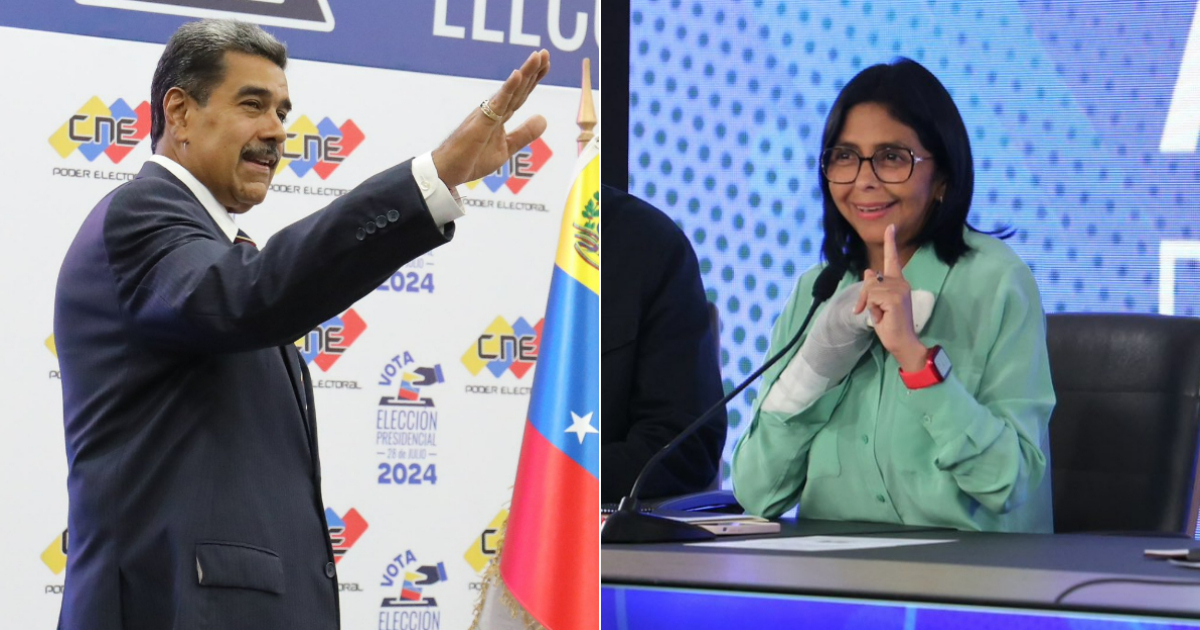
In a dramatic turn of events, Venezuela's Supreme Tribunal of Justice (TSJ) has mandated that Vice President Delcy Rodríguez assume the presidency following the capture of Nicolás Maduro by U.S. forces. The operation, which unfolded in Caracas and several regions, has left Venezuela in a state of upheaval.
This unprecedented ruling, invoking Article 335 of the Venezuelan Constitution, is designed to ensure governmental continuity during extraordinary circumstances. Justice Tania D’Amelio, speaking on behalf of the tribunal, declared the "forced absence of the president," entrusting Rodríguez with the full powers and responsibilities of the presidency until constitutional order is restored.
"The goal," D’Amelio explained, "is to maintain institutional functionality, defend the nation comprehensively, and preserve public order in this exceptional and atypical context."
The TSJ's decision acknowledges the current scenario as a force majeure event, prompting an extensive interpretation of Articles 234 and 239 to legitimize the temporary power transfer. According to El Universal, the decision followed intense internal debates on handling the foreign military intervention and the detention of the head of state.
The move comes on the heels of a night marked by intense U.S. bombings on Caracas, La Guaira, and Aragua, targeting military sites, including Fuerte Tiuna and La Carlota Air Base. This operation culminated in Maduro and his wife, Cilia Flores, being transported to New York.
From his Mar-a-Lago residence, U.S. President Donald Trump announced that America would "manage Venezuela until a fair transition is achieved," ensuring that the new Venezuelan government is overseen for a "smooth transition to democracy."
The TSJ's ruling aims to prevent a power vacuum and maintain administrative continuity amid the instability triggered by the U.S. operation. Nonetheless, analysts warn that this judicial maneuver exposes internal fractures within the Chavista movement, with the armed forces split between allegiance to the Supreme Tribunal and loyalty to the former leader.
Now assuming the head of state role amidst an unprecedented institutional crisis, Rodríguez emerges as a pivotal figure in a country under military tension, sporadic protests, and an uncertain political future.
U.S. Influences Venezuela’s Transition as Rodríguez Takes Charge
The TSJ's appointment of Rodríguez as interim president coincides with strategic shifts in U.S. policy towards Caracas. President Trump confirmed that his administration would "control Venezuela under its conditions," with Rodríguez leading a U.S.-supervised transitional government.
From Mar-a-Lago, Trump asserted that the U.S. would manage the country "until a just democratic transition occurs," emphasizing that Venezuelan energy resources—particularly oil—would be temporarily managed by the U.S. to "benefit the Venezuelan people" and address "past illegal expropriations."
"We're going to run this country correctly and ensure the Venezuelan people are cared for," Trump declared, confirming communications between Secretary of State Marco Rubio and Rodríguez herself. According to Trump, Rodríguez has shown willingness to cooperate in stabilizing the country, echoing his campaign slogan.
Rubio, speaking to The New York Times, suggested that the Chavista elite faces a "historic opportunity" to act in the nation's best interest. "We'll make decisions based on the facts and actions observed in the coming days," he warned, indicating that Washington will scrutinize Rodríguez's and her cabinet's actions before determining further steps.
The declarations have sparked debate both inside and outside the United States. While some Republicans, such as Congressman Mario Díaz-Balart, praised the military operation and its "real and sustained support" for opposition leader María Corina Machado, others criticized Trump's plan for concentrating power in a Chavista figure.
Díaz-Balart defended the military action as "necessary to expedite political change" and dismissed claims of U.S. oversight as colonialism. However, he cautioned that any negotiation with Rodríguez must only facilitate a democratic exit, "never to legitimize the regime."
In Caracas, Rodríguez called Maduro's capture an "illegal kidnapping" and demanded proof of life for the former president. Nonetheless, she expressed openness to "respectful relations" with Washington within "international legality," hinting at a potential, albeit ambiguous, cooperation with the U.S. amid the crisis.
Venezuela's political future, and by extension the continent's geopolitical balance, now hinge on this tense interaction between the White House and the surviving Chavismo. This scenario combines Trump's promised democratic transition with energy interests, strategic calculations, and a new phase of power struggle.
FAQs on Venezuela's Political Crisis and U.S. Involvement
Why did the Supreme Tribunal of Justice appoint Delcy Rodríguez as president?
The TSJ appointed Delcy Rodríguez as interim president to ensure governmental continuity after the capture of Nicolás Maduro, invoking constitutional provisions for extraordinary situations.
What is the U.S. role in Venezuela's current political situation?
The U.S., under President Trump's direction, plans to manage Venezuela's transition to democracy and temporarily oversee its energy resources, asserting control until a fair transition is achieved.
How have internal Chavista dynamics been affected by these developments?
The TSJ's decision has exposed fractures within the Chavista movement, with the military divided between following the Supreme Tribunal and remaining loyal to Maduro.
What are the potential outcomes of Rodríguez's interim presidency?
Rodríguez's presidency could lead to either a stabilization of the country under U.S. oversight or further internal conflict, depending on her cooperation and the response of other political factions.