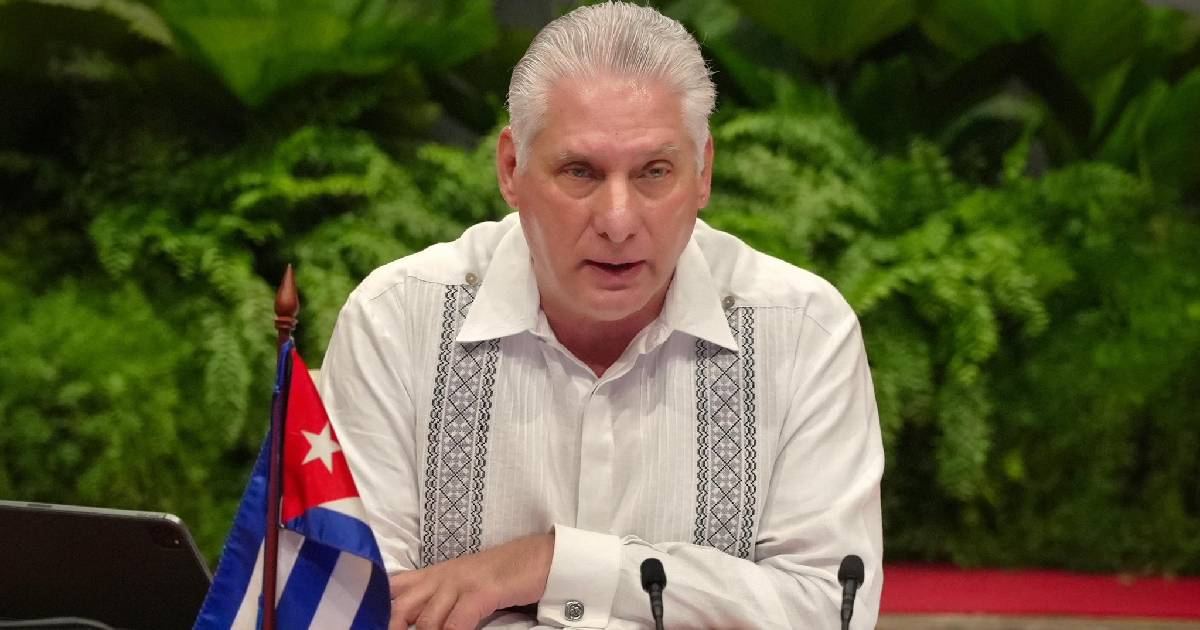
In a New Year's message to the Cuban people, leader Miguel Díaz-Canel extended his congratulations as 2025 came to a close, sharing his principal wish for the coming year.
"May every initiative we undertake in 2026, from the most intricate economic reforms to the simplest acts of solidarity, be infused with the Fidelist spirit of struggle and a profound love for the people," stated Díaz-Canel, as quoted by the official presidency account on X.
Díaz-Canel's New Year address, marked by its usual ideological tone and references to Fidel Castro, starkly contrasts with the harsh conditions faced by Cubans as 2025 ends.
While the Cuban leader urges embarking on tasks with a "Fidelist spirit," the nation is grappling with one of its most severe crises in recent history. This crisis is characterized by rampant inflation, persistent power outages, a collapsing production sector, and a massive exodus that depletes the country's workforce.
The appeal to "love for the people" rings hollow in a context where the majority are struggling to secure food, medicine, or simply endure without electricity.
The speech, laden with revolutionary slogans, appears more as an effort to reinforce official ideology than a gesture of empathy or self-criticism in light of the economic and social failures of the model Díaz-Canel champions.
Once again, the regime leans on the rhetoric of the past, invoking the supposed "Fidelist spirit of struggle," instead of providing tangible solutions to the overwhelming problems faced by the populace.
The "economic transformations" that the leader speaks of have yet to yield visible benefits for the population, while the gap between the ruling class and the ordinary citizen continues to widen.
Cuba's Crisis Under Díaz-Canel: Key Questions and Answers
What is the current economic situation in Cuba under Díaz-Canel?
Cuba is facing a severe economic crisis characterized by uncontrolled inflation, frequent blackouts, and a collapsing production sector. Many citizens are struggling to access basic necessities such as food and medicine.
How has the Cuban government responded to the ongoing crisis?
The government, led by Díaz-Canel, often resorts to ideological rhetoric and references to the legacy of Fidel Castro, rather than implementing concrete measures to solve the persistent issues facing the country.
What are the challenges faced by ordinary Cubans?
Ordinary Cubans are challenged by scarcity of food, lack of medicine, and persistent power outages. Additionally, many are affected by the ongoing mass exodus which has reduced the country's workforce.