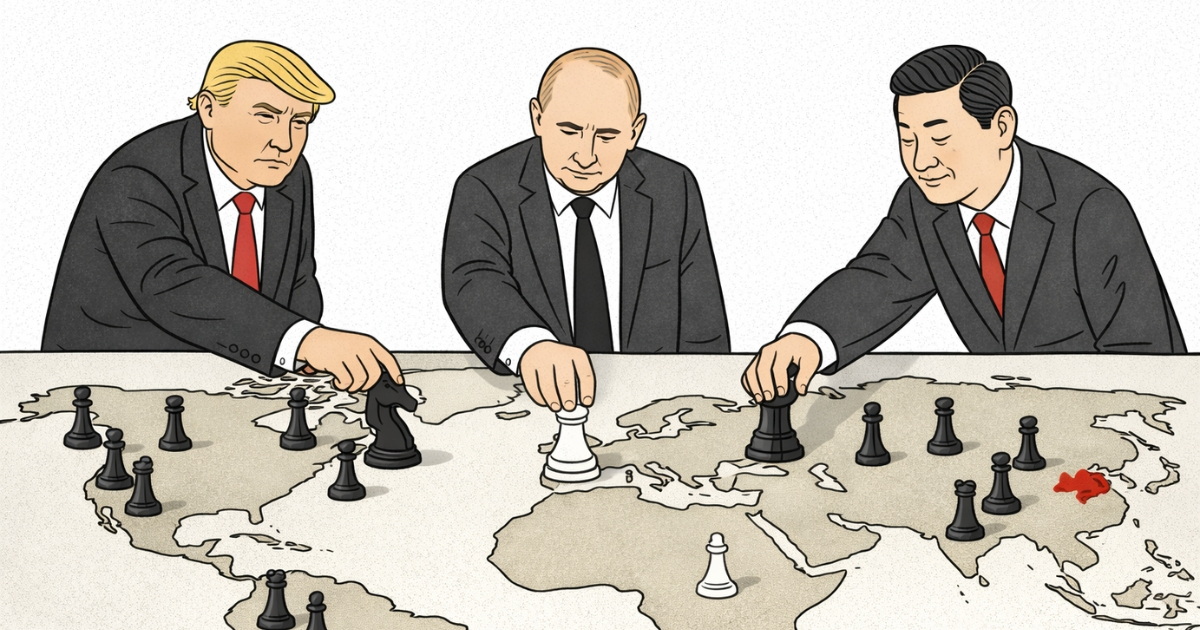
The world bids farewell to the year amidst an escalation in global tensions, with active hotspots in Eastern Europe, Asia, and Latin America. Over the past 24 hours, the negotiations between Ukraine and Russia have been disrupted by mutual accusations, China has conducted unprecedented military exercises surrounding Taiwan, and the United States, led by Donald Trump, has increased pressure on the Venezuelan regime, announcing an attack that leaves many questions unanswered.
Ukraine-Russia Talks: Drone Attack Allegations Heighten Tensions
Discussions for a potential ceasefire between Ukraine and Russia have hit a new snag after the Kremlin alleged a drone attack on Putin’s presidential residence within Russian territory. Moscow directly accused Kyiv of attempting to sabotage diplomatic efforts and announced a tougher negotiating stance.
The Ukrainian government firmly denied the accusation, calling it a provocation and propaganda aimed at justifying new Russian demands or future military actions. So far, there is no independent verification confirming the attack claimed by Russia.
This incident underscores the precarious nature of the negotiations: any event, whether real or fabricated, can be leveraged to shift the political balance of the dialogue. Meanwhile, the conflict remains stagnant on the ground, with the potential for an agreement hinging more on strategic calculations than genuine concessions.
China's Military Drills Around Taiwan Escalate
In Asia, China has significantly ramped up pressure on Taiwan by conducting its largest military maneuvers to date around the island. For over 10 hours, the People's Liberation Army deployed dozens of aircraft and ships, carried out live-fire exercises, simulated maritime blockades, and practiced coordinated attacks from air, sea, and subterranean sources.
Beijing justified these maneuvers as a direct response to the recent approval of a substantial U.S. arms package to Taiwan, accusing Washington of meddling in Chinese internal affairs. Taiwanese authorities denounced the actions as a direct threat to regional stability, though they maintained a defensive and non-provocative stance.
International analysts warn that these exercises are no longer mere symbolic demonstrations but operational drills showcasing China's real capability to isolate or exert military pressure on the island in the event of a major crisis.
U.S. and Venezuela: Trump’s Attack Announcement Raises Questions
In Latin America, attention has turned to Venezuela after President Donald Trump publicly announced that the U.S. had "hit" a Venezuelan port facility allegedly used for loading boats linked to drug trafficking. Trump described a large explosion and significant damage in the area.
However, neither the CIA, the Pentagon, nor the White House has officially confirmed the operation, and there is currently no independent verification of the announced attack. The regime of Nicolás Maduro has not provided clear details, though official media have decried a new "imperialist aggression."
What is confirmed is that the U.S. has maintained a sustained maritime interdiction campaign against drug trafficking in the Caribbean since September, with over 30 strikes on vessels accused of transporting drugs—a campaign criticized by international organizations for the lack of judicial processes and transparency.
For many analysts, Trump’s announcement marks a dangerous turning point: if it is confirmed that there was a direct action against infrastructure on Venezuelan soil, it would represent the largest U.S. military escalation against the Chavista regime in years, amid international isolation, economic crisis, and growing internal pressure on Maduro.
Frequently Asked Questions on Global Tensions
What prompted the recent tensions between Russia and Ukraine?
Tensions escalated following a Russian accusation of a drone attack on Putin’s residence, which Ukraine has denied, calling it a provocation.
Why did China conduct military exercises around Taiwan?
China's maneuvers were a response to a U.S. arms deal with Taiwan, perceived by Beijing as interference in its internal matters.
What is the status of the U.S. attack on Venezuela?
President Trump announced an attack on a Venezuelan port, but no official confirmation has been provided by U.S. agencies, leaving the situation unclear.