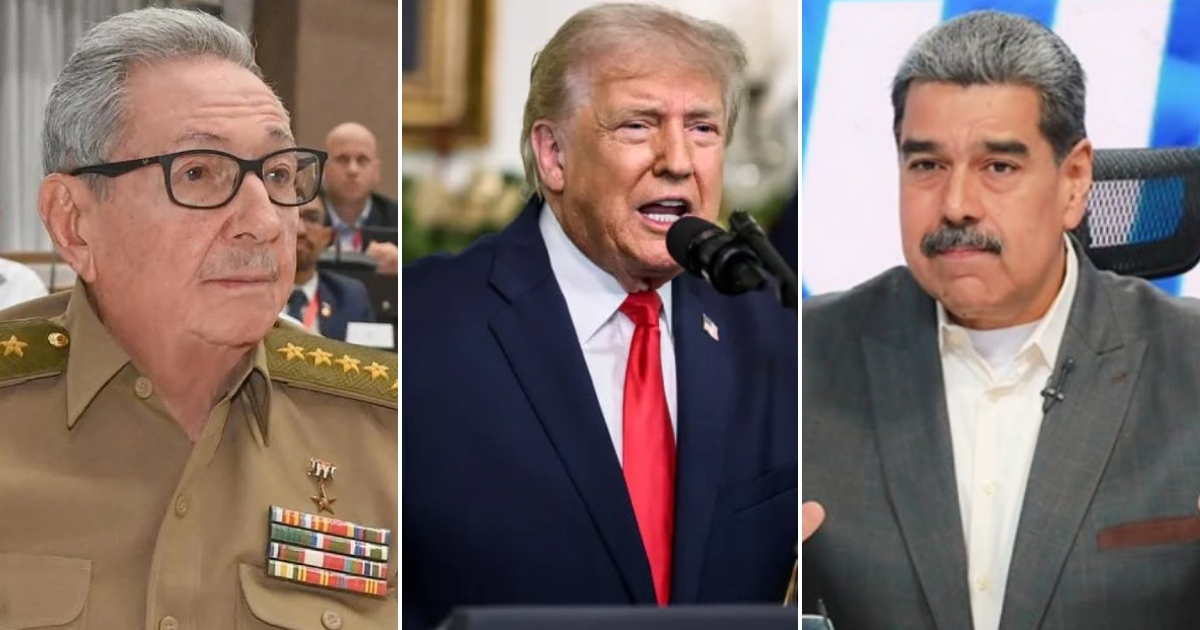
As December 28, 2025, marks the year's final weekend, the political landscape in Latin America remains unchanged: Nicolás Maduro retains power in Venezuela, and the regime led by Raúl Castro and Miguel Díaz-Canel remains unbroken in Cuba. With the calendar nearing its end, so does one of the frequently repeated narratives among Cuban and Venezuelan exiles: the hope that Maduro would fall by Christmas, leading to the collapse of Castro's regime on the island.
Throughout 2025, this notion was echoed in interviews, live broadcasts, social media, and political forums in the United States. Discussions of military intervention, imminent operations, and the "countdown" for the end of Chávez's legacy were rampant. Some U.S. congressmembers and commentators insisted the end was near. Exile influencers promised their followers that this Christmas would be different for both Venezuela and Cuba.
Yet, as the year draws to a close, the reality is starkly different.
Resilience of Maduro and the Cuban Regime
Instead of toppling, Maduro clings to power, bolstered by military support, institutional control, and strategic backing from allies like Russia, Iran, and China. He has even celebrated early Christmas festivities, projecting an image of normalcy while portraying himself as a leader who defied — and withstood — U.S. pressure.
In Cuba, Miguel Díaz-Canel remains the public face of authority, while Raúl Castro and the military-business elite maintain the true reins of power. There have been no visible political cracks, significant concessions, or signs of political or social openness. The economic crisis, hunger, blackouts, and repression continue to plague the Cuban people, yet the regime remains fortified and free from immediate repercussions.
For thousands of Cubans and Venezuelans — both at home and abroad — the end of 2025 symbolizes not just a date on the calendar but another missed opportunity, another emotional blow after months of inflated expectations.
The Harm of False Promises and Misleading Timelines
The criticism is not aimed at hope — which is both legitimate and essential — but at those who exploit it. Promising freedom on a specific date without real support is deeply irresponsible. Each "it's coming," "before Christmas," and "this time for sure" that goes unfulfilled leaves people more weary, cynical, and distrustful.
The Venezuelan people have endured a perpetual state of waiting for years. Meanwhile, the Cuban populace, accustomed to decades of unmet promises, found renewed hope in the notion that the fall of Chavismo would drag down Castroism. Today, both nations face the new year with fewer certainties than headlines promised.
Meanwhile, regimes capitalize on these narratives to enhance their propaganda: they speak of external threats, fictitious invasions, and powerful adversaries. This justifies increased repression, tighter control, and more enforced silence.
Trump's Role and the Geopolitical Chessboard
Donald Trump returned to the presidency with a tough stance against Maduro and Castro's regime, fulfilling some promises: sanctions, diplomatic pressure, military presence in the Caribbean, and direct rhetoric contrasting with previous administrations' passivity. However, Trump did not set official dates nor publicly promise a downfall by Christmas, despite many speaking on his behalf.
The reality suggests that the Venezuelan issue has been a strategic pawn for the White House, not an immediate crusade. Trump has prioritized other fronts — particularly Ukraine and his standoff with Russia — and it appears Caracas is part of a broader negotiation, not a spontaneous action.
Moreover, the Venezuelan conflict has served to divert attention from domestic tensions in the United States, project strength, and reinforce international leadership. While this is politically legitimate, it dismantles the narrative of an instant liberation touted by others.
Looking Ahead to 2026: Hope Without Deception
As 2025 concludes, the message is clear: neither Venezuela nor Cuba has achieved political freedom, but neither are they doomed to eternal oppression. The regimes remain, but so do social discontent, economic collapse, and internal exhaustion. Change will come, but not through grandiose announcements or calendar promises.
Perhaps 2026 will bring different scenarios, unexpected negotiations, or internal ruptures. Or perhaps not. What must change is how we communicate with suffering nations. Hope cannot continue to be used as a tool for audience, votes, or digital prominence.
This article reaffirms support for a free Venezuela and a Cuba without dictatorship. It defends these causes with realism, respect for the suffering of those within these nations, and the conviction that freedom will come when real conditions arise, not when someone promises it in front of a camera.
The last Sunday of 2025 does not bring liberation, but it does offer a lesson: no more miraculous dates, no more empty promises. Let 2026 be the year of truth, not smoke and mirrors.
Understanding the Political Stalemate in Venezuela and Cuba
Why is Nicolás Maduro still in power in Venezuela?
Nicolás Maduro remains in power due to strong military backing, institutional control, and strategic support from countries like Russia, Iran, and China, which bolster his regime against external pressures.
How does the Cuban regime maintain control?
The Cuban regime maintains control through a combination of military-business leadership, lack of political concessions, and repression, all while managing the country's ongoing economic crisis and suppressing dissent.
What role has Donald Trump played in the situation in Venezuela?
Donald Trump's administration applied sanctions and diplomatic pressure, deployed military forces in the Caribbean, and used strong rhetoric against Maduro, though these actions were part of broader strategic interests rather than immediate interventions.