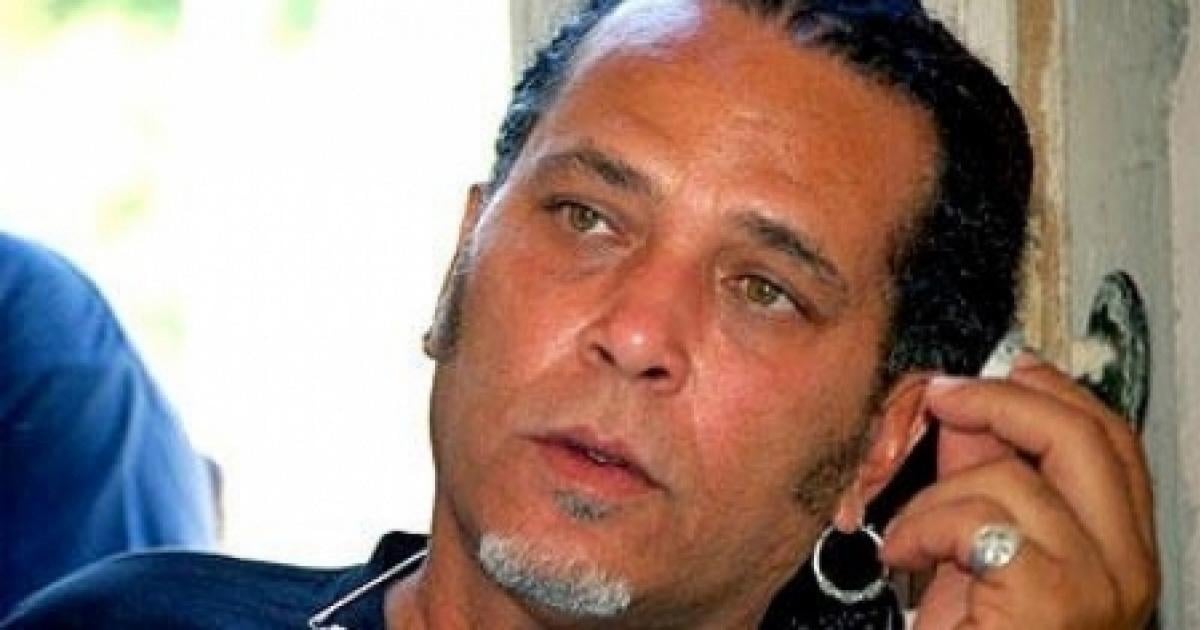
Cuban actor Luis Alberto García Novoa has joined the wave of outrage sparked by recent official statements on food in Cuba, delivering a sharp message on Facebook against discrediting staple foods based on their "non-native" origins.
His response was aimed at an agricultural specialist who suggested changing the population's dietary habits, using potatoes and rice as examples, arguing they shouldn't be consumed as much because "they aren't Cuban foods."
"Rice and potatoes (yes, potatoes too) have as much right to be Cuban as those humans born from Spaniards, once labeled as creoles," Luis Alberto asserted emphatically in his post.
With a touch of mockery, the actor criticized the attempt to challenge the presence of certain foods on the Cuban table, warning that it's not just about gastronomy, but about identity, history, and survival in a nation hit by shortages.
"We've become accustomed to the partial or total disappearance of many of these foods (for quite some time), but suggesting to strip them of their identity card, passport, and remove them from the table seems like a crime against culture and a dangerous precedent," he remarked sarcastically.
The artist jested about the possibility that, following this logic, there might be a move to "revoke the citizenship" of animals brought by the Spanish colonizers, like cattle, pigs, sheep, horses, and chickens.
"Will this 'ICE of Cuban food' denaturalize corn? What about Los Tamalitos de Olga? And Coffea Arabica, which also came from abroad? The guava (another outsider)? Bread? Are we going to exile bread with timba?" he elaborated.
García also highlighted the social backdrop of this debate: the scarcity of food and the fact that the few available products largely end up with those who have greater purchasing power or in the tourism sector, leaving large segments of the population excluded.
He emphasized that the "needy and vulnerable" people don't have access to native fish and seafood due to a reduced fishing fleet and a distribution system that prioritizes visitors and those who can pay in foreign currency.
"What will happen to this long-suffering and noble people without the Italo-Cuban pizza? Without the European native hot dogs and sausages? Without the Mesoamerican avocado salad and Egyptian lettuce? Without the German-origin beer to forget so many sorrows? Without the fiery 'ronaldiño' made from sugarcane native to India, New Guinea, and Southeast Asia?" he asked pointedly.
His message came after an agricultural sector official publicly blamed the population's eating habits for the country's production problems and suggested a diet change, alleging that many of the foods consumed by Cubans aren't "native" to the nation.
These statements have been widely rejected on social media, where numerous users pointed out that the government is trying to shift the blame for the scarcity onto the citizens, without acknowledging the lack of investment, obstacles to producers, inefficiency of the state system, and deterioration of the agricultural sector.
Luis Alberto García's intervention fits into this climate of collective discontent.
His post not only challenges the governmental narrative but also highlights the structural precariousness forcing millions of Cubans to survive on a minimal food supply. For the actor, the issue isn't what people eat, but that they are eating less, worse, and at higher costs.
In a country where the economic crisis has reduced purchasing power to critical levels, the idea of redefining the identity of foods is seen as a maneuver to avoid acknowledging the true causes of the shortages.
García summed it up with concern: the debate threatens not only traditional cuisine but also the fundamental right of the population to eat with dignity.
Understanding the Controversy Over Cuban Food Identity
Why did Luis Alberto García criticize the official statements on food in Cuba?
Luis Alberto García criticized the official statements because they discredited staple foods like rice and potatoes based on their "non-native" origins, which he saw as an affront to Cuban identity and a distraction from the real issues of food scarcity and structural problems in the country.
What are the underlying issues behind the food identity debate in Cuba?
The underlying issues include food scarcity, a lack of access for the needy, and the government's attempt to shift blame for these problems onto the population's eating habits rather than addressing inefficiencies and lack of investment in the agricultural sector.
How did social media react to the official comments on Cuban food?
Social media reacted with widespread rejection, with many users criticizing the government's attempt to divert responsibility for food shortages to the citizens, pointing out systemic issues like lack of investment and inefficiency instead.