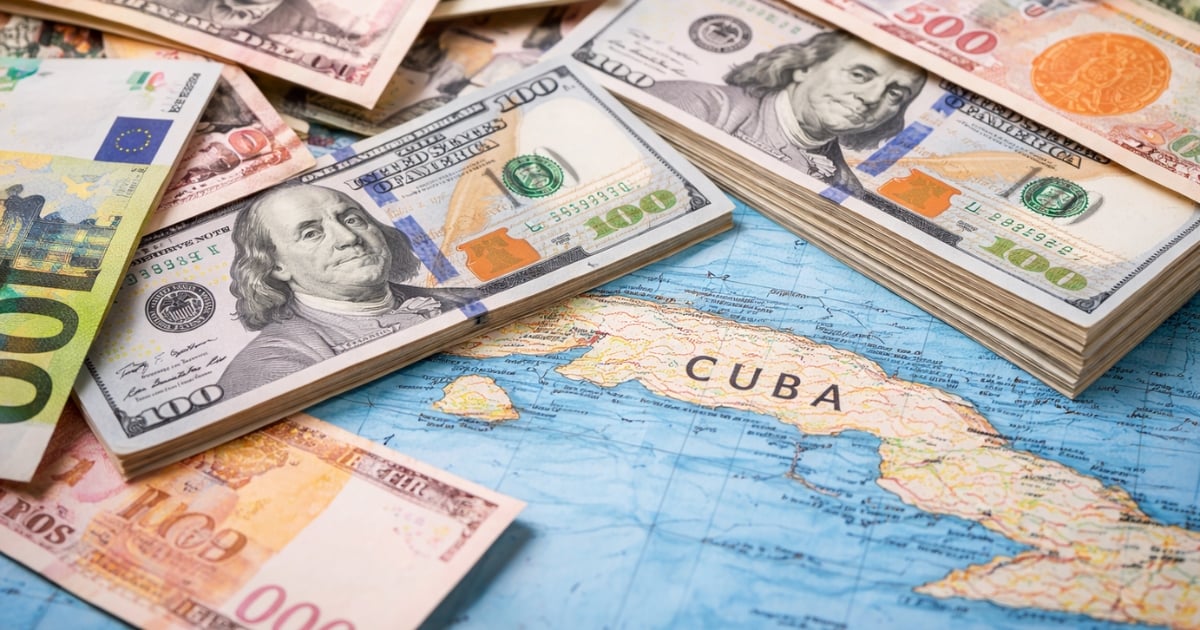
Over recent years, Cuba has consistently been linked to international money laundering schemes. Law enforcement operations, journalistic investigations, and intelligence reports have identified the island as an appealing "financial bridge" for illegal networks. What factors contribute to Cuba's frequent appearance in global money laundering activities? Here, we delve into the role of Cuba's financial system, the gray areas of state control—including the involvement of GAESA—and highlight some notable cases that exemplify this troubling trend.
The Shadowy and State-Controlled Financial System
A significant factor lies in the opacity of the Cuban financial system. For decades, Cuba has operated a dual economy with officially controlled markets alongside a vast black market for currency, fueled by remittances and informal activities. The lack of transparency and the existence of a substantial parallel cash circuit pose serious money laundering risks.
The stringent state-military control over the economy exacerbates this issue. A large portion of Cuba's foreign currency income is channeled through state conglomerates without independent public audits. GAESA, a military-run holding company, plays a crucial role, managing strategic businesses—tourism, trade, remittances, imports—under strict secrecy. Analysts estimate that GAESA controls between 40% and 60% of the country's foreign currency inflows, operating companies registered in Panama and bank accounts in tax havens without citizen oversight.
A 2025 report revealed that GAESA handles over 95% of the national finances, with the Central Bank even acting under its directives. From 2008 to 2022, of the more than $108 billion earned from Cuban medical missions, about $70 billion were absorbed by GAESA via the Banco Financiero Internacional without audits or oversight. Essentially, an "State within a State" has been created—a parallel financial structure managed by the military elite with minimal transparency and accountability.
Cuba as a "Financial Bridge" in Global Schemes
Several international cases illustrate how Cuba has served as a bridge for money laundering, acting as a stopover or temporary destination for illicit funds. In Spain, Operation “Rapax” (2025) dismantled a criminal network that defrauded nearly seven million euros in public subsidies, funneling part of those funds to Cuba. Authorities concluded that the island was chosen deliberately: its financial opacity and lack of effective controls make it an ideal destination for laundering capital without raising alarms.
Another joint investigation by Europol and Spanish police in 2025 uncovered a network linked to Russian organized crime planning to invest in Cuba to launder money. The ringleaders negotiated with Cuban officials to set up photovoltaic solar parks in exchange for payments in nickel and gold. Although the scheme was thwarted, it highlighted the Cuban authorities' laxity towards investors of dubious origin.
In 2018, American researcher Douglas Farah exposed a network where the former Colombian guerrilla group FARC laundered drug trafficking money through Cuba. Funds moved from Colombia to Cuban accounts and then to El Salvador, Nicaragua, and Panama, where they were legalized. Although the Cuban government denied these accusations, the case demonstrated how the island's control gaps are exploited for international illicit schemes.
Intermediaries, Front Companies, and Sanctioned Allies
Another aspect of the problem is Cuba's connection with strategic allies accused of corruption. The case of the airline Plus Ultra, investigated in Spain, is a prime example. Although Spanish, the company was closely linked to the governments of Venezuela and Cuba. In 2025, its executives were detained for money laundering. The airline allegedly moved money stemming from Venezuelan corruption, some of which may have returned to Cuba disguised as payments for services or inflated contracts.
Plus Ultra leased planes to Cubana de Aviación and transported Cuban medical brigades, integrating into the regime's logistical framework. The case demonstrates how an airline crucial for Cuba ended up entangled in laundering networks, strengthening financial ties between Havana and Caracas.
Another major scandal involved Habanos S.A., the joint venture marketing Cuban cigars. Journalistic investigations discovered that Chinese businessman Chen Zhi, accused of massive fraud and money laundering, infiltrated as an indirect owner of half the company. Through shell companies and cryptocurrencies, he laundered billions of dollars from illegal casinos and cyber scams, turning that dirty money into legitimate assets within the Cuban tobacco business.
The Cracks Exploited by Money Laundering
The cases described explain why Cuba repeatedly appears in international money laundering schemes: its financial-political environment offers structural gaps that are highly attractive to criminals of all kinds. Key factors include:
Opacity and Lack of Transparency: Cuba's dual economy makes tracking money difficult. Large cash flows move without independent oversight.
Absolute State-Military Control: Entities like GAESA manage vast foreign currency sums outside public scrutiny, creating a financial "black hole."
Collaboration with Questionable Allies: Cuba has served as a financial platform for regimes and groups involved in regional corruption.
Need for Foreign Currency and Investments: Economic desperation makes it less demanding regarding the origin of foreign capital.
Limited Legal Framework and International Cooperation: Although Cuba formally participates in FATF evaluations, the application of standards is deficient, and cooperation with international bodies is minimal.
Together, these factors create an ecosystem conducive to money laundering. Cuba is not the only country used for such purposes, but it offers comparative advantages: secrecy, vertical control, and a geopolitical position outside certain regulatory circuits. Without structural changes—greater transparency, independent controls, and limits on military power—the island will continue to be a key link in global money laundering networks.
Understanding Cuba's Role in Money Laundering Networks
Why is Cuba considered a financial bridge for money laundering?
Cuba's financial system is characterized by a lack of transparency and state control, making it an attractive destination for illicit funds. Its dual economy and extensive black market facilitate money movement without oversight.
What role does GAESA play in Cuba's economy?
GAESA, a military-run holding company, manages a significant portion of Cuba's foreign currency. It operates with minimal oversight, controlling strategic sectors like tourism and trade, which contributes to the opacity of Cuba's financial system.
What are some notable cases of money laundering involving Cuba?
Cases such as Operation Rapax in Spain and the involvement of Plus Ultra Airlines demonstrate how Cuba has been used to launder money. These cases highlight the island's financial opacity and willingness to engage with questionable foreign investments.