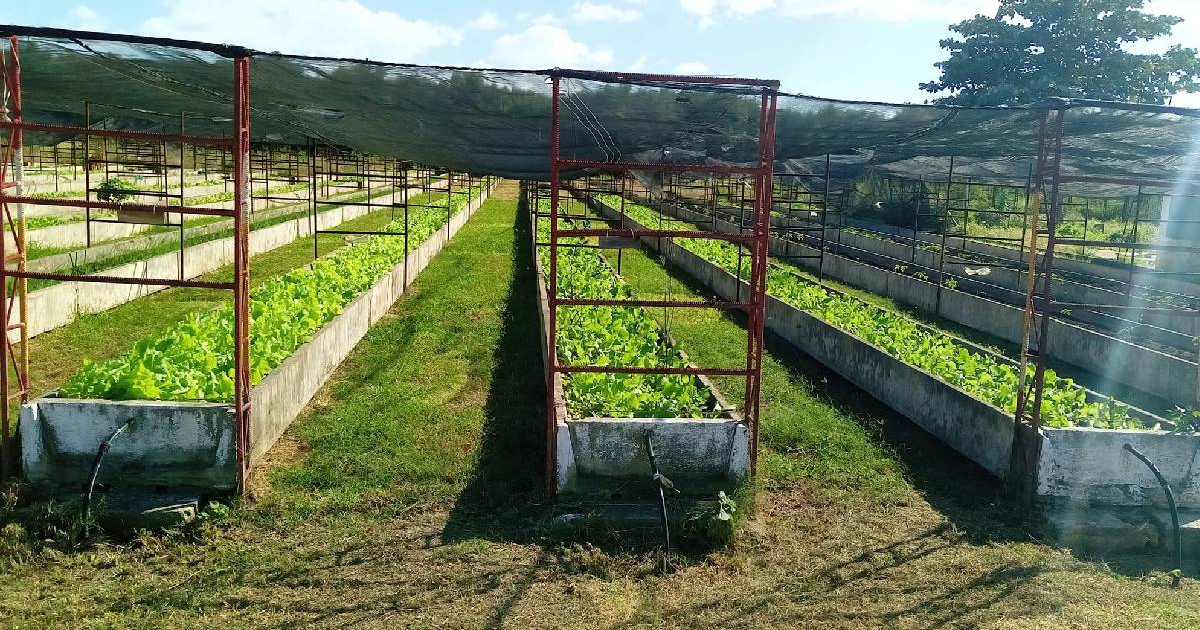
Just days after a Cuban regime official blamed the country's agricultural crisis on the consumption of rice and potatoes, Prime Minister Manuel Marrero Cruz took to social media to commend the "progress" of the Urban, Suburban, and Family Agriculture program, sparking a wave of mockery and sarcastic comments.
"The Urban, Suburban, and Family Agriculture program, established by Army General Raúl Castro Ruz 38 years ago, serves as a valuable alternative for bringing agricultural production closer to the population. Congratulations to those who make its advancement possible," Marrero wrote on his X account (formerly Twitter).
Published amidst widespread food shortages and skyrocketing market prices, the tweet received a flood of criticism.
Public Skepticism Over Urban Agriculture
Many users reminded Marrero of the "urban gardens" from the 1990s — touted as a solution to hunger during the Special Period — which today lie abandoned or overgrown with marabou weed.
"Thirty-eight years ago, Raúl Castro was living in a perpetual state of intoxication, which is why it hasn't worked. By now, we should be seeing results, not still relying on ration books while suffering from scarcity," one user responded to the post.
"Urban and family urban agriculture are destined for embezzlement and failure. Only someone with a backward mindset, sitting in a mansion, could order something that has already completely failed. Tremendous 'economic distortion,'" another commenter pointed out.
"Absolutely, the population enjoys excellent nutrition with this alternative...!" another user quipped sarcastically.
Controversial Remarks Add Fuel to the Fire
This week saw a media uproar following statements by Dr. Roberto Caballero, a member of the National Executive Committee of Agricultural and Forestry Technicians.
Caballero claimed on the official program "Cuadrando la Caja" that one of the problems facing Cuban agriculture is that citizens have "grown accustomed to eating foods not native to the country," specifically referring to rice and potatoes.
"We are not Asians. Eating rice is not a Cuban habit," he stated, a comment that ignited widespread indignation and thousands of mocking reactions on social media.
Many believe the official rhetoric aims to shift state responsibility and frame the issue as a "cultural problem" rather than acknowledging the structural collapse of the agricultural system.
Meanwhile, markets remain empty. A pound of rice exceeds 200 pesos in the informal market, and potatoes — when available — are sold at prices unreachable for the majority.
In this context, Marrero's remarks on the "valuable alternative" of urban agriculture sound, to many, like a mockery.
Understanding the Agricultural Crisis in Cuba
What is the Urban, Suburban, and Family Agriculture program in Cuba?
The Urban, Suburban, and Family Agriculture program was initiated by Raúl Castro 38 years ago to enhance agricultural production and bring it closer to Cuban citizens. It is intended to provide a sustainable alternative to traditional farming.
Why are rice and potatoes controversial in Cuban agriculture?
Rice and potatoes have become controversial due to statements from Cuban officials suggesting that these foods, not native to Cuba, contribute to the agricultural crisis. This has sparked debate about cultural preferences versus agricultural feasibility.
How has the public reacted to government statements on agriculture?
The public has largely reacted with skepticism and criticism, pointing out the failures of past agricultural initiatives and expressing frustration over continued shortages and high prices.