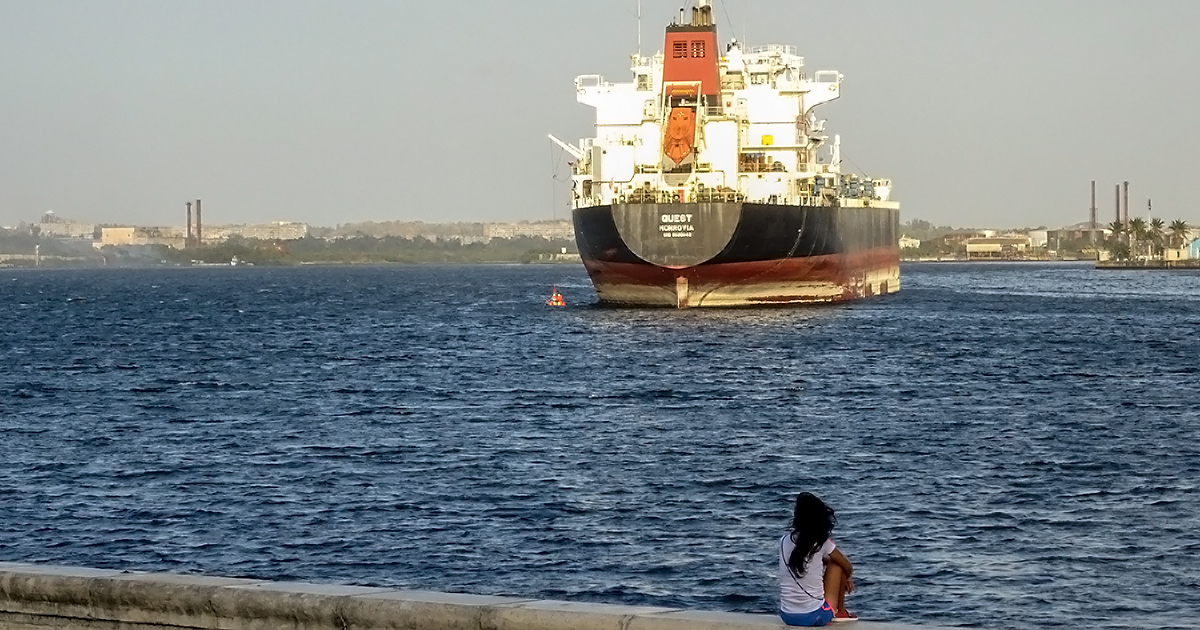
The decline in crude shipments from Venezuela to Cuba, amidst heightened U.S. pressure on the so-called Venezuelan "ghost fleet," raises a critical question for Havana: who will fill the fuel gap left by Caracas?
Experts consulted by EFE warn that further reductions in Venezuelan deliveries could be "disastrous" for the island, especially given the prolonged blackouts, economic crisis, and lack of foreign currency to purchase oil on the open market.
The energy dependency was solidified by the Comprehensive Cooperation Agreement between Cuba and Venezuela in 2000, whereby Caracas compensated Cuba's professional services—primarily doctors and teachers, along with security and defense experts—with oil.
Although there are no official public figures on the volumes, experts, including Arturo López-Levy, agree that shipments have decreased over the past decade due to Venezuela's declining production and U.S. sanctions.
This year, Venezuela, which once supplied 100,000 barrels per day, has reportedly sent an average of 27,000 barrels daily, according to a Reuters service cited by EFE.
Addressing the Energy Shortfall
The problem intensifies because, based on independent estimates, Cuba required between 110,000 and 120,000 barrels per day this year. Of this, around 40,000 comes from domestic production, with the remainder needing to be imported.
This shortfall manifests in everyday life: blackouts lasting up to 20 hours, halted industries, and long lines for fuel.
Potential Alternatives: Russia and Mexico
Is there a real substitute? Russia emerges as a possible alternative, but with limitations. Cuban economist Ricardo Torres sees Russia as "the only country that could genuinely replace Venezuela," but he doubts Moscow's ability to fulfill this role due to the war in Ukraine, economic challenges, and pressure on their own oil logistics.
The article references expert Jorge Piñón from the University of Texas Energy Institute, who reported that Russia might have sent approximately 6,000 barrels daily in 2025, with a Russian tanker carrying 330,000 barrels arriving on the island.
Mexico is another mentioned player, though its contribution has sharply declined: last year, it sent around 23,000 barrels daily, but this year only about 2,500, according to Pemex data cited by EFE. Torres attributes part of this restriction to Mexico's need to "maintain relations" with the United States, which receives 85% of its exports.
The Financial Role of China
Simultaneously, economist and political scientist Arturo López-Levy suggests that President Claudia Sheinbaum might be willing to make "political sacrifices" for Cuba, but warns that Mexico is nearing the limit of its capabilities.
In the scenario described by López-Levy, the central question isn't just about who supplies the oil, but who finances it: "who would finance purchases in other markets, and who would dare to sell and transport the fuel" under U.S. scrutiny.
Here, China emerges as a potentially "key" player, not necessarily through direct shipments, but by possibly providing loans to Cuba or suppliers (in dollars or yuan), a decision the expert views as geopolitical.
López-Levy urges not to "underestimate" the regime's resilience even under extreme conditions, but differentiates between temporary endurance and resolving the structural crisis, which he believes lacks a "prospective solution."
In summary, according to specialists, there is no clear replacement for Venezuela. Russia appears as the most promising alternative but with constraints; Mexico has significantly reduced its shipments; and China might play a financing role, should it choose to bear the geopolitical costs of supporting new fuel purchases for Cuba.
Frequently Asked Questions on Cuba's Oil Crisis
Why has Venezuela reduced oil shipments to Cuba?
Venezuela has reduced oil shipments to Cuba due to declining production and tightening U.S. sanctions on its oil industry.
What are the consequences of the oil shortfall in Cuba?
The oil shortfall in Cuba has led to prolonged blackouts, halted industries, and long lines for fuel, exacerbating the country's economic crisis.
Could Russia or China replace Venezuela as Cuba's oil supplier?
Russia could potentially replace Venezuela, but faces limitations due to its own challenges. China might not supply oil directly but could provide financial support for Cuba's oil purchases.