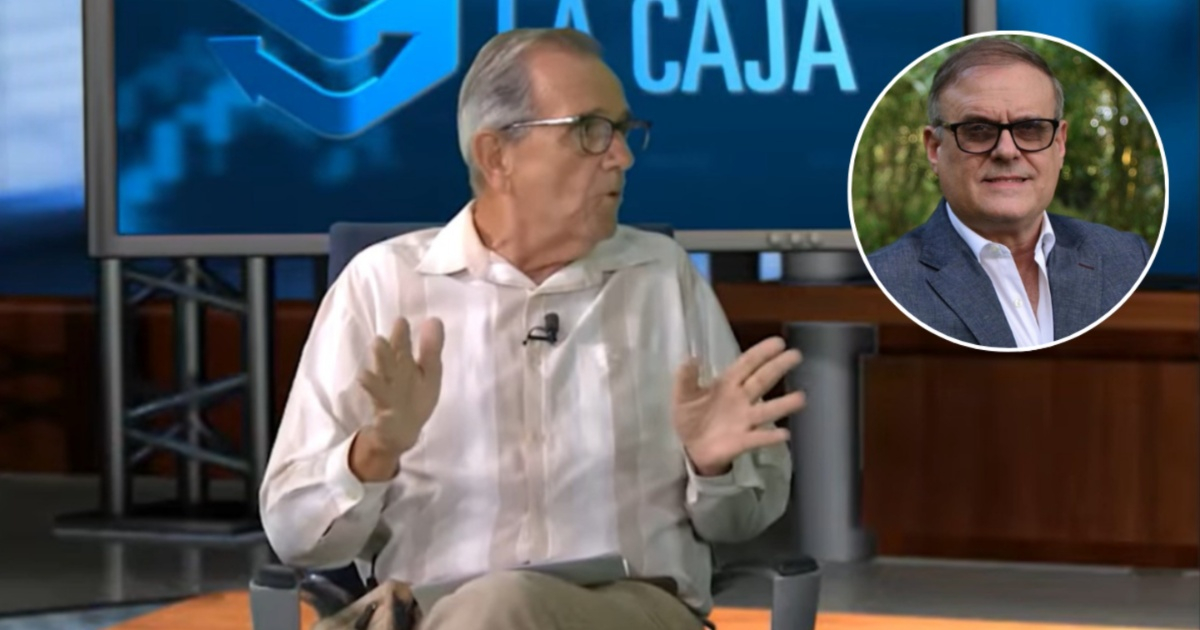
Prominent Cuban economist Mauricio De Miranda Parrondo has voiced strong criticism against a recent episode of the state-run television show "Cuadrando la Caja," which focused on food production. He condemned it as an example of official media's disrespect towards the Cuban population, emphasizing that many are enduring hunger in the country.
De Miranda shared his views on Facebook, explaining that he refrained from making comments until he had watched the entire program. He wanted to avoid relying solely on viral clips circulating online, where Dr. Roberto Caballero, a member of the National Executive Committee of Agricultural and Forestry Technicians, critiqued the dietary habits of Cubans. Caballero noted that Cubans have become accustomed to consuming significant amounts of potatoes, which are expensive to produce, and rice, which he suggested is excessive given that Cubans are not of Asian descent.
To De Miranda, these comments are particularly insulting given the current scarcity of food. While social media focused on these dietary critiques, another statement by a representative from the agroindustry went largely unnoticed. This individual suggested that selling certain products in dollars within the domestic market might be necessary to generate foreign currency for purchasing supplies to revitalize the food industry.
The economist interpreted this as an attempt to justify an accelerated move towards a dollarized economy, without any corresponding increase in wages for workers and pensioners. He chose not to delve into a technical analysis of these claims, asserting that other economists have already done so with data-backed insights, highlighting the irrationality of the proposals.
Instead, De Miranda focused on the underlying message of the program, which he sees as an attempt to manipulate public opinion and obscure governmental incompetence and systemic crisis. He referenced historical examples of agricultural and food policy decisions, attributing many of the failures to governmental actions.
Among these examples, he mentioned initiatives associated with Fidel Castro, including a story about how Castro cooked lobster, and numerous policies that, according to De Miranda, harmed Cuba's agriculture and food supply, such as cattle farming, "El Cordón de La Habana," the Ten Million Ton Sugar Harvest, the closure of sugar mills, and products like "soy mince."
He argued that it is unacceptable to blame the public for "poor dietary habits" when many face hunger daily. The same episode of "Cuadrando la Caja" also claimed that Cuba lacks the economic resources to provide a comprehensive solution to the agricultural crisis and advocated for localized solutions from municipalities and provinces.
In this context, the program cited Dr. Roberto Caballero and Engineer José Carlos Cordobés, who addressed the food industry's reliance on a weakened agriculture sector due to a lack of inputs, energy, and funding. They emphasized territorial autonomy and production linkages without offering a clear path for structural transformation.
Abandoning Potatoes and Rice
During "Cuadrando la Caja," Roberto Caballero argued that one of the main barriers to achieving food sovereignty in Cuba is the population's eating habits. Amid the agricultural sector's crisis, food scarcity, and inflation, Caballero warned that the Law of Food Sovereignty and Nutritional Security aims not only to boost food production but also to change the Cuban diet.
He highlighted that the agricultural production issue stems from consuming foods not native to Cuba, using the potato as an example. According to him, this Andean tuber has never adapted well to Cuba's climate and soil. The state invests more in inputs and seeds than it gains from production. In the past, potatoes were stored in refrigerators to ensure year-round availability, but more than half would spoil before reaching consumers.
As an alternative, he suggested promoting native crops like malanga, sweet potato, yam, and yuca, which are better suited to local conditions and need fewer imported inputs. Despite this, Cuban markets lack potatoes and these purportedly abundant resources.
Understanding Cuba's Food Crisis
Why is Mauricio De Miranda critical of "Cuadrando la Caja"?
De Miranda criticizes the program for disrespecting the Cuban population by focusing on dietary habits during a time of widespread hunger and for suggesting dollarization without increasing local incomes.
What dietary changes does the Cuban government propose?
The government, through representatives like Dr. Roberto Caballero, suggests reducing the consumption of non-native foods like potatoes and rice and promoting native crops such as malanga and yuca.
What are the historical examples of failed agricultural policies in Cuba?
Examples include the Ten Million Ton Sugar Harvest, closure of sugar mills, and other initiatives like "El Cordón de La Habana" and the promotion of products like "soy mince," which De Miranda argues have harmed agriculture and food supply.