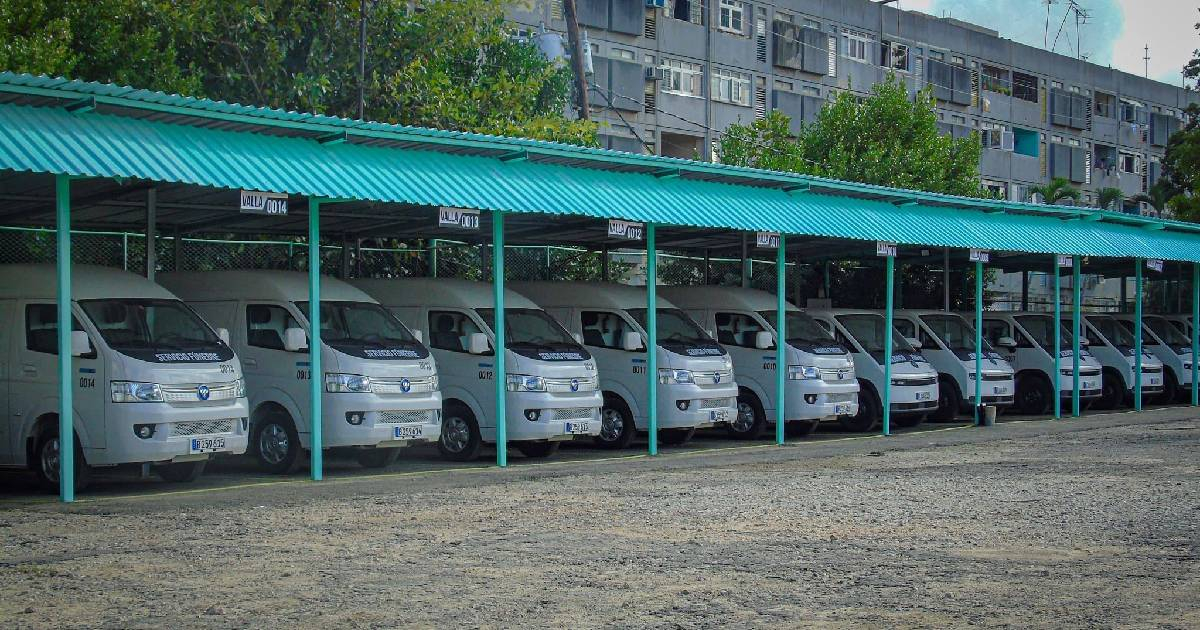
A fleet of 15 new electric hearses started operating in Havana on Saturday, offering free services to the public and equipped with their own energy backup, according to Eduardo Rodríguez Dávila, the Minister of Transportation.
Rodríguez shared on his Facebook profile that this project was rapidly developed over the past month. It was recently reviewed by President Miguel Díaz-Canel alongside top Party and Government officials in the capital.
The hearses, owned by the state enterprise Servi Axess, a subsidiary of AXESS Marketing Company under the OSDE/GEA of the Ministry of Transportation (Mitrans), are designated solely for use within Havana.
The Transportation Minister stated that the service costs will be covered by the State budget, ensuring that the public will not be charged for these transportation services.
Previously, the Provincial Government of Havana's Budgeted Unit for Necrological Services handled this responsibility, operating under what the minister admitted were "challenging conditions."
This new fleet aims to enhance funeral service coverage in response to directives from national leadership, addressing the collapse of funeral services in Cuba's major city, as well as nationwide.
Rodríguez pointed out that since these are electric vehicles, their charging infrastructure is fully supported by solar panels and energy storage systems. An emergency generator serves as an additional safety measure. The entire system is automated to prioritize renewable energy sources, he explained.
He also confirmed that the vehicle supplier will handle all maintenance and necessary repairs to maintain the technical condition of the hearses and prevent resource shortages or common limitations from degrading service quality over time.
Although the initiative began in Havana, the minister indicated it is part of a broader plan that includes other provinces and the special municipality of Isla de la Juventud.
This program anticipates the gradual addition of new electric and combustion vehicles, already contracted. The funding in foreign currency comes from the Public Transportation Support and Development Fund, a mechanism introduced this year from sector-generated foreign currency income and taxes from vehicle sales.
According to Mitrans, these resources have facilitated the acquisition of electric tricycles, Foton minibuses, eco-mobiles in Sancti Spíritus, the V2V catamaran, as well as tires, batteries, and other supplies.
Funeral services in Cuba have been in continuous decline due to the deterioration of hearses, fuel shortages, a lack of materials for coffins, and poor management.
Serious incidents, such as coffins falling on public roads and bodies left untransported for hours, highlight the gravity of this crisis.
The situation is particularly dire in provinces outside Havana, where families struggle to bid farewell to their deceased with dignity.
Key Insights on Havana's New Electric Hearses
What prompted the introduction of electric hearses in Havana?
The introduction of electric hearses was prompted by the need to improve funeral service coverage in response to a national directive addressing the collapse of funeral services in Havana and across Cuba.
How are the costs for these funeral services covered?
The costs for funeral services provided by the new electric hearses are covered by the State budget, meaning the public will not incur any charges for these services.
What renewable energy sources support the operation of the electric hearses?
The operation of the electric hearses is supported by solar panels and energy storage systems, with an emergency generator as a backup. The system prioritizes the use of renewable energy sources.
What are some challenges faced by funeral services in Cuba?
Cuban funeral services face challenges such as deteriorating hearses, fuel shortages, lack of coffin materials, and inefficient management, leading to incidents like coffins falling in public and delayed body transports.