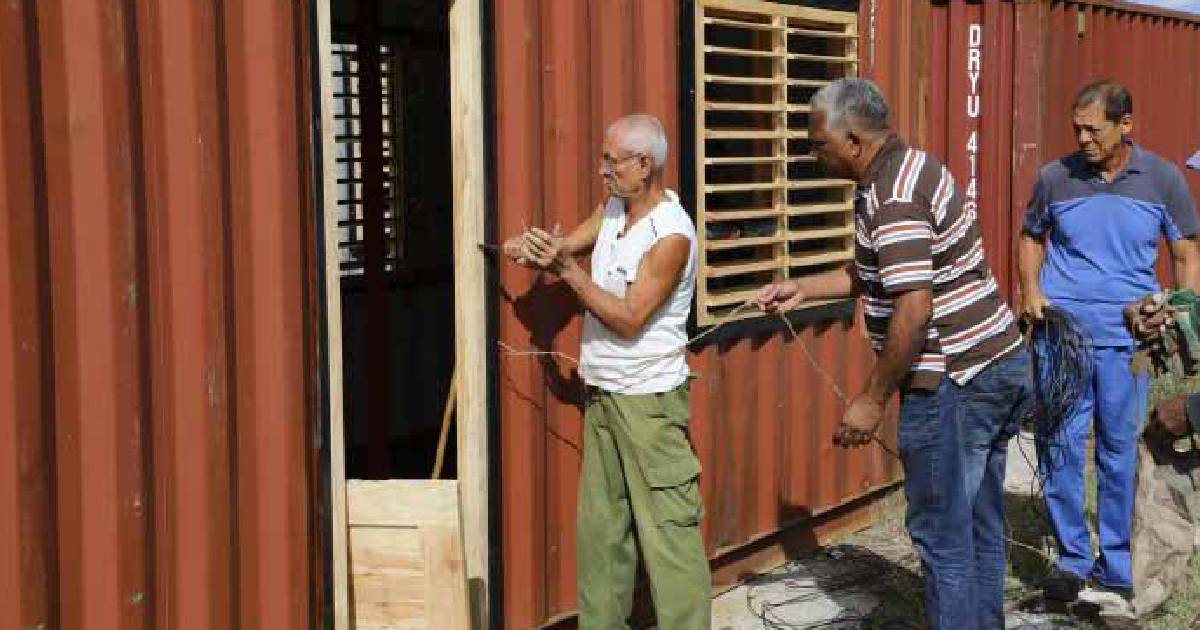
In a bold move to address the housing shortage caused by scarce resources and construction materials, over 3,500 unused shipping containers will be transformed into modular homes across various municipalities in Havana. This state-led initiative aims to offer an alternative to traditional construction methods, which the country currently struggles to maintain.
Initial conversions are underway at the Metal Productions Base Business Unit in Guanabacoa. Here, 29-square-meter modules are being fitted with living areas, kitchen-dining spaces, bathrooms, and two bedrooms, complete with doors, windows, interior lining, and anti-corrosive paint, as reported by the Cuban News Agency on Wednesday.
Delilah Díaz Fernández, the Director of the Housing Program, stated that these homes will be allocated to solar park workers, individuals impacted by total collapses, and vulnerable families, facilitated by local governments and municipal and provincial housing authorities.
Although the funding comes from the State Budget, recipients are required to make bank payments, which vary based on the materials used and the level of completion of the homes.
Production constraints such as fuel and electricity shortages have slowed the pace of the first 35 homes being built for the La Solita neighborhood in Arroyo Naranjo, according to the production entity.
The use of containers as housing solutions is not exclusive to Havana. In Villa Clara, the local Electromechanical Company is progressing on a project to create 20 homes using recycled metal modules, with 90% of the necessary resources already secured, as reported by the official Granma newspaper.
While these efforts are presented as part of a broader innovative construction strategy using recycled materials and prefabricated solutions, they reveal the country's structural limitations in addressing the housing deficit through conventional methods on a large scale.
In Santiago de Cuba, officials have confirmed plans to expedite the conversion of shipping containers into emergency housing due to the worsening housing crisis that leaves thousands of families at risk, especially following Hurricane Melissa's impact.
Furthermore, Prime Minister Manuel Marrero Cruz has called for the acceleration of this housing model in Granma province, where many families remain in collapsed buildings, overcrowded conditions, and temporary shelters turned permanent, particularly after Hurricane Melissa.
The transformation of containers into permanent homes is also progressing in Guantánamo as a response to damages from hurricanes Oscar and Melissa. However, this solution is neither comprehensive nor free, as it involves debt, reduced living space, and adjusted expectations amid scarcity.
With a construction material shortage and a housing deficit exceeding 800,000 units, the government has turned to alternative solutions like converting shipping containers into homes. This decision has faced criticism for its improvisational nature and lack of adequate structural planning.
Main criticisms focus on the lack of thermal insulation and proper ventilation in these containers. In Cuba's hot climate, these structures can become "solar ovens," rendering the homes uninhabitable.
Additionally, the lack of adequate infrastructure and vulnerability to climatic events have generated public disapproval.
Frequently Asked Questions About Housing Solutions in Cuba
Why is Cuba using shipping containers as housing solutions?
Cuba is utilizing shipping containers for housing due to a severe shortage of construction materials and resources, making traditional building methods unsustainable.
What are the challenges of using shipping containers as homes in Cuba?
The main challenges include inadequate thermal insulation, poor ventilation, and vulnerability to climatic events, which can make these homes uninhabitable in Cuba's hot climate.
Who will receive the converted container homes in Havana?
The homes will be allocated to solar park workers, individuals affected by building collapses, and families in vulnerable situations, facilitated through local housing authorities.