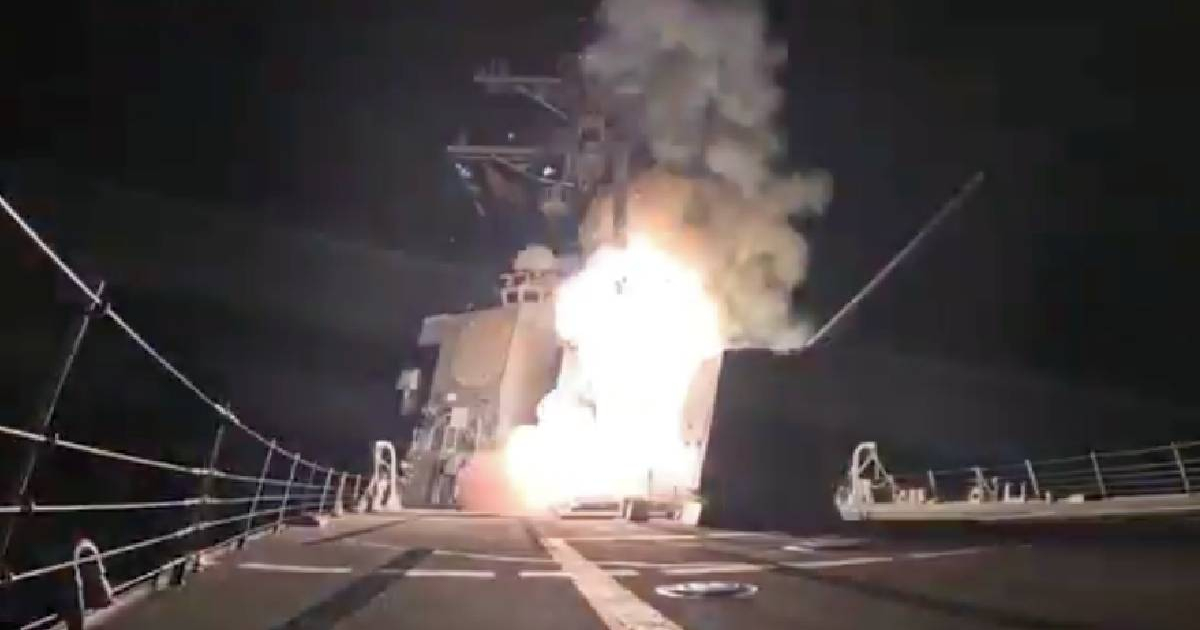
On Thursday, President Donald Trump confirmed that he ordered "powerful and lethal" airstrikes against ISIS targets in northwestern Nigeria. This decision came as a response to what he described as an increase in mass killings of Christians in the African nation.
In a statement released by the White House and the newly named Department of War, Trump revealed that the operation was carried out on Christmas night under his command as Commander-in-Chief. He cautioned that further military actions would follow if the massacres persist.
"ISIS has been savagely attacking and murdering innocent Christians, reaching levels unseen in many years, even centuries," the president stated.
"I warned them that there would be consequences if they did not cease the slaughter of Christians. Tonight, those consequences were realized," he asserted.
Trump emphasized that U.S. forces conducted "numerous flawless strikes," stressing that his administration will not allow "radical Islamic terrorism" to thrive.
The president concluded his message by wishing a "Merry Christmas" and imparting blessings to the American military forces.
The Secretary of War, Pete Hegseth, confirmed the operation, noting that the bombings fulfilled Trump's warning issued weeks prior.
"The president was clear: the killings of Christians in Nigeria must stop. ISIS experienced that reality tonight," he posted on social media.
Hegseth mentioned that the operation involved cooperation with the Nigerian government, though their authorities have yet to provide an official account of casualties or damages.
The decision follows a surge of attacks on churches, schools, and Christian communities in Nigeria.
In recent weeks, armed assailants have stormed places of worship, kidnapped dozens of worshippers, and abducted hundreds of students across various states in the country.
As part of its response, the Trump administration recently announced visa restrictions on individuals involved in severe violations of religious freedom.
Secretary of State Marco Rubio explained that the policy allows the denial of visas to those who have "led, supported, or participated" in acts of religious persecution, and in some instances, to their immediate family members.
Trump also designated Nigeria as a "country of particular concern" due to religious persecution, a label the Nigerian government has rejected.
"The United States cannot stand by while these atrocities occur," Rubio reiterated, aligning with the president's stance.
On November 2, Trump instructed the Department of War to prepare potential military actions in Nigeria, threatening to withdraw all aid if the Nigerian government did not contribute to curbing the killings.
The Christmas-ordered strikes represent one of the most direct U.S. military actions in West Africa under the current administration.
U.S. Military Actions and Policies in Nigeria
What was the reason behind the U.S. airstrikes in Nigeria?
The U.S. airstrikes in Nigeria were ordered by President Trump in response to the escalation of mass killings of Christians by ISIS in the region.
How did the Trump administration plan to address religious persecution in Nigeria?
The Trump administration implemented visa restrictions on those involved in severe religious persecution and designated Nigeria as a country of particular concern for religious freedom violations.
What role did the Nigerian government play in the U.S. military operation?
The operation was conducted with cooperation from the Nigerian government, although they have not yet provided an official report on the outcomes.